
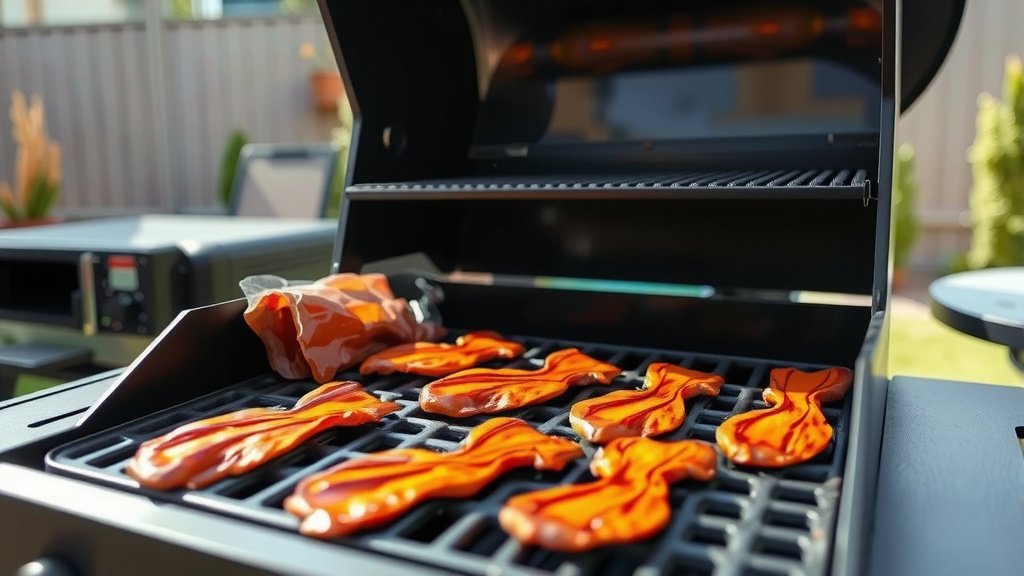
To smoke jerky on a pellet grill, aim for a consistent temperature range of 160°F to 180°F (71°C to 82°C).
This lower heat allows for gradual dehydration and optimal smoke absorption, giving you that perfect jerky texture and deep flavor.
- Smoke jerky on your pellet grill between 160°F and 180°F for optimal flavor and texture.
- Proper meat preparation, including careful slicing and effective seasoning, is essential before smoking.
- Use a quality cure or brine to ensure food safety and to enhance your jerky’s taste.
- Always monitor your jerky’s internal temperature and texture for perfect doneness and safety.
- Different wood pellets will impart unique smoky notes, so choose one that complements your jerky.
What Temp To Smoke Jerky On Pellet Grill?
The ideal temperature to smoke jerky on a pellet grill is consistently between 160°F and 180°F. This range is gentle enough to dehydrate the meat without cooking it too quickly, preserving that chewy texture.
Keeping the heat low helps the smoke penetrate the meat effectively, building incredible flavor. It’s a balance between drying the meat and infusing it with that classic smoky taste you love.
Why Temperature Matters for Jerky
Imagine trying to dry laundry in a scorching oven; it would bake, not dry gently. Jerky making works similarly. The right temperature is paramount for the finished product.
Too high a temperature, and your jerky will cook instead of dehydrate, turning out brittle or tough. Too low, and you risk food safety issues without enough drying action (USDA).
The Science of Jerky Making
Making jerky is a scientific dance of dehydration and smoke infusion. You want to remove moisture from the meat slowly. This process prevents bacterial growth and concentrates the natural flavors.
At 160-180°F, moisture evaporates steadily from the meat’s surface. This allows the smoke to cling to the meat fibers, creating a deeply flavored and safely preserved snack.
Avoiding the “Cooked” Texture
Nobody wants jerky that tastes like a dried-out steak. The goal is a pliable, chewy texture with concentrated flavor. Higher temperatures can give you a dry, crumbly result.
By staying in the recommended range, you avoid charring the outside before the inside is properly dried. This careful approach maintains the meat’s structure and its enjoyable chew.
Preparing Your Meat for the Pellet Grill
Great jerky starts long before it hits the grill. Proper meat preparation sets the stage for success. Think of it as laying the groundwork for a masterpiece.
From choosing the right cut to careful slicing and seasoning, each step plays a vital part. Don’t skip these initial stages; they truly make a difference in your final product.
Choosing the Right Cut
Lean meat is your best friend when making jerky. Cuts like top round, bottom round, or flank steak work wonderfully. We found that excess fat can turn rancid and shorten shelf life.
Trim all visible fat from your chosen cut. This effort ensures a better texture and a longer-lasting jerky. Many experts say a lean cut makes for the best, most consistent results.
Slicing for Success
Consistency in thickness is key. Aim for slices about 1/8 to 1/4 inch thick. You can slice with or against the grain, depending on your preferred chewiness.
Slicing against the grain makes for a more tender, easier-to-chew jerky. Slicing with the grain gives you a tougher, more traditional, sinewy chew. A partially frozen cut of meat is much easier to slice evenly.
The Importance of Curing and Marinating
Curing is not just for flavor; it’s a food safety step. A proper cure uses salt and often a curing agent (like Prague Powder #1) to prevent bacterial growth during the low and slow smoke (NCBI).
Marinating adds immense flavor. Allow at least 6-12 hours for the marinade to penetrate the meat. Overnight marination often provides the deepest, most satisfying flavor profiles.
- Choose a lean meat cut.
- Trim all visible fat meticulously.
- Slice meat evenly, 1/8 to 1/4 inch thick.
- Use a curing agent for safety.
- Marinate for deep flavor, at least 6 hours.
Setting Up Your Pellet Grill for Jerky
Your pellet grill is an amazing tool for jerky. It offers consistent temperatures and a steady smoke supply. Getting it ready means more than just turning it on.
A little preparation goes a long way to ensure a smooth, problem-free smoking session. Let’s make sure your grill is ready to create some delicious jerky.
Calibrating Your Grill
Even the best pellet grills can have temperature fluctuations. It’s wise to use an independent grill thermometer to verify your grill’s internal temperature. Place it near your jerky.
This helps you avoid “hot spots” and ensure the meat is consistently drying at the target temperature. A consistent temperature is critical for both safety and texture.
Optimal Pellet Choices
The type of wood pellet you choose significantly impacts flavor. Different woods impart unique characteristics. Do you prefer a mild or robust smoke?
Fruity woods like apple or cherry offer a sweeter, milder smoke. Hickory or mesquite provide a much stronger, more traditional smoky flavor. Mix and match to find your favorite!
| Wood Pellet Type | Flavor Profile | Best For Jerky |
|---|---|---|
| Apple | Mild, sweet, fruity | Beef, poultry, pork |
| Cherry | Sweet, subtle, reddish hue | Beef, game, poultry |
| Hickory | Strong, bacon-like | Beef, pork, game |
| Pecan | Nutty, mild, rich | Beef, poultry, fish |
| Mesquite | Very strong, earthy | Beef, game (use sparingly) |
The Smoking Process: Step-by-Step
With your meat prepped and your grill ready, it’s showtime! The actual smoking process is a patience game. You’re giving the meat time to transform.
It’s not just about setting a temperature and walking away. Regular checks and careful monitoring ensure your jerky comes out perfectly every time.
Initial High Heat Stage (Optional)
Some people like to start their jerky at a slightly higher temperature, around 200°F (93°C), for the first hour. This can help to dry the surface quickly.
However, we found that sticking to the 160-180°F range from the start works just fine. If you use a high heat start, remember to drop it down quickly to prevent cooking.
Maintaining Consistent Low Heat
Once your jerky is on the grill, maintain that 160-180°F temperature. Avoid opening the lid too often, as this causes heat fluctuations. Every peek releases precious heat and smoke.
Smoke for 3-6 hours, depending on your desired dryness and the thickness of your jerky. Thinner slices and a drier climate will reduce the time needed.
Monitoring for Doneness
How do you know when it’s done? It’s less about a specific time and more about feel and texture. Jerky is ready when it’s dry but still flexible.
It should bend without snapping but not feel wet or spongy. Always prioritize safety first by ensuring it’s sufficiently dried out. Many experts say a good bend test is the most reliable.
Here’s a quick checklist to help you:
- Is the jerky dry to the touch?
- Does it bend easily without breaking?
- Are there any wet or soft spots remaining?
- Has it shrunk by about 50%?
- Do you see any signs of cooked rather than dried meat?
Checking Texture and Flex
To check for doneness, pull a piece of jerky from the grill. Let it cool for a few minutes. Then, try to bend it. It should crack slightly on the outside but not break all the way through.
The inside should look dark and dehydrated, without any pink or raw appearance. If it feels too soft, it needs more time on the grill. If it snaps like a potato chip, it’s overdone.
Common Jerky Smoking Mistakes to Avoid
Even seasoned grill masters can make mistakes with jerky. Learning from common pitfalls can save you time, effort, and perfectly good meat. What should you watch out for?
Paying attention to these details can elevate your jerky game. It’s all about attention to detail and a little patience.
Overcrowding Your Grill Grates
Resist the urge to cram too much jerky onto your grill. Airflow is vital for proper dehydration and even smoke distribution. Leave space between each piece.
If pieces are touching, they won’t dry evenly and might create moisture pockets. Give your jerky room to breathe, and it will thank you with superior texture and flavor.
Rushing the Process
Jerky smoking is a slow art. Trying to speed things up by cranking the heat is a common mistake. Remember, we’re dehydrating, not cooking fast.
Patience is truly a virtue here. Give the meat the time it needs at the proper low temperature. Good things come to those who wait, especially with jerky.
Storing Your Homemade Jerky Safely
Once your jerky is perfectly smoked, proper storage is crucial. You’ve invested time and effort; now protect your delicious creation. How do you keep it fresh?
Allow the jerky to cool completely at room temperature before storing. This prevents condensation, which can lead to mold. Air-tight containers are your best friend here.
Many experts suggest storing homemade jerky in airtight bags or containers in a cool, dark place for up to two weeks. For longer storage, vacuum sealing or freezing can extend its life by months.
Conclusion
Smoking jerky on a pellet grill is a rewarding experience, especially when you nail that perfect temperature. Sticking to 160-180°F ensures a safe, flavorful, and wonderfully chewy product.
Remember that careful preparation, consistent monitoring, and choosing the right wood pellets are all part of the journey. With these tips, you’re all set to create delicious homemade jerky that everyone will love. Happy smoking!
What is the minimum safe temperature for smoking jerky?
The USDA recommends heating jerky to an internal temperature of 160°F (71°C) to ensure safety, even if it’s done at lower temperatures in the smoker. Some people opt for a short pre-bake at 160°F in an oven before smoking at lower temperatures.
Can I smoke jerky at 225°F on a pellet grill?
Smoking jerky at 225°F (107°C) is generally too high. This temperature will likely cook the meat rather than dehydrate it slowly, resulting in a brittle or crumbly texture instead of traditional chewy jerky. Stick to the 160-180°F range for optimal results.
How do I get more smoke flavor in my jerky?
To enhance smoke flavor, ensure you use good quality wood pellets and keep the smoke steady. Some pellet grills have a “Smoke” or “Super Smoke” setting that produces more smoke at lower temperatures. Also, ensure adequate airflow around your jerky slices.
Do I need to flip the jerky during smoking?
Flipping jerky is not strictly necessary on a pellet grill, especially if you have good airflow and consistent temperatures. However, rotating or flipping halfway through can help ensure more even drying and smoke penetration, particularly if you notice any unevenness.
Why is my smoked jerky turning out too dry and brittle?
If your jerky is too dry and brittle, it’s likely due to smoking at too high a temperature or leaving it on the grill for too long. Ensure your grill’s actual temperature matches your setting and check for doneness earlier next time. The goal is pliable, not cracker-crisp.
