
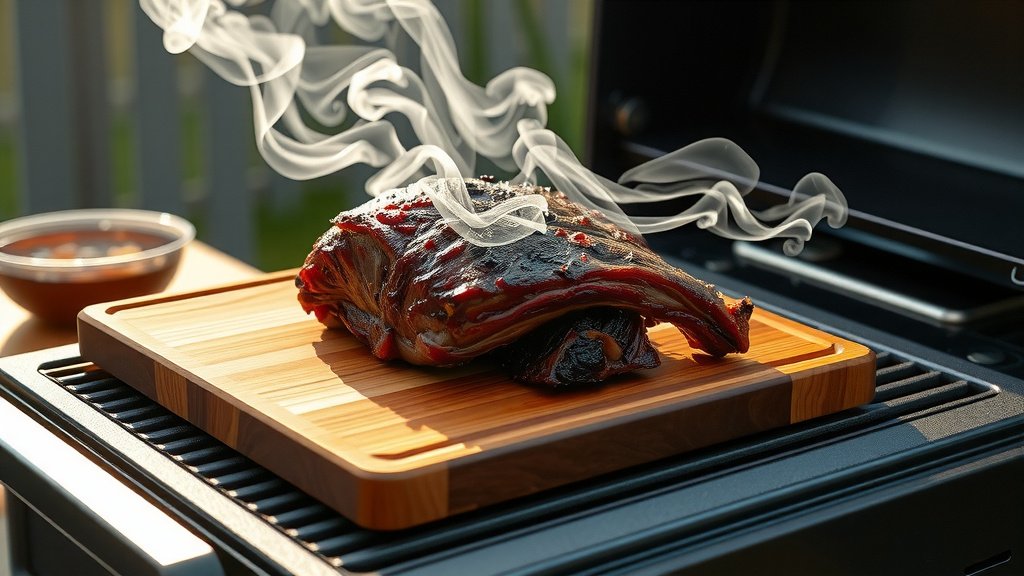
For smoking brisket on a pellet grill, the optimal temperature range is typically between 225°F and 275°F.
Most pitmasters aim for a consistent 225°F or 250°F to slowly render fats and break down tough connective tissues in your brisket, ensuring a tender and juicy result.
Here’s the quick lowdown on smoking brisket on a pellet grill:
- Aim for 225°F to 275°F, with 225°F or 250°F being popular choices.
- Smoke until the internal temperature hits 165°F to 175°F (the stall).
- Wrap your brisket in butcher paper or foil after the stall.
- Finish cooking until it reaches an internal temp of 200°F to 205°F.
- Always rest your brisket for at least one hour before slicing.
What Temp To Smoke Brisket On Pellet Grill?
You should smoke brisket on a pellet grill at a temperature between 225°F and 275°F. Maintaining a steady 225°F or 250°F is often ideal for that perfect tender texture.
This lower temperature range allows the brisket to cook slowly. It gives the collagen enough time to break down, turning into gelatin for that signature tenderness.
Why Temperature Matters for Brisket
Controlling your pellet grill’s temperature is key to great brisket. Too high, and your meat dries out before it gets tender. Too low, and you risk a rubbery texture.
The right temperature ensures even cooking and smoke penetration. It also helps render the fat slowly, keeping your brisket incredibly moist.
The “Low and Slow” Philosophy
Smoking brisket is all about “low and slow.” This method involves cooking at lower temperatures for extended periods. We found this approach produces the best results.
It’s not a race; it’s a marathon for your meat. Patience pays off with a beautiful bark and a juicy interior.
Ideal Temperature Range for Your Pellet Grill
Many experts suggest a sweet spot for brisket. This typically falls between 225°F and 275°F on your pellet grill.
Some prefer 225°F for maximum smoke flavor. Others like 250°F for a slightly faster cook without sacrificing quality. Choosing your temp depends on personal preference and your specific grill.
The Initial Smoke Phase Temperature
Start your brisket in the 225°F to 250°F range. This temperature allows for good smoke ring development.
This phase is where the brisket absorbs most of its smoky flavor. Keep your grill lid closed to maintain stable temperatures.
Understanding the Brisket Stall
Around 150°F to 170°F internal temperature, your brisket will hit a “stall.” The temperature might stop rising for hours. Don’t panic!
This happens because moisture evaporates from the surface, cooling the meat. It’s a natural part of the smoking process.
Post-Stall Temperature Adjustment
Some pitmasters slightly increase the grill temperature after the stall. Raising it to 275°F can help push through it faster.
This isn’t always necessary, but it’s an option if you’re short on time. We found this trick can shave off a few hours from the total cook.
Wrapping Your Brisket (The Texas Crutch)
When the internal temp hits 165°F to 175°F, it’s time to wrap your brisket. Use butcher paper or foil for this step, often called the “Texas Crutch.”
Wrapping helps power through the stall and retains moisture. It creates a braising effect, making the brisket even more tender.
After wrapping, you can maintain your 225°F to 275°F grill temperature. Cook until the brisket feels probes like butter, usually around 200°F to 205°F internally.
Monitoring Internal Temperature is Crucial
Always use a reliable meat thermometer. This is your most important tool, not time, for judging doneness (USDA).
Insert the probe into the thickest part of the flat, avoiding fat pockets. This gives you the most accurate reading.
Here’s a quick checklist for temperature success:
- Check your grill’s temperature often.
- Use a quality leave-in meat thermometer.
- Verify probe placement in the thickest part.
- Don’t lift the lid too much; “if you’re lookin’, it ain’t cookin’.”
- Feel for tenderness, not just temperature.
Rest Period: Don’t Skip It!
Once your brisket reaches its target internal temperature, remove it from the grill. Wrap it in a towel and place it in a cooler for 1-4 hours.
This rest period is incredibly important. It allows the juices to redistribute throughout the meat, making it super juicy and tender when sliced.
What if My Pellet Grill Temp Swings?
Pellet grills are generally stable, but slight swings can happen. Try to avoid opening the lid often, as this causes significant temperature drops.
If your grill struggles to maintain temp, check your pellet hopper. Make sure it’s full. Also, clean out your fire pot if needed, as ash buildup can affect performance.
Common Brisket Smoking Mistakes to Avoid
One common mistake is cooking too fast or at too high a temperature. This usually leads to dry, tough brisket.
Another pitfall is not resting the meat long enough. Skipping this step means losing out on ultimate juiciness. We found that patience makes all the difference.
Temperature vs. Time: What’s More Important?
Many new smokers wonder about cooking time. While time provides a general idea, internal temperature is your true guide.
Brisket sizes vary greatly, as do grill performances. Focusing on internal temperature ensures your brisket is cooked perfectly every time.
| Factor | Importance for Brisket | Why It Matters |
|---|---|---|
| Grill Temperature | Very High | Controls cooking speed and fat rendering. |
| Internal Meat Temperature | Extremely High | Determines doneness and tenderness. |
| Cooking Time | Moderate | A general estimate, not a precise measurement. |
| Probe Tenderness | High | Final check for perfect texture. |
Conclusion
Smoking brisket on a pellet grill is a rewarding experience. The secret lies in understanding and controlling your temperatures.
Aim for that 225°F to 275°F sweet spot, monitor internal temperatures closely, and always allow for a generous rest. With these tips, you’re well on your way to creating a perfectly tender and incredibly flavorful brisket. You’ve got this!
How long does it take to smoke a 12lb brisket at 225?
Smoking a 12lb brisket at 225°F can take anywhere from 10 to 14 hours, or even longer. The exact time depends on many factors, including the brisket’s thickness, fat content, and how consistently your grill maintains temperature. Always cook to internal temperature, not just time.
Can I smoke brisket at 275°F on a pellet grill?
Yes, you can smoke brisket at 275°F on a pellet grill. Many pitmasters use this slightly higher temperature to speed up the cooking process, especially after the stall, without compromising the brisket’s quality. You might notice a slightly less pronounced smoke ring compared to 225°F.
Should I wrap my brisket in foil or butcher paper?
Both foil and butcher paper are effective for wrapping brisket during the stall. Butcher paper allows for more breathability, which can help maintain a crisper bark. Foil creates a tighter seal, trapping more moisture and often speeding up the cook more. Many experts have found butcher paper is preferred for bark quality.
What internal temperature is considered “done” for brisket?
Brisket is generally considered “done” when its internal temperature reaches between 200°F and 205°F. However, doneness is truly determined by tenderness. The probe should slide into the meat with very little resistance, like sliding into warm butter, regardless of the exact temperature reading.
Do I need to trim my brisket before smoking on a pellet grill?
Yes, trimming your brisket before smoking is highly recommended. You should remove hard fat and silver skin, and trim the fat cap to about 1/4 to 1/2 inch thick. This allows for better smoke penetration, more even cooking, and a more pleasant eating experience. Untrimmed fat can prevent bark formation and sometimes render poorly.
