
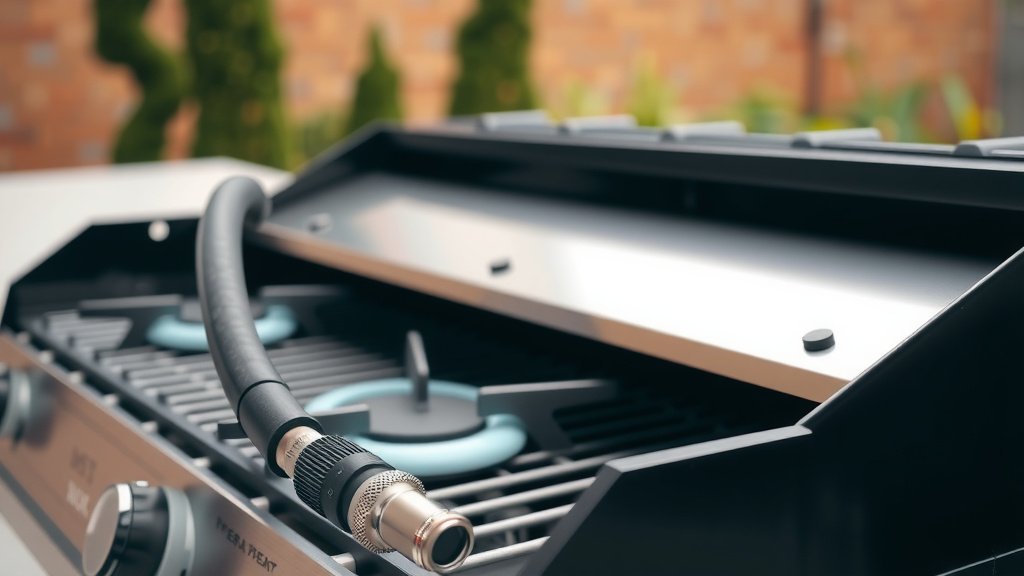
Connecting a natural gas grill involves a specific process, linking your grill safely to your home’s natural gas supply with the right fittings.
You’ll need to secure a natural gas grill connection kit, understand your gas line, and perform thorough leak tests to ensure safe operation.
TL;DR: Ready to grill without propane tanks? Connecting your natural gas grill is straightforward but requires careful attention to safety. Here’s the quick rundown:
- Always prioritize safety: shut off gas, use proper tools.
- Gather essential components like a quick-disconnect hose and sealant.
- Attach the quick-disconnect kit to your grill and the gas line.
- Perform a thorough leak test using a soapy water solution.
- If unsure, call a licensed professional for peace of mind.
How To Connect Natural Gas Grill?
Connecting your natural gas grill is a fantastic way to enjoy endless grilling without the hassle of propane tanks. It’s a project you can tackle yourself with the right tools and careful steps.
Safety First: Your Most Important Step
Before you even pick up a wrench, remember safety. Working with natural gas means being extra cautious. A small mistake could have big consequences, so pay close attention.
Shut Off Your Gas Supply
Your absolute first move is to turn off the gas supply to your home. Locate your main gas shut-off valve, usually near your gas meter. This step is non-negotiable for safety (Gas Safety Institute).
Ventilation is Key
Ensure you are working in a well-ventilated area. If you smell gas at any point, stop immediately, ventilate the area, and contact your gas company. Your nose is your best safety tool.
Essential Tools and Materials
Gathering everything you need before starting saves time and prevents frustration. Think of it like a chef prepping ingredients; it makes the cooking smoother.
- Adjustable wrenches (two are often helpful)
- Pipe thread sealant (yellow Teflon tape or pipe dope rated for natural gas)
- Gas-rated quick-disconnect hose kit (match fitting sizes!)
- Leak detection solution (soapy water in a spray bottle works great)
- Safety glasses and gloves
Understanding Your Gas Line
Do you already have a natural gas stub-out ready for a grill? This makes the job much easier. If not, you might need professional help to extend a line (National Plumbing Association).
Quick-Connect vs. Permanent Line
Most home grillers use a quick-connect fitting. This allows you to easily disconnect and move your grill. A permanent line requires rigid piping and is typically done by a plumber.
| Connection Type | Pros | Cons |
|---|---|---|
| Quick-Connect | Easy to disconnect, flexible placement. | Hose can be a tripping hazard, inspect regularly. |
| Permanent Line | Very secure, hidden piping, no tripping risk. | Fixed grill location, professional installation likely needed. |
Step-by-Step Connection Guide
Alright, gas is off, tools are ready. Let’s walk through the actual connection process. Take your time with each step; haste can lead to errors.
Prepare Your Grill and Gas Line
First, inspect your grill for any existing propane regulator. If your grill came with a propane regulator, you must remove the propane regulator before connecting to natural gas. Natural gas pressure is much lower.
Attaching the Quick-Connect Kit
Your quick-connect kit will typically have two main parts: a female coupler and a male nipple. The female coupler usually attaches to your gas supply line stub-out.
Apply Thread Sealant
Apply pipe thread sealant (yellow tape or pipe dope) to the male threads of the gas supply line. This helps create a gas-tight seal. Make sure it’s rated for natural gas.
Connect the Female Coupler
Screw the female quick-connect coupler onto the prepared gas supply line stub-out. Tighten it securely with your wrenches. Use one wrench to hold the gas line steady and the other to turn the coupler.
Connect the Male Nipple to the Grill
Next, apply thread sealant to the male threads of the grill’s gas inlet. Attach the male quick-connect nipple from your kit to this inlet. Tighten it firmly, but don’t over-tighten and strip the threads.
Join the Quick-Connect Hose
Now, connect the quick-connect hose itself. Push the male nipple (from the grill) into the female coupler (from the gas line) until it clicks and locks into place. Give it a gentle tug to ensure it’s secure.
Testing for Leaks (Crucial!)
This is where your soapy water solution comes in. Do not skip this step! Many safety guidelines emphasize leak testing after any gas connection (NFPA).
Reactivate Gas Supply
Slowly turn your main gas supply back on. Do it gently. Listen for any immediate hissing sounds, which indicate a large leak.
Apply Soapy Solution
Spray your leak detection solution liberally over all connections you just made. This includes where the coupler meets the stub-out, where the nipple meets the grill, and where the hose connects to both.
Look for Bubbles
Watch closely. If you see bubbles forming, even small ones, you have a leak. Turn off the gas immediately, re-tighten the connection, reapply sealant, and retest. Repeat until no bubbles appear.
What If You Don’t Have a Natural Gas Line?
If you don’t have a gas line to connect to, your journey isn’t over! You have a few choices. Think about your long-term grilling habits and budget.
Professional Installation: Is It for You?
Running a new natural gas line is not a DIY project for most homeowners. This requires expertise and permits. A licensed plumber or gas technician is the right person for this job.
When to Call an Expert
You should absolutely call a professional if you need a new gas line run, if your existing line is unsuitable, or if you feel any uncertainty. Your safety is worth the investment.
Common Pitfalls to Avoid
Even experienced DIYers can make mistakes. Watch out for these common issues to keep your natural gas grill connection smooth and safe.
Incorrect Sealant Use
Using regular Teflon tape or not enough sealant can lead to leaks. Always use yellow gas-rated tape or pipe dope for natural gas applications.
Over-tightening Connections
While connections need to be snug, over-tightening can strip threads or damage fittings. This can create weak points that are prone to leaks.
Ignoring Leak Tests
Skipping the leak test is a serious safety hazard. Always, always, always test for leaks, even if you’re confident in your work.
Maintaining Your Natural Gas Grill Connection
A natural gas connection is largely maintenance-free once installed correctly. However, a quick yearly check can add to your peace of mind.
Check Hose and Fittings
Periodically inspect the quick-connect hose for cracks, kinks, or wear. Ensure all fittings remain tight and free of corrosion. A quick visual inspection is usually enough.
Conclusion
Connecting your natural gas grill can be a rewarding DIY project that elevates your outdoor cooking. Remember, safety is paramount. By following these steps carefully—from shutting off the gas to performing thorough leak tests—you can enjoy a seamless grilling experience.
If at any point you feel uncomfortable or encounter issues, don’t hesitate to contact a qualified professional. Happy grilling!
FAQs About Connecting Natural Gas Grills
Can I convert a propane grill to natural gas?
Yes, many propane grills can be converted to natural gas, but it requires a specific conversion kit for your grill model. This kit typically includes different orifice sizes and a natural gas regulator, as natural gas operates at a lower pressure than propane.
What size natural gas line do I need for a grill?
Most residential gas grills use a 1/2-inch diameter natural gas line. However, the exact sizing depends on the grill’s BTU rating and the length of the gas line run. Consulting a plumber or gas technician can ensure the correct sizing for optimal performance.
How often should I check for gas leaks?
You should always check for leaks immediately after making any new gas connection or after reconnecting a gas appliance. Additionally, many experts suggest a visual inspection and a quick soapy water test annually, especially before the grilling season begins.
Is it safe to leave my natural gas grill connected all the time?
Yes, it is generally safe to leave your natural gas grill connected to a properly installed and leak-tested quick-disconnect line. Unlike propane tanks, natural gas lines typically have a main shut-off valve, adding a layer of security. Always ensure the grill’s valve is off when not in use.
Do I need a permit to connect a natural gas grill?
If you are simply connecting a quick-disconnect hose to an existing, code-compliant gas stub-out, a permit is usually not required. However, if you are running a new gas line, modifying existing lines, or performing extensive plumbing work, a permit will likely be necessary. Always check with your local building department.
