
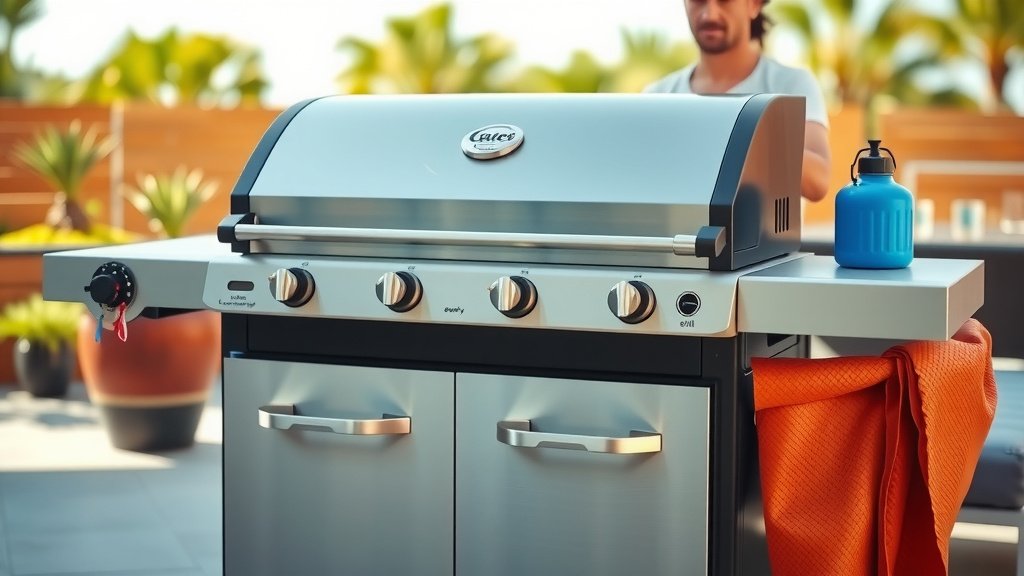
Connecting a gas grill involves safely attaching its regulator hose to a propane tank valve or a dedicated natural gas line, ensuring a secure seal to prevent leaks.
To safely connect your gas grill, always refer to your grill’s owner’s manual for specific instructions and use the correct tools to tighten connections.
Here’s a quick rundown of what you’ll find in this guide, helping you get your grill ready for action:
- Always prioritize safety: checking for leaks is non-negotiable.
- Identify your grill’s gas type: propane or natural gas requires different approaches.
- Propane connections are typically straightforward; natural gas connections often need a professional touch.
- You’ll mostly need a wrench and soapy water for a safe setup.
- Regular checks keep your grilling sessions smooth and safe for seasons to come.
How To Connect A Gas Grill?
To connect a gas grill, you typically attach the grill’s flexible hose and regulator assembly to a propane tank valve or, for natural gas grills, directly to your home’s gas supply line.
Always ensure a secure, leak-free connection for safety, following manufacturer instructions closely for your specific model.
Gas Grill Types: Do You Know Yours?
Before you even think about connecting anything, do you know what kind of gas your grill uses? This is a really important first step.
Gas grills usually run on one of two types: liquid propane (LP) from a tank or natural gas (NG) directly from your home’s gas line. They are not interchangeable without conversion kits, and sometimes, not at all.
Propane Grills: The Portable Powerhouses
Most backyard grills are propane-powered. They use those familiar, refillable tanks you find at hardware stores or supermarkets.
These grills come with a regulator hose designed specifically for propane tanks, making them easy to move around your patio.
Natural Gas Grills: The Permanent Fixtures
Natural gas grills connect directly to your home’s gas line. They offer unlimited fuel, which means no more running out of gas mid-cookout!
However, connecting a natural gas grill often involves running a gas line, which can be a more involved process. We found that many homeowners prefer professional installation for natural gas connections (Consumer Reports).
Safety First: Your Top Priority
Connecting a gas grill involves working with flammable gas, so safety is not just a suggestion; it’s a rule. Think of it like cooking: you wouldn’t forget the main ingredient, right?
Before you touch any connections, make sure your grill and the gas supply are turned off. Always work in a well-ventilated area.
Pre-Connection Checklist: What You Need
Gathering your tools beforehand makes the job smoother and safer. You don’t want to be scrambling mid-connection.
Here’s a quick list to get you started:
- Adjustable wrench or open-end wrench (often 1/2 or 3/4 inch).
- A bottle of soapy water (or leak detection solution).
- Your grill’s owner’s manual (this is key!).
- Clean cloths.
Connecting a Propane Gas Grill: Step-by-Step
This is the most common scenario, and thankfully, it’s quite straightforward. Think of it as a simple puzzle with just a few pieces.
Let’s walk through it together.
Positioning Your Propane Tank
First, place your propane tank on the designated shelf or hook on your grill’s cart. This keeps it stable and upright.
Ensure the tank valve is in the “off” position, usually by turning it clockwise until tight.
Attaching the Regulator Hose
The regulator hose has a connector that screws into the propane tank valve. It often has a large plastic knob or nut.
Align the connector with the tank valve threads. Remember the saying, “righty tighty, lefty loosey.”
Hand-Tighten, Then Wrench if Needed
Begin by hand-tightening the connector clockwise until it’s snug. You should feel it tighten securely.
Many propane connections are designed to be hand-tightened only. However, some older models or specific connectors might suggest a light wrench turn. Always check your manual. We found that over-tightening can actually damage the seal (National Fire Protection Association).
Connecting a Natural Gas Grill: A Different Approach
Natural gas connections are generally more permanent and might require a bit more expertise. It’s not quite like plugging in a lamp.
Safety is even more critical here because you’re tapping into your home’s main gas supply.
Safety Precautions for Natural Gas
Always turn off the main gas supply to your home before attempting any natural gas connection. Locate your gas shut-off valve and turn it off.
Many experts say that you should also notify your gas company if you plan significant work on your gas lines (American Gas Association).
The Role of a Professional
We found that for natural gas connections, especially if you’re running new lines or making modifications, it’s highly recommended to hire a licensed plumber or gas technician.
They have the right tools, knowledge, and permits to ensure everything is up to code and perfectly safe. This step is worth the investment for your peace of mind.
The Crucial Leak Test: Don’t Skip This!
This is probably the most important step after connecting your grill. Would you drive a car without checking the tires? No, right?
A leak test confirms your connections are secure and gas isn’t escaping. It’s simple and takes just a few minutes.
Performing the Soapy Water Test
First, ensure all grill burner knobs are in the “off” position. Then, turn on your gas supply (slowly open the propane tank valve or turn on your home’s natural gas line).
Mix equal parts dish soap and water in a spray bottle or cup. Apply this solution generously over all connections: where the regulator meets the tank, and where the hose connects to the grill.
What If You Find a Leak?
If you see bubbles forming in the soapy water, you have a leak! Immediately turn off the gas supply.
Retighten the connection (but don’t overtighten!). Apply more soapy water and recheck. If bubbles persist, turn off the gas, disconnect, and inspect the connection for damage or debris. If you can’t fix it, do not use the grill, and consider replacing the hose/regulator or seeking professional help.
First Time Firing Up Your Grill
Once you’re sure there are no leaks, you’re ready for your first cookout! Open the gas valve fully.
Then, following your grill’s instructions, ignite the burners. It might take a few seconds for the gas to reach the burners the first time.
Maintaining Your Gas Connection
Regular checks can prevent future problems. Think of it as routine maintenance for your car.
Here’s a simple guide to keep your connections in top shape:
| Check Item | Frequency | Action |
|---|---|---|
| Hose & Regulator | Before each use | Inspect for cracks, fraying, or wear. |
| Connections | At least once a season | Perform a soapy water leak test. |
| Propane Tank Valve | Before connecting/disconnecting | Ensure it turns freely and seals tightly. |
| Grill Components | Annually | Clean burners, check igniter functionality. |
| Storage | Off-season | Disconnect propane tank, store grill safely. |
Conclusion
Connecting a gas grill safely is a straightforward process when you know the steps and prioritize safety. Whether you have a propane or natural gas grill, understanding your specific setup is key.
Remember to always double-check your connections with a leak test, and don’t hesitate to seek professional help for natural gas installations. Enjoy your delicious grilled meals!
What is the proper way to store a propane tank?
You should always store propane tanks upright in a well-ventilated outdoor area, away from direct sunlight, heat sources, and potential ignition sources. Never store a propane tank indoors or in enclosed spaces like garages or sheds, as this can be a serious fire hazard (National Fire Protection Association).
How often should I replace my grill’s regulator and hose?
Many experts suggest replacing your grill’s regulator and hose assembly every 5-10 years, or sooner if you notice any signs of wear, cracks, kinks, or damage. Inspecting it before each grilling season is a good practice to ensure its integrity and prevent leaks.
Can I convert a propane grill to natural gas, or vice-versa?
Some grills are designed to be convertible, but it requires a specific conversion kit from the manufacturer and often professional installation. Attempting to convert a grill without the correct kit and expertise is dangerous and can void your warranty. Always check your grill’s manual for convertibility.
What if my grill’s igniter isn’t working after connection?
If your igniter isn’t working, first ensure the gas is flowing by checking the tank valve and performing a leak test. Then, make sure the igniter electrode is clean and properly positioned near the burner port. Sometimes, the igniter battery (if applicable) might need replacing. Consult your grill’s manual for specific troubleshooting steps.
Should I use thread sealant tape on gas grill connections?
For most standard propane tank connections, thread sealant tape (like Teflon tape) is generally not recommended. The connections are designed to seal metal-to-metal or with an internal rubber O-ring. Using tape might interfere with this seal. However, for natural gas pipe connections, a gas-rated thread sealant is often necessary, but this is best handled by a professional.
