
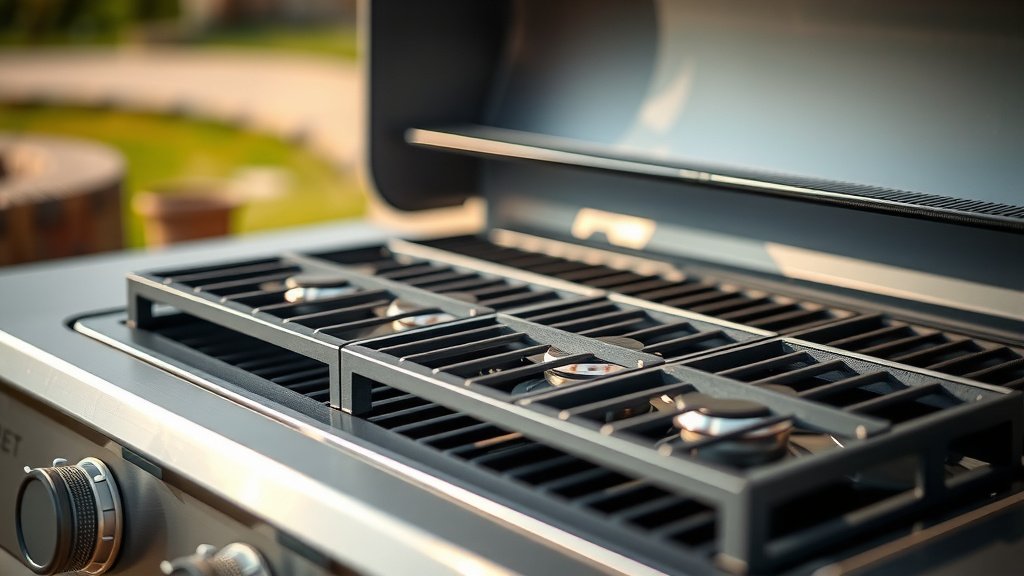
No, you absolutely cannot use charcoal directly inside a gas grill. Attempting to do so is extremely dangerous and can damage your grill or cause serious injury.
Gas grills are not designed to safely contain the intense heat and ash produced by burning charcoal, posing fire hazards and releasing dangerous carbon monoxide.
- Trying to burn charcoal in a gas grill is dangerous due to fire risk and carbon monoxide.
- Gas grills lack proper ventilation and heat resistance for charcoal use.
- You risk damaging your grill and voiding its warranty.
- Dedicated charcoal boxes are a safer, but limited, alternative for gas grills.
- For true charcoal flavor, consider a separate charcoal grill or a hybrid model.
Can You Use Charcoal In A Gas Grill?
Let’s get straight to it: directly using charcoal in a gas grill is a big no-go. It’s a common question among grill enthusiasts, but it’s important to understand why this combination is a bad idea.
Why Would You Even Want To Try?
Many people love the distinct smoky flavor and crispy texture that charcoal grilling provides. You might be dreaming of that taste but only own a gas grill. It’s natural to wonder if you can combine the convenience of gas with the taste of charcoal.
We all crave that authentic barbecue flavor, don’t we? That smoky char on a burger or steak is truly something special. But trying to force it can lead to trouble.
The Big “No”: Safety First
Your safety is the most important thing when you’re grilling. Using charcoal in a gas grill creates several major safety concerns. This isn’t just about avoiding a messy clean-up; it’s about preventing accidents.
What Happens If You Try?
Picture this: you light charcoal inside a gas grill. The grill’s internal components, like burners and heat deflectors, are not meant for direct contact with burning charcoal. This can lead to flare-ups, component damage, and even a structural fire. It’s like putting racing fuel in a regular car engine; it’s just not built for it.
Gas Grill Design vs. Charcoal Needs
Gas grills and charcoal grills are built differently for very good reasons. They each have specific designs to handle their respective fuel sources safely and effectively. You can’t just swap the fuel and expect the same results.
Ventilation Matters
Charcoal needs a lot of oxygen to burn properly and release heat. It also produces ash and heavy smoke. Gas grills have limited airflow and ventilation openings designed for gas combustion, not for controlling a charcoal fire. This lack of proper airflow can cause carbon monoxide to build up, a silent but deadly gas.
Material Differences
Many experts say gas grills often use aluminum or thin steel components that can’t withstand the extreme, focused heat of burning charcoal (Consumer Reports). Charcoal burns much hotter and less evenly than gas flames. This intense heat can warp, melt, or otherwise damage the inside of your gas grill.
Understanding Carbon Monoxide Risk
Burning charcoal produces carbon monoxide (CO), a colorless, odorless gas. In a well-ventilated charcoal grill, this gas dissipates. However, inside the enclosed space of a gas grill, CO can build up to dangerous levels. Inhaling CO is very dangerous and can lead to serious health problems or worse (CDC).
Is There Any Workaround?
If you really want that smoky flavor in your gas grill, don’t despair! There is a safer, indirect method you might consider. It won’t be exactly like a true charcoal grill, but it gets you closer without the risk.
Charcoal Boxes for Gas Grills
A charcoal box, sometimes called a smoker box, is a specific accessory designed for this purpose. These are typically made of cast iron or heavy-gauge stainless steel. They are meant to hold a small amount of charcoal or wood chips. You place these boxes over a gas burner. The gas burner then heats the box, which in turn heats the charcoal or wood inside.
How Charcoal Boxes Work
With a charcoal box, you’re not burning charcoal directly in your grill’s main chamber. Instead, you’re using your gas burner to heat the specialized box. This box then smolders the charcoal or wood chips, releasing smoke and a bit of that charcoal flavor. You’re effectively using your gas grill as an oven to heat the charcoal contained safely within the box.
Benefits of a Charcoal Box
- Adds smoky flavor to your food.
- Safer than direct charcoal use.
- Less mess than a full charcoal grill.
- Gives you more versatility with your gas grill.
Limitations and Considerations
While charcoal boxes offer a solution, they come with their own set of limitations. It’s important to have realistic expectations. This isn’t a magic wand for turning your gas grill into a full-fledged charcoal cooker.
Flavor Profile Differences
The flavor from a charcoal box won’t be as intense or authentic as from a dedicated charcoal grill. Because the charcoal isn’t exposed directly to the air and heat, it smolders more. This creates smoke but less of that direct char flavor. It’s like comparing a campfire to a scented candle; both have smoke, but the experience is different.
Maintenance After Using a Charcoal Box
Using a charcoal box still means you’ll have some clean-up. Ash will build up in the box, and some smoke residue will remain in your grill. Regular cleaning is key to keep your grill in good shape.
Here’s a quick checklist for after using a charcoal box:
- Allow the charcoal box to cool completely.
- Empty ash from the charcoal box carefully.
- Wipe down the inside of your gas grill.
- Check for any lingering ash or debris.
- Store the charcoal box in a dry place.
The Best of Both Worlds: Hybrid Grills
If you’re truly torn between gas and charcoal, why not consider a grill that does both? Hybrid grills are designed to safely accommodate both fuel types, giving you ultimate flexibility. These units offer dedicated sections for each fuel source.
Dedicated Charcoal Grills
For the purest charcoal experience, many grill masters choose to own a separate charcoal grill. This gives you the control and authentic flavor you’re looking for. Charcoal grills come in many shapes and sizes, from small portable models to large kamado-style cookers.
When to Use Each Type
Deciding which grill to use depends on your meal and your time. Here’s a quick guide to help you choose:
| Grill Type | Best For | Time Commitment | Flavor Profile |
|---|---|---|---|
| Gas Grill | Quick weeknight meals, precise temperature control, delicate foods | Low (fast heat-up) | Clean, direct heat |
| Charcoal Grill | Slow-cooked meats, searing, smoky flavor, large gatherings | High (longer heat-up and cool-down) | Deep, smoky, char-grilled |
| Hybrid Grill | Versatility, when you want both options, experimental cooking | Medium | Flexible (gas or charcoal) |
Making the Right Choice for Your Grilling Style
Ultimately, the best choice depends on your personal grilling style and preferences. Do you grill every night, or just on weekends? How important is that smoky flavor to you? Thinking about these questions can guide you to the right equipment. Sometimes, having two grills is the simplest answer!
Gas Grill Safety Tips
Regardless of whether you use a charcoal box, always follow basic gas grill safety. This keeps your grilling experience fun and safe for everyone. A little caution goes a long way in the backyard.
Always check for gas leaks with a soapy water solution (Propane Education & Research Council). Keep your grill clean and free of grease build-up. Never grill indoors or in enclosed spaces. Always make sure your grill is on a level, stable surface, away from anything that can catch fire.
Conclusion
While the idea of combining charcoal and gas in one unit is tempting for that smoky flavor, doing so directly in a gas grill is simply not safe. The design differences and fire risks are too great. If you crave that unique charcoal taste, consider a specialized charcoal box for your gas grill or, better yet, invest in a dedicated charcoal grill or a versatile hybrid model. Your safety, and the longevity of your grill, are always worth protecting.
Can a gas grill explode if I put charcoal in it?
While a direct explosion is unlikely, using charcoal in a gas grill can lead to uncontrolled flare-ups, fire spreading, damage to the grill’s gas lines, and potential carbon monoxide poisoning. These risks are serious and can cause significant harm or injury.
Will putting charcoal in a gas grill void the warranty?
Yes, almost certainly. Manufacturers design gas grills for specific fuel types. Any use outside of these guidelines, like burning charcoal, is considered misuse and will void your warranty. This means you would be responsible for any repairs or replacements.
What is a hybrid grill, and how does it work?
A hybrid grill is a unit designed to cook with both gas and charcoal. It typically has separate sections or interchangeable components that allow you to use either fuel safely. This gives you the convenience of gas for quick cooks and the flavor of charcoal for special occasions, all in one appliance.
How do I add smoky flavor to food on a gas grill safely?
To add smoky flavor to your food on a gas grill safely, use a smoker box filled with wood chips or wood chunks. Place the smoker box over a burner or directly on the grates. As the wood heats, it will release smoke, infusing your food with that desired smoky taste without the dangers of burning charcoal directly.
What are the signs of carbon monoxide poisoning?
Signs of carbon monoxide poisoning include headache, dizziness, nausea, weakness, confusion, and chest pain. Because carbon monoxide is odorless, it can be hard to detect. If you suspect exposure, immediately move to fresh air and seek medical attention (Mayo Clinic).
