
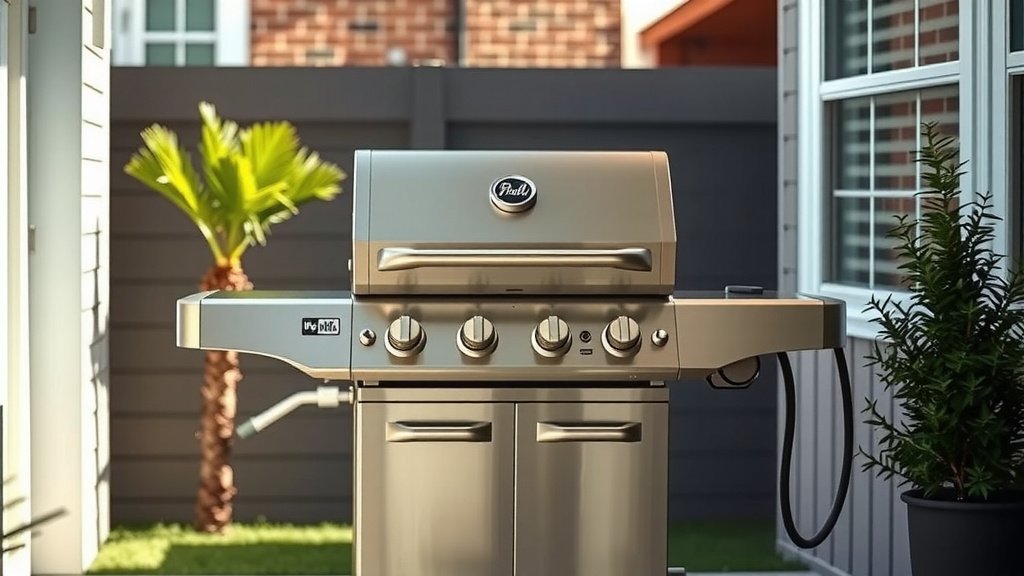
To hook up a grill to a gas line, you typically need a specific natural gas conversion kit, a proper quick-connect hose, and a designated outdoor gas shut-off valve. Always prioritize safety, ensuring correct fittings and thorough leak tests before use.
Many experts advise consulting a qualified plumber or gas technician to safely install or convert your grill to a natural gas line connection, preventing dangerous gas leaks and ensuring compliance with local codes.
- Before anything, check your grill’s compatibility with natural gas and gather the right tools.
- Safety is non-negotiable; gas leaks are extremely dangerous, so consider professional installation.
- You’ll likely need a natural gas conversion kit, a quick-connect hose, and a designated shut-off valve.
- Always test for leaks meticulously after connection using a soap solution.
- When in doubt, call a certified gas technician—it’s always worth the peace of mind.
How To Hook Up Grill To Gas Line?
Connecting your grill to a natural gas line requires careful steps. You will need a natural gas conversion kit if your grill is not already set up for it. Safety procedures are essential to avoid dangerous gas leaks.
Why Go Natural Gas? It’s Convenient!
Imagine never running out of propane in the middle of a cookout. That’s the big appeal of natural gas. You get an endless fuel supply directly from your home’s utility line.
This means no more heavy tanks to lug around. No more trips to the store for refills. Just turn on the gas and grill, whenever you want.
We found that this convenience makes natural gas a favorite for many grilling enthusiasts. It simplifies the grilling experience dramatically.
Is Your Grill Ready for Natural Gas?
Before you even think about hooking up a grill to a gas line, you need to know if it’s compatible. Not all grills are built the same. Some are designed for propane, others for natural gas.
Many grills can be converted, but it requires the correct conversion kit. Skipping this step is a major safety risk.
Propane vs. Natural Gas Grills
Propane and natural gas are different fuels. Propane burns at higher pressure, while natural gas uses a lower pressure system. This means the burner orifices differ between the two.
A grill designed for propane will not work correctly, or safely, with natural gas. You risk an inefficient flame or worse, a fire hazard.
Finding the Right Conversion Kit
If your grill wasn’t originally natural gas ready, you’ll need a conversion kit. Always get one specifically made for your grill’s make and model. Check your grill’s manual for details.
This kit usually includes new orifices and sometimes a different regulator. Installing the wrong kit can be extremely dangerous (Consumer Product Safety Commission).
Safety First: A Non-Negotiable Rule
Working with gas lines demands extreme caution. Gas leaks are not just a nuisance; they are a serious fire and explosion risk. Your safety, and that of your family, is paramount.
Always treat gas line work with the utmost respect. If you feel uncertain at any point, stop and call a professional. There’s no shame in seeking expert help.
Tools and Materials You’ll Need
Having the right gear makes the job smoother and safer. Here’s a basic list of what you might need. Make sure everything is rated for natural gas.
- Pipe wrench and adjustable wrench
- Gas-rated thread sealant tape (yellow PTFE tape) or pipe dope
- Flexible natural gas hose with quick-connect fitting
- Natural gas regulator (often part of the conversion kit)
- Outdoor gas shut-off valve (if not already present)
- Leak detection solution (soapy water)
Before you begin, here’s a quick checklist to make sure you’re ready:
- Did you confirm your grill is natural gas compatible or has a conversion kit?
- Do you have a designated outdoor gas shut-off valve ready?
- Is your gas line’s pressure appropriate for a grill?
- Are all your fittings, hoses, and sealants rated for natural gas use?
- Have you located your home’s main gas shut-off valve?
Understanding Your Home’s Gas Line Setup
Your home’s natural gas line runs at a specific, lower pressure than propane tanks. You need a dedicated line to your grilling area. This line should also have a **proper shut-off valve**.
Many local codes require this valve to be easily accessible. Knowing where your main home gas shut-off is also key in case of an emergency.
| Feature | Propane Connection | Natural Gas Connection |
|---|---|---|
| Fuel Source | Portable tanks | Direct home line |
| Refilling | Requires tank refills | No refills needed |
| Portability | High | Low (fixed location) |
| Pressure | High pressure (regulated) | Low pressure (from home line) |
| Installation | Simple hose hookup | Often requires professional gas line extension and conversion |
Step-by-Step: Connecting Your Grill (Carefully!)
This general guide outlines the process. Remember, specific steps vary by grill and local codes. Always refer to your grill’s manual and local regulations.
1. Turn Off the Gas Supply
Locate the main gas shut-off valve for your house and turn it off. This is a critical first step. Double-check that the gas is completely off.
2. Install the Shut-Off Valve
If you don’t have an outdoor gas shut-off valve, you must install one. This valve allows you to turn off gas to the grill without shutting off your entire home’s supply. Use gas-rated thread sealant on all connections.
3. Attach the Quick-Connect Fitting
Connect the quick-connect fitting to your outdoor gas line, downstream from the shut-off valve. Again, use thread sealant liberally. Ensure connections are tight but do not over-tighten.
4. Connect the Gas Hose to Your Grill
Attach one end of your flexible natural gas hose to the quick-connect fitting. Then, connect the other end to the grill’s gas inlet. Make sure all connections are **snug and secure**.
5. Convert Your Grill (If Needed)
If you are converting a propane grill, now is the time to install the natural gas orifices and regulator from your conversion kit. Follow your **grill manufacturer’s instructions** precisely for this step.
The All-Important Leak Test
After all connections are made, turn your main gas supply back on. Then, open the outdoor grill shut-off valve. Do not light the grill yet!
Mix some dish soap with water to create a bubbly solution. Spray or brush this mixture generously over all new gas connections. Look for bubbles forming. Persistent bubbles mean a leak. If you see bubbles, turn off the gas immediately and re-tighten the connection. Repeat the test until no bubbles appear.
Common Mistakes to Avoid
We found that people often make a few key errors. One common mistake is using propane hoses or regulators for natural gas. These are not interchangeable and are unsafe.
Another error is skipping the leak test. This is an absolute must-do step. Also, never force fittings that don’t match; always use the correct, compatible parts.
When to Call the Pros
If your home doesn’t have an existing outdoor gas line, you will need a new line installed. This is a job for a **licensed plumber or gas technician**. They know local codes and safety standards (National Fire Protection Association).
If you’re unsure about any step, or if your leak test keeps showing bubbles, don’t hesitate. A professional can quickly identify and fix issues. Your **peace of mind is worth it**.
Conclusion
Hooking up a grill to a natural gas line offers wonderful convenience for outdoor cooking. You get an endless fuel supply and no more heavy tanks. While it’s a DIY project for some, it absolutely demands **precision and a strong commitment to safety**.
Always ensure your grill is compatible or properly converted. Use the right tools and materials, and never skip that crucial leak test. When in doubt, remember that a qualified professional is your best friend. Grill safely and enjoy those delicious meals!
Can all grills be converted to natural gas?
No, not all grills can be safely converted to natural gas. Always check your grill’s manufacturer specifications and availability of a specific natural gas conversion kit for your model. Trying to convert a grill without the proper kit can be dangerous.
How often should I check for gas leaks?
You should always check for gas leaks with a soap solution every time you reconnect or adjust any part of your gas line. It’s also a good practice to do a quick visual and soap test at the start of each grilling season, even if nothing was disconnected.
What’s the difference between a quick-connect and a permanent connection?
A quick-connect fitting allows you to easily attach and detach your grill’s gas hose without tools. A permanent connection is typically hard-piped directly to the grill, meaning it requires tools to disconnect and is usually meant for fixed installations.
Are natural gas grills more efficient than propane?
In terms of fuel cost, natural gas is often cheaper than propane, making it more “efficient” in a financial sense over time. Regarding heat output, both fuels can provide excellent grilling temperatures when the grill is properly configured for the specific fuel type.
What if my gas line pressure seems too low?
If you suspect your gas line pressure is too low for your grill, which might manifest as weak flames, you should immediately contact a qualified gas technician or your gas utility company. Do not attempt to alter the gas line pressure yourself, as this can be extremely dangerous.
