
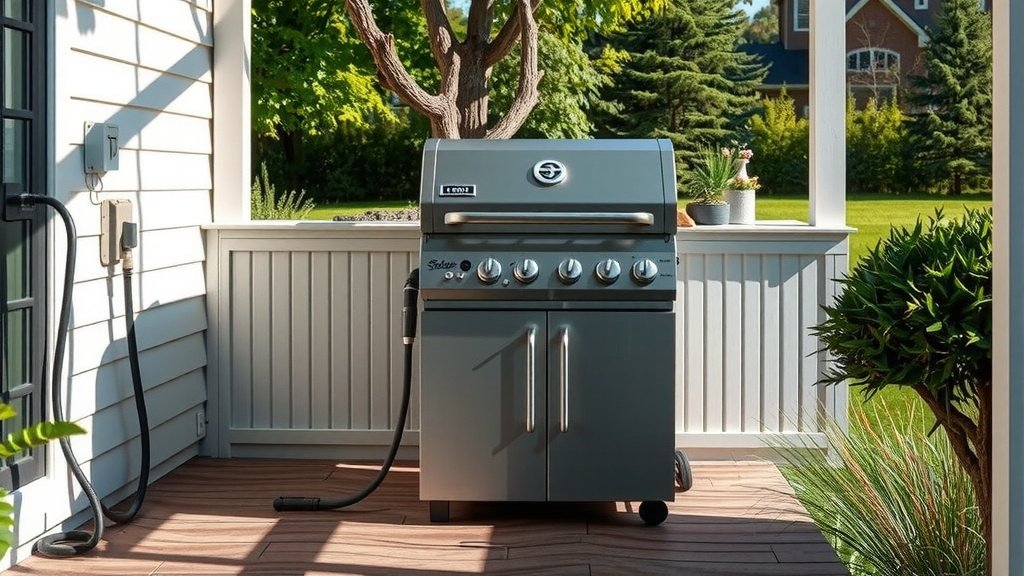
To connect your grill to natural gas, you must first ensure your grill is designed for natural gas or has a conversion kit, then shut off your home’s main gas supply, and use a certified quick-connect hose to link to a dedicated outdoor natural gas line, followed by a crucial leak test.
Always prioritize safety by understanding the steps, gathering the right tools, and knowing when to call a certified professional for gas line work to avoid hazardous situations.
- Always prioritize safety: Turn off your main gas supply before starting any work.
- Verify grill compatibility: Ensure your grill is factory-ready for natural gas or has an official conversion kit.
- Gather the correct tools and certified quick-connect hose.
- Connect to a dedicated outdoor natural gas line, often requiring professional installation.
- Perform a thorough leak test with a soap and water solution before lighting the grill.
How To Connect Grill To Natural Gas?
Connecting your grill to natural gas means saying goodbye to propane tank refills. It offers a constant fuel source right from your home. This guide will walk you through the essential steps to get your natural gas grill running safely.
Why Connect Your Grill to Natural Gas?
Imagine never running out of fuel mid-cookout. Natural gas offers an unlimited supply. It also means no more heavy propane tanks to haul around. This can really improve your grilling experience, making it smoother and more convenient.
Many grill owners appreciate the consistent heat and lower cost per use compared to propane. We found that natural gas often burns cleaner too. It’s a popular choice for those with established gas lines (Consumer Reports).
Is Your Grill Natural Gas Ready?
Not all grills are built the same. A propane grill cannot simply hook up to a natural gas line without changes. Natural gas requires a different pressure and burner orifice size.
Check your grill’s manual. It will clearly state if it’s a natural gas model or if it can be converted. If it’s a propane grill, you’ll need a specific natural gas conversion kit from the manufacturer. Trying to convert without the right kit is extremely dangerous.
Safety First: Your Top Priority
Working with gas lines demands respect and extreme caution. Your safety and the safety of your family depend on careful work. Any mistake can have severe consequences, including leaks or explosions.
Before touching any gas line, always know where your main gas shut-off valve is. We found that this is the most important first step (National Fire Protection Association). Never hesitate to call a professional if you feel unsure about any step.
Tools and Materials You’ll Need
Preparation is key for any home project. Having the right tools makes the job easier and safer. Here’s a list of what you will likely need:
- Adjustable wrenches or pipe wrenches
- Pipe thread sealant (gas-rated, PTFE tape is ideal)
- Natural gas grill conversion kit (if converting)
- Natural gas quick-connect hose kit (CSA certified)
- Soap and water solution (for leak testing)
- Safety glasses and work gloves
Locating Your Natural Gas Line
You’ll need an existing outdoor natural gas line near your grilling area. This line should have a shut-off valve. If you don’t have one, or if it’s too far away, this is definitely a job for a licensed plumber or gas technician.
Many experts say that extending a gas line or creating a new tap is complex work. It requires specific codes and permits. Do not attempt this unless you are a qualified professional (International Plumbing Code).
The Connection Process: Step-by-Step
Once you’ve verified your grill and have your tools, you can begin the connection. Remember, patience and precision matter here. Rushing can lead to problems.
Shutting Off the Gas Supply
This step is non-negotiable. Find the main gas shut-off valve to your house. Turn it off completely. You want zero gas flowing while you make your connections. Don’t skip this. Is the valve completely off? Double-check!
This is often a lever you turn ninety degrees or a knob you rotate until it’s closed. We found that proper shut-off is the single most critical safety step before any gas work.
Installing the Quick-Connect Fitting
Your outdoor gas line should have a shut-off valve. Attach the quick-connect fitting to this valve. Apply pipe thread sealant to the threads before tightening. Make sure it’s snug, but do not overtighten, which can damage threads.
Connecting the Natural Gas Hose
Now, connect one end of your CSA-certified natural gas hose to the quick-connect fitting. The other end goes to your grill’s natural gas inlet. Again, use thread sealant if required by the fittings. You’ll hear a “click” when the quick-connect is properly engaged.
Checking for Gas Leaks
This is arguably the most important step after making the connections. A leak can be very dangerous. Never assume your connections are perfect without checking.
Turn your main gas supply back on slowly. Then, with the grill’s gas valve off, open the quick-connect valve to allow gas to flow to the hose. Mix a solution of dish soap and water. Apply this soapy mixture generously to all new connections using a brush or spray bottle.
Watch for bubbles. Persistent bubbling indicates a leak. If you see bubbles, immediately turn off the gas supply and re-tighten the connection. Repeat the soap test until no bubbles appear. Can you really afford to skip this? No, you can’t!
Testing Your New Setup
After a successful leak test, you are ready to fire up the grill. Light your grill as you normally would. Observe the flame. It should be blue with yellow tips, indicating proper combustion. If the flame is mostly yellow or uneven, turn off the gas and consult your grill’s manual or a professional.
When to Call a Professional
If you have any doubt, concern, or lack experience with gas work, call a licensed professional. This includes tasks like:
- Installing a new gas line.
- Converting a propane grill if the kit instructions are unclear.
- If you detect a gas leak you can’t fix.
- If you smell gas or have any concerns about safety.
It’s always better to be safe and spend a little extra for peace of mind. Many homeowners prefer professionals for initial gas line setup.
Maintenance Tips for Your Natural Gas Grill
Once connected, regular maintenance keeps your grill working great. Check your hose for cracks or wear periodically. Clean your grill burners and grates often. This ensures optimal performance and safety for years to come.
Many experts advise checking connections seasonally (NFPA). Make sure the quick-connect isn’t corroded. A well-maintained grill cooks better and lasts longer, right?
Common Pitfalls to Avoid
Here’s a quick overview of things to watch out for:
| Pitfall | How to Avoid It |
|---|---|
| Using incorrect gas type | Verify grill is NG-ready or converted properly. |
| Not shutting off gas | Always turn off main gas supply first. |
| Skipping leak test | Perform thorough soap and water test on all connections. |
| Overtightening fittings | Tighten snugly, but avoid damaging threads. |
| Using uncertified parts | Only use CSA-certified hoses and fittings. |
Conclusion
Connecting your grill to natural gas can truly change your outdoor cooking experience. Remember that safety, proper tools, and careful execution are the cornerstones of this project. Always prioritize turning off the gas, performing a thorough leak test, and recognizing when professional help is needed. Enjoy your endless supply of fuel and many delicious grilled meals!
Can I use a natural gas grill indoors?
No, natural gas grills are designed exclusively for outdoor use. They produce carbon monoxide, which is extremely dangerous in enclosed spaces and requires proper ventilation. Always operate your grill in a well-ventilated outdoor area.
How far can my natural gas grill be from the gas line?
The distance is limited by the length of your CSA-certified natural gas hose. These hoses come in various lengths, typically up to 20 feet. Longer hoses can sometimes affect gas pressure, so always check your grill’s manual for recommended lengths and use only approved hoses.
What if I smell gas after connecting my grill?
If you smell gas, immediately turn off the gas supply at the main valve and at the grill. Do not light the grill or any other ignition source. Evacuate the area, and call your gas utility company or a licensed plumber immediately. This indicates a serious leak that needs professional attention.
Do natural gas grills cook differently than propane grills?
For most home grilling, the difference in cooking is negligible. Natural gas and propane both provide clean-burning fuel for consistent heat. Any perceived difference often relates more to the grill’s design and features rather than the fuel source itself (Food Network Kitchen).
Is a natural gas quick-connect safe?
Yes, a proper quick-connect fitting, when installed correctly and maintained, is very safe. It allows for easy and secure connection and disconnection of your grill. Always ensure it’s a CSA-certified product, and perform regular leak checks to confirm its integrity.
