
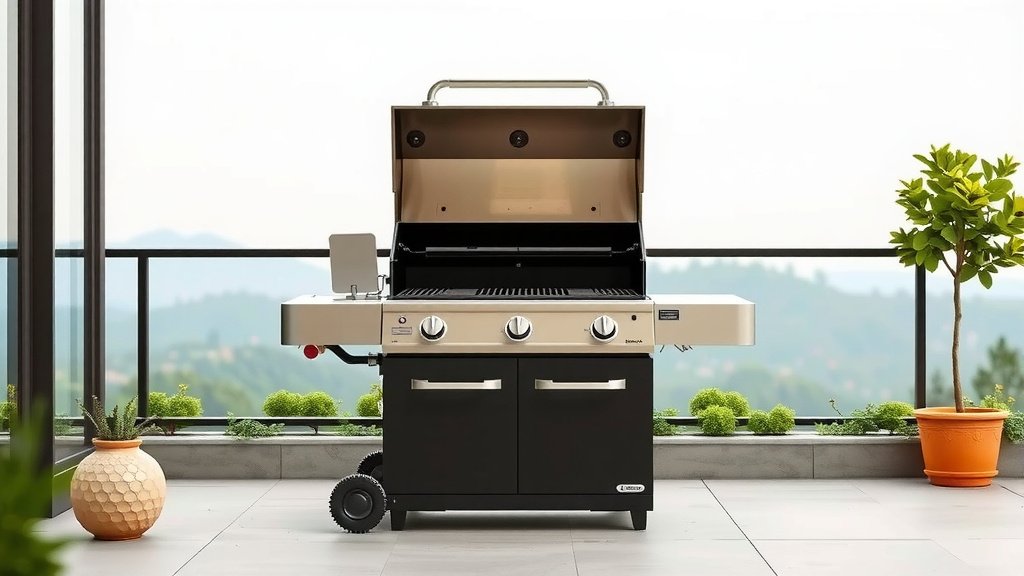
To start a propane grill safely, first ensure the lid is open, then connect your propane tank firmly to the grill’s regulator.
Next, slowly open the tank’s main valve all the way, push and turn one burner knob to HIGH, and press the ignition button to light it.
TL;DR:
- Always open the grill lid before starting for safety.
- Check your propane tank and connections for leaks.
- Slowly open the tank valve fully to prevent gas flow issues.
- Ignite burners one at a time, then preheat the grill.
- Regular maintenance keeps your grill working great.
How To Start A Propane Grill?
Learning how to start a propane grill correctly is a simple process, ensuring both delicious food and safe operation every time you cook.
Follow these steps to get your grill ready for cooking your favorite meals without any fuss or worry.
Why Should You Use Propane Grills?
Propane grills offer quick heat-up times, letting you start cooking faster than charcoal options. They are also super convenient.
You get precise temperature control, making it easy to grill anything from delicate fish to thick steaks perfectly (USDA).
Many experts say propane grills are a clean-burning fuel source, producing less ash and smoke compared to charcoal.
Safety First: Essential Checks Before Starting
Before you even think about lighting a flame, a quick safety check is vital. This helps prevent any unexpected issues.
Taking a moment now can save you a big headache later, keeping your grilling experience enjoyable and safe.
Check Your Propane Tank
First, make sure your propane tank has enough fuel. Give it a gentle shake; a sloshing sound means there’s liquid propane inside.
Always inspect the tank for any visible damage or rust. A compromised tank needs replacing, we found.
Inspect Hoses and Connections
Look at your grill’s gas hose for cracks, kinks, or wear. These can lead to gas leaks, which is a serious risk.
Ensure all connections between the hose, regulator, and tank are tight and secure. You can use a soapy water test to check for leaks: bubbles indicate a problem.
Ensure Proper Ventilation
Always grill in a well-ventilated outdoor area. Never use a propane grill indoors or in enclosed spaces, like a garage.
Good airflow disperses gas vapors, preventing dangerous buildups. Safety is always your top priority.
Your Step-by-Step Guide to Starting a Propane Grill
You’ve checked everything, right? Good! Now let’s get that grill fired up for some amazing food.
Follow these steps closely, and you’ll be grilling like a pro in no time at all.
Step 1: Open the Grill Lid
This is a non-negotiable step. Always open your grill lid fully before turning on any gas.
Opening the lid prevents gas from accumulating inside the grill, which could cause a dangerous flare-up (NFPA).
Step 2: Connect the Propane Tank
Make sure the tank connection is finger-tight. Then, use a wrench to give it another quarter to half turn.
Don’t over-tighten, as this can damage the seal. A snug fit is exactly what you need here.
Step 3: Open the Propane Tank Valve
Slowly turn the main valve on top of the propane tank counter-clockwise until it’s fully open.
Opening it slowly helps prevent the grill’s safety device, called an OPD, from restricting gas flow.
Step 4: Turn On Burners to Light
Start with one burner. Push and turn the control knob for that burner to the HIGH position.
Immediately press the igniter button, usually a red or black button near the control knobs. Listen for a “whoosh” sound.
Step 5: Check for Ignition
Look through the grill grates to see if the burner has lit. You should see a flame.
If it doesn’t light within a few seconds, turn off the burner, wait a minute for gas to clear, and try again.
Step 6: Preheat Your Grill
Once the first burner is lit, you can turn on other burners to your desired temperature settings.
Close the grill lid and allow your grill to preheat for 10-15 minutes. This gets the grates hot and ready for cooking.
Troubleshooting Common Starting Issues
Sometimes, things don’t go exactly as planned. Don’t worry, many issues are easily fixed.
Here are some common snags you might hit and how to deal with them calmly.
When the Burner Won’t Light
If your burner isn’t lighting, first check if the propane tank valve is fully open. A partially open valve can restrict gas.
You might also have a clogged burner port. Many experts say a small wire brush can clear these blockages.
Dealing with Low Flame
A low flame often means the OPD (Overfill Prevention Device) on your tank has tripped. This happens if the tank valve opens too quickly.
To reset it, turn off all burners and the tank valve. Disconnect the regulator, wait 5 minutes, then reconnect and try starting slowly again.
| Grill Starting Problem | Possible Cause | Quick Fix |
|---|---|---|
| No Gas Flow | Tank valve not open; OPD tripped | Open tank valve fully; reset OPD |
| Burner Not Lighting | Clogged burner; faulty igniter | Clean burner ports; use manual light |
| Low Flame | OPD tripped; low propane level | Reset OPD; check tank fuel |
| Gas Leak Smell | Loose connection; damaged hose | Tighten connections; replace hose |
Propane Grill Safety Checklist
A quick mental run-through of these items ensures you’re ready for a safe and enjoyable grilling session.
Keep this checklist in mind every time you fire up your grill for peace of mind.
- Lid Open: Is the grill lid open before starting?
- Tank Full: Do you have enough propane in the tank?
- Connections Tight: Are all hoses and connections secure?
- No Leaks: Have you checked for any gas leaks?
- Ventilation Clear: Is your grilling area well-ventilated?
When to Replace Your Propane Tank and Parts
Propane tanks have a lifespan. We found that most tanks need re-certification or replacement every 10-12 years.
Always replace cracked hoses or regulators showing signs of wear immediately. Your safety depends on it.
Damaged grates or rusted burner tubes can also affect performance and safety. Consider swapping these out as needed.
Conclusion
Starting a propane grill is a straightforward process once you understand the basic steps and safety precautions.
By following this guide, you can confidently light your grill, knowing you’ve taken all the necessary measures for a safe and successful cooking experience.
Enjoy those grilled meals and make lasting memories with friends and family!
How do I know if my propane tank is full?
You can tell by lifting it; a full 20-pound tank weighs about 37-40 pounds. Another method is to pour warm water down the side; where it condenses, the tank is empty.
What if my grill igniter isn’t working?
If your igniter fails, you can manually light the burner with a long grill lighter or a match holder. Always ensure the gas is on and the lid is open before lighting.
Why does my propane grill emit a strange smell?
A strong gas smell indicates a leak. Turn off the tank valve immediately, disconnect it, and perform a soapy water test on all connections to find the source.
How often should I clean my propane grill?
It’s best to clean your grill grates after every use. A deeper clean of burner tubes and the cookbox is recommended two to three times per grilling season for optimal performance.
Can I use a propane grill in windy conditions?
Yes, but be cautious. Strong winds can make lighting difficult and affect temperature control. Position your grill to shield it from direct wind to maintain consistent heat.
