
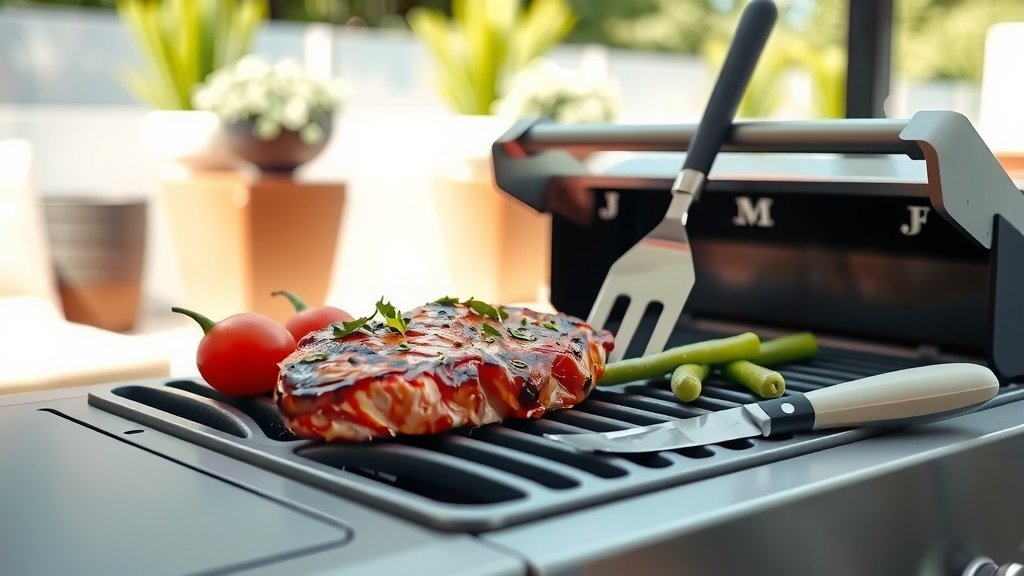
Cooking on a propane grill involves igniting the gas, preheating it to the desired temperature, and then placing your food over direct or indirect heat zones to achieve optimal doneness.
To cook effectively on a propane grill, you should always ensure your grill grates are clean, the propane tank has enough fuel, and you understand basic temperature management for different foods.
- Get started by checking your propane tank and cleaning your grill grates for safe, delicious cooking.
- Always preheat your grill thoroughly, allowing 10-15 minutes for it to reach the right temperature.
- Learn the difference between direct and indirect heat zones to cook various foods perfectly.
- Use a reliable meat thermometer to ensure food is cooked safely and to your liking.
- Remember to clean your grill after each use to keep it ready for your next meal.
How To Cook On A Propane Grill?
Cooking on a propane grill means using controlled flame to achieve delicious, evenly cooked food, often with those coveted grill marks.
It involves mastering temperature, timing, and direct versus indirect cooking methods for the best results.
Prepping Your Propane Grill For Cooking
Before you even think about putting food on the grates, a little preparation goes a long way.
Checking your propane tank is the first step; a simple gauge or the “hot water test” can prevent running out mid-cook.
Checking Your Propane Tank Level
Nobody likes a grill that runs out of gas halfway through dinner.
You can gently pour warm water down the side of the tank; the water will feel cool at the liquid level, showing you how much fuel is left.
Cleaning Grill Grates Before Use
Clean grates prevent sticking and give you those beautiful sear marks.
Many experts suggest using a stiff wire brush to scrub away any leftover food particles once the grill is hot (USDA).
Igniting Your Propane Grill Safely
Turning on your grill is straightforward, but safety is always important.
Always open the grill lid before turning on the gas and igniting; this prevents gas buildup.
Step-by-Step Ignition Guide
First, open the lid. Then, turn on the gas from the tank valve, usually counter-clockwise.
Next, turn one burner knob to high and press the igniter button until it lights.
Once one burner is lit, you can turn on the other burners as needed.
Mastering Grill Preheat Temperatures
Preheating is like getting a skillet hot on the stovetop; it’s essential for good cooking.
A properly preheated grill ensures food cooks evenly and prevents sticking.
Why Preheating Matters So Much
We found that preheating helps create a non-stick surface and gives you those desirable grill marks.
It also brings the entire cooking surface up to temperature, not just the area directly over the flames.
Recommended Temperature Ranges
Different foods need different temperatures. High heat is for searing, while medium is good for most meats.
Low heat works well for delicate items or finishing thicker cuts slowly.
Direct vs. Indirect Heat Zones
Understanding heat zones is a game-changer for versatility on your propane grill.
It allows you to cook a wide range of foods, from thin steaks to whole chickens.
| Cooking Method | Ideal For | Burner Setup |
|---|---|---|
| Direct Heat | Steaks, burgers, vegetables, quick-cooking items | Food directly over lit burners |
| Indirect Heat | Roasts, whole chicken, delicate fish, slow cooking | Food placed over unlit burners, lit burners on the sides |
When To Use Direct Heat
Use direct heat for foods that cook quickly, often in 20 minutes or less.
Think about thin cuts of meat, shrimp, or vegetables that you want to get a good char on.
When To Use Indirect Heat
Indirect heat is your friend for larger items that need longer cooking times without burning.
Many experts recommend this method for items like ribs, whole poultry, or thick roasts (Food Safety.gov).
Controlling Grill Temperature
The beauty of a propane grill is your ability to control the heat with precision.
This control lets you manage flare-ups and cook foods to perfection.
Using Burner Knobs Effectively
Adjusting the burner knobs is like adjusting the dial on your oven.
Lower the heat to slow cooking or raise it for a quick sear.
Monitoring With A Grill Thermometer
The thermometer on your grill lid gives you a general idea, but a good quality instant-read thermometer for food is essential.
Research often connects accurate temperature monitoring with food safety and optimal taste (CDC).
Cooking Different Foods On A Propane Grill
Your propane grill can handle almost anything you throw at it, given the right approach.
From sizzling burgers to tender veggies, the possibilities are vast.
- For steaks and burgers, sear on direct high heat, then move to indirect heat to finish if needed.
- Chicken breasts often benefit from direct heat to get color, then move to indirect to cook through.
- Fish cooks best over medium indirect heat to prevent sticking and drying out.
- Vegetables can be grilled directly over medium-high heat for a few minutes until tender-crisp.
Essential Grilling Safety Tips
Grilling is fun, but safety should always be your top priority.
A few simple rules keep everyone safe and your cooking enjoyable.
Keeping Your Grill Area Safe
Always grill in a well-ventilated area, away from structures, trees, or anything flammable.
Keep a fire extinguisher or a bucket of sand nearby, just in case.
Food Safety On The Grill
Use separate platters for raw and cooked meat to avoid cross-contamination.
Always use a meat thermometer to ensure poultry reaches 165°F and ground meats reach 160°F (USDA).
Post-Grill Cleanup Checklist
A clean grill is a happy grill, ready for its next adventure.
Cleaning right after cooking, while the grill is still warm, makes the job much easier.
Here’s a quick checklist for after you finish grilling:
- Turn off all burners and the propane tank valve.
- Once cool enough, scrape the grates thoroughly with a grill brush.
- Empty and clean the grease tray to prevent future flare-ups.
- Wipe down the exterior surfaces if desired, for a clean look.
- Cover your grill to protect it from the elements until next time.
Conclusion
Cooking on a propane grill is a rewarding experience that combines flavor, fun, and fresh air. By understanding the basics—from ignition and preheating to managing direct and indirect heat—you gain the confidence to grill almost anything.
Remember to prioritize safety, keep your grill clean, and always monitor food temperatures for the best results. With a little practice, your propane grill will become a constant source of delicious meals and outdoor memories for you and your loved ones.
How do I know if my propane grill is hot enough?
You can test the heat by holding your hand about 5 inches above the grate. If you can hold it there for 2-4 seconds, it’s high heat (450-650°F). For 5-7 seconds, it’s medium heat (350-450°F). For 8-10 seconds, it’s low heat (250-350°F). Always rely on a lid thermometer or infrared thermometer for precise readings.
Can I add wood chips to a propane grill for smoke flavor?
Yes, you can add wood chips to a propane grill for extra smoke flavor. The best way is to use a metal smoker box or wrap moist wood chips in foil with holes poked in it. Place this packet directly over a lit burner to create smoke, positioning your food on the indirect side of the grill.
What causes flare-ups on a propane grill?
Flare-ups are often caused by grease dripping onto the hot burners or heat deflectors. To reduce them, trim excess fat from meats, clean your grill grates regularly, and keep a spray bottle of water nearby to spritz minor flames. If a large flare-up occurs, close the lid, turn off the burners, and move food to indirect heat.
Is it better to cook with the grill lid open or closed?
It depends on what you’re cooking. Cook with the lid closed for thicker cuts of meat, poultry, or anything that needs to cook through, as it helps maintain consistent internal temperature and cooks faster. Keep the lid open for thin cuts, like shrimp or vegetables, that cook quickly and benefit from more direct exposure to the flame for searing.
How often should I clean my propane grill grates?
You should ideally clean your grill grates after every use. While the grill is still warm, use a stiff-bristled grill brush to scrape off any food residue. A deeper cleaning, involving removing and washing grates with soap and water, can be done every few weeks or months, depending on how often you grill.
