
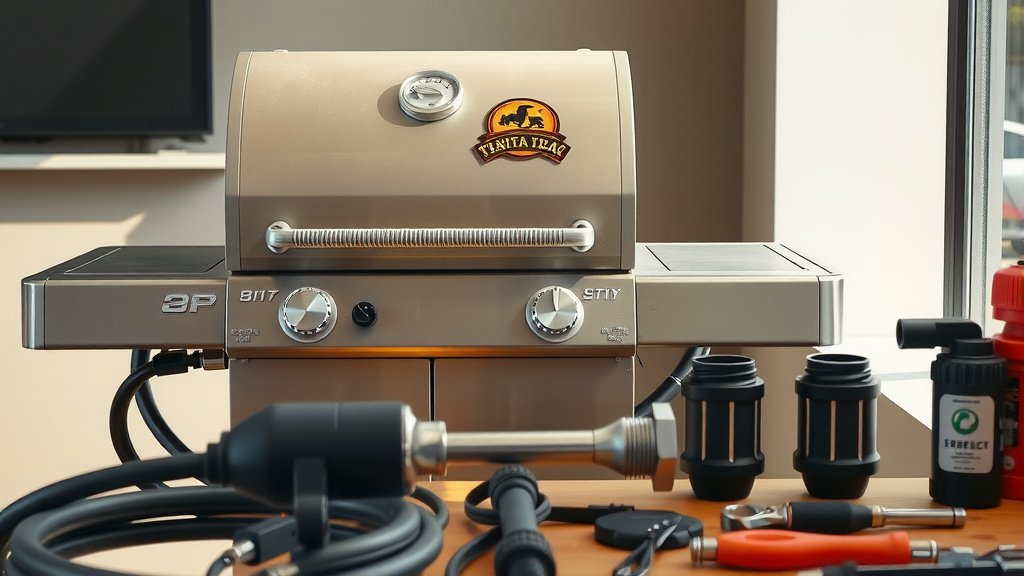
You can convert a propane grill to natural gas, but it involves more than just swapping fuel lines. It requires specific conversion kits and careful, often professional, installation to ensure safety and proper operation.
To successfully change a propane grill to natural gas, you must replace key components such as the gas regulator, orifice valves, and sometimes the hose, ensuring compatibility with your grill model.
TL;DR: Here’s the essential lowdown on converting your propane grill to natural gas:
- It’s possible, but not all grills are designed for conversion.
- You’ll need a specific conversion kit for your grill’s make and model.
- Key parts like orifices and regulators must be replaced for natural gas pressure.
- Safety is paramount; improper conversion risks gas leaks and fire hazards.
- For peace of mind, consider professional installation, especially with gas lines.
How To Change A Propane Grill To Natural Gas?
Changing your grill from propane to natural gas typically means you are looking for convenience. This process involves specific parts replacement and careful attention to detail. We found that most grill manufacturers offer conversion kits for their models.
Is Your Grill Convertible? A Key First Step
Before you get too excited, let’s hit the brakes for a moment. Not every propane grill can switch to natural gas. Some models are “dual-fuel ready,” meaning they just need a kit. Others are strictly propane. Checking your grill’s manual is your first, best move (Consumer Reports).
Finding Your Grill’s Specific Conversion Kit
Once you know your grill is convertible, you’ll need the right kit. These kits are not one-size-fits-all. Each grill manufacturer has its own conversion kit, tailored to its burner and valve systems. Using a generic kit can be dangerous, leading to uneven heat or gas leaks.
Why Make the Switch to Natural Gas?
Why even consider this change? Many people appreciate the constant fuel supply of natural gas. No more running out of propane in the middle of a cookout! You get to connect directly to your home’s gas line, offering endless grilling sessions without tank swaps. It’s like having a gas station right in your backyard.
Here’s a quick look at the main differences and why you might convert:
| Feature | Propane Grill | Natural Gas Grill |
|---|---|---|
| Fuel Source | Portable Tank | Home Gas Line |
| Pressure | Higher (around 11″ WC) | Lower (around 3.5″ WC) |
| Fuel Cost | Tank refills vary | Often cheaper per BTU |
| Convenience | Tank changes needed | Continuous fuel supply |
What Exactly Do You Need for the Conversion?
You can’t just connect a natural gas line to a propane grill. The gas pressures are different. Propane systems operate at higher pressure. Natural gas uses a lower pressure, so your grill needs parts adjusted to this difference. You’ll primarily need a natural gas conversion kit specific to your grill.
Essential Components in a Conversion Kit
A typical conversion kit will include a few vital parts. You’ll get new orifices, which are tiny nozzles that regulate gas flow to the burners. It also often includes a new natural gas regulator and sometimes a longer natural gas hose. We often find kits also contain conversion labels to mark your grill as natural gas ready.
The Step-by-Step Conversion Process: A General Guide
Ready to get your hands a little dirty? This process needs precision and care. Always read your specific grill’s manual alongside these general steps. Many experts advise turning off your home’s main gas supply before starting any work on the line.
Safety First: Always Prioritize This
Before touching anything, turn off the gas supply. If you’re connecting to your home’s main natural gas line, ensure the main shut-off valve is closed. Working with gas lines can be dangerous if not done correctly. We found that gas leaks are a real risk if parts are not sealed properly.
Here’s a practical checklist for your conversion project:
- Turn off all gas supplies.
- Gather all necessary tools (wrenches, screwdrivers, gas leak detector solution).
- Consult your grill’s owner’s manual.
- Ensure your conversion kit matches your grill model.
- Have a buddy for an extra pair of eyes and hands.
- Know when to call a professional.
Detailed Steps: Disassembly and Reassembly
First, disconnect the propane tank and remove the existing propane regulator and hose. Next, you will access the burner orifices. These are usually small brass fittings where the gas enters each burner. Carefully remove the propane orifices and install the new, smaller natural gas orifices from your kit. These smaller holes are key to adapting to natural gas’s lower pressure. Then, install the natural gas regulator and connect your new natural gas hose.
Leak Testing: The Non-Negotiable Step
After everything is connected, it’s time for the crucial leak test. Open your gas supply slowly. Mix some dish soap with water to make a bubbly solution. Apply this solution to all gas connections. If you see bubbles forming, you have a leak. Tighten connections until no bubbles appear. Do not skip this; it’s vital for your safety.
When to Absolutely Call a Professional
While some DIY enthusiasts might tackle this, connecting to a home gas line often requires a qualified plumber or gas technician. Many local codes actually require professional installation for new gas line connections. If you are not comfortable with any part of the process, or if your grill manual recommends it, bringing in an expert is the smartest choice. It’s always better to be safe than sorry when dealing with gas.
Common Mistakes to Avoid During Conversion
One common mistake is using the wrong conversion kit. This can lead to inefficient burning, safety hazards, or even damage to your grill. Another pitfall is forgetting to leak test all connections. Skipping this step is extremely dangerous. Also, never try to drill out orifices; they need to be precisely sized, and drilling can create rough edges that impede gas flow.
Benefits of Switching to Natural Gas
The main benefit is convenience, as we mentioned. No more heavy tanks to lug around or worry about running empty. Natural gas is often a more cost-effective fuel source over time, especially if you grill often. Plus, it’s a cleaner-burning fuel, which is a nice bonus for the environment (Environmental Protection Agency).
Conclusion
Converting your propane grill to natural gas can significantly upgrade your grilling experience, bringing unmatched convenience and potentially lower running costs. While it’s a manageable project for the mechanically inclined, remember that safety is the top priority. Always use the correct manufacturer-specific conversion kit, perform thorough leak tests, and consider professional help for any home gas line connections. Enjoy your continuous flow of fuel and endless grilling possibilities!
Can I convert any propane grill to natural gas?
No, not all propane grills are designed for conversion. You must check your grill’s owner’s manual to confirm if it is convertible and to identify the specific conversion kit required for your model.
Is it safe to convert my grill myself?
While possible for experienced DIYers, working with gas lines carries inherent risks. Improper conversion can lead to gas leaks and fire hazards. Many experts and local codes recommend professional installation, especially for connecting to your home’s main gas line, for optimal safety.
What is the main difference between propane and natural gas for grilling?
The primary difference lies in their pressure and heating values. Propane operates at a higher pressure and has a higher BTU content per cubic foot compared to natural gas, which operates at a lower pressure. This difference necessitates changing orifices and regulators during conversion.
How do I know if I have a gas leak after conversion?
After conversion, you must perform a leak test using a soapy water solution. Apply the solution to all gas connections. The appearance of bubbles indicates a gas leak, which requires tightening the connection until no bubbles are visible.
Will converting my grill void its warranty?
It’s possible. Many manufacturers state in their warranty terms that unauthorized modifications or conversions not performed with their approved kits or by certified technicians could void the warranty. Always check your grill’s warranty information before proceeding.
