To convert a propane grill to natural gas, you typically replace the propane gas orifices with smaller natural gas orifices and install a natural gas hose and regulator designed for your specific grill model.
This conversion allows your grill to safely connect to a home natural gas line, providing a steady and often more convenient fuel source for your outdoor cooking.
- You’ll need a specific conversion kit for your grill model.
- The main change involves swapping out gas orifices and adding a natural gas regulator.
- Always prioritize safety, including turning off gas and checking for leaks.
- If you’re unsure, professional installation is a smart choice.
- Converting can offer convenience and cost savings over time.
How Do You Convert A Propane Grill To Natural Gas?
Converting a propane grill to natural gas usually involves changing out the tiny gas orifices located at each burner and installing a natural gas hose with its appropriate regulator.
This process adjusts your grill to the lower pressure and different fuel characteristics of natural gas, allowing it to function correctly and safely.
Why Consider Converting Your Grill?
Many grill owners find natural gas appealing for its convenience. Imagine never running out of fuel in the middle of a cookout!
You get a continuous gas supply directly from your home, meaning no more trips to refill propane tanks. This also often leads to long-term cost savings on fuel.
Is Your Propane Grill Convertible?
Not all propane grills are designed for conversion. We found that some manufacturers build grills specifically for one fuel type or the other.
Attempting to convert a non-convertible grill can be risky and may void your warranty. So, how can you tell if yours is ready for the switch?
Checking Your Grill’s Compatibility
The first place to look is your grill’s owner’s manual. It will clearly state if your model is convertible and which specific kit you need.
If you can’t find the manual, many experts suggest checking the manufacturer’s website or contacting their customer service directly (National Fire Protection Association).
Safety Considerations First
Before doing anything, remember that you are dealing with flammable gases. This isn’t a task to take lightly.
Always shut off the gas supply at the source before you begin any work. Safety glasses and gloves are also good ideas.
Understanding the Core Difference: Orifices
The key to conversion lies in understanding the difference in gas pressure. Propane operates at a higher pressure than natural gas.
Because of this, propane burners use smaller orifices, or tiny holes, to regulate the gas flow. Natural gas needs larger orifices for the same heat output due to its lower pressure.
What’s in a Natural Gas Conversion Kit?
A typical conversion kit will include new orifices for each burner, a natural gas regulator, and often a longer natural gas hose designed to connect to your home’s gas line.
Some kits also come with tools or sealant, but always check what’s specific to your grill model.
Tools You’ll Need for the Task
Having the right tools makes the job much smoother. You likely have most of these in your toolbox already.
- Screwdriver set (Phillips and flathead)
- Adjustable wrench or open-end wrenches
- Pliers
- Pipe thread sealant (rated for gas)
- Leak detection solution (soapy water or commercial spray)
- Safety glasses and work gloves
The Step-by-Step Conversion Process
Ready to get your hands a little greasy? Remember, patience is your best friend here. Don’t rush any steps.
This process involves a few critical steps, from disconnecting the old fuel to ensuring the new connection is leak-free.
Prioritize Safety Measures
Before touching anything, turn off the gas supply to your propane tank completely. Disconnect the propane tank from the grill.
Make sure your grill is cool and has not been used recently. Working on a hot grill is a definite no-go.
Swapping Out the Propane Orifices
Access your grill’s burner area. You’ll usually need to remove the grates and burner covers. Locate the existing propane orifices, which are small brass fittings.
Carefully unscrew each propane orifice and replace it with the new, larger natural gas orifice from your conversion kit. Hand-tighten first, then use a wrench gently.
Connecting to Natural Gas
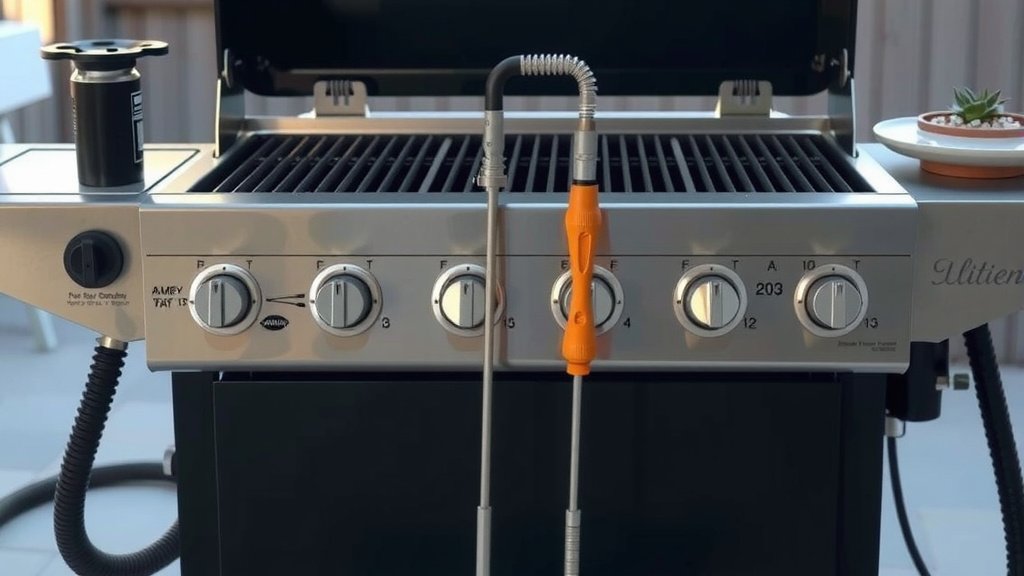
Attach the natural gas regulator to the grill’s manifold, if applicable. Then, connect the new natural gas hose to the regulator and to your home’s natural gas stub-out.
Use pipe thread sealant on all threaded connections to ensure a tight seal. Make sure all connections are snug, but avoid over-tightening.
Crucial Leak Testing
This step is non-negotiable! Turn on your home’s natural gas supply. Mix some dish soap with water to create a bubbly solution.
Brush or spray this solution onto all new connections. If you see bubbles forming, you have a leak. Tighten connections until the bubbles stop, then retest.
When to Call a Professional
If you feel uncomfortable at any point during the conversion, or if your grill manual advises professional installation, don’t hesitate to call an expert.
Working with gas lines requires precision and expertise, and a certified technician can ensure everything is installed correctly and safely (American Gas Association).
Propane vs. Natural Gas: A Quick Comparison
Understanding the fundamental differences can help you appreciate your new setup. Both offer great grilling experiences, but they have distinct traits.
Here’s a brief look at how they stack up for typical home grilling needs:
| Feature | Propane | Natural Gas |
|---|---|---|
| Fuel Source | Portable tanks | Direct home line |
| Pressure | Higher (11" WC) | Lower (3.5-7" WC) |
| Heat Output (BTU/cu ft) | Higher | Lower |
| Convenience | Tank refills needed | Continuous supply |
| Cost | Per tank refill | Monthly utility bill |
Enjoying Your New Natural Gas Setup
Once your conversion is complete and leak-free, you are ready to enjoy endless grilling. Natural gas burns cleanly and efficiently.
You might notice a slightly different flame appearance or heating pattern initially, but your food will taste just as delicious.
Conclusion
Converting a propane grill to natural gas can be a rewarding DIY project, offering the convenience of a continuous fuel supply for your outdoor cooking.
Remember to always prioritize safety, use the correct conversion kit for your grill model, and perform thorough leak tests.
If you’re ever in doubt, calling a qualified professional is always the safest option to ensure your grill operates flawlessly and securely for years to come.
FAQs
Is it cheaper to use natural gas than propane for grilling?
Generally, natural gas is often cheaper per BTU than propane over the long term. While the initial setup for natural gas might involve a conversion kit and line installation, the ongoing fuel costs tend to be lower and more consistent, avoiding the fluctuating prices of propane tanks.
Can all propane grills be converted to natural gas?
No, not all propane grills can be converted. Many manufacturers design specific models to be convertible, offering conversion kits. Always check your grill’s owner’s manual or the manufacturer’s website to confirm compatibility and to identify the correct conversion kit.
How long does it take to convert a propane grill to natural gas?
The actual conversion process itself, once you have all the parts and tools, typically takes about one to two hours for someone with basic mechanical skills. This time includes careful replacement of orifices, installation of the natural gas line, and essential leak testing.
What is the most important safety step when converting a grill?
The most important safety step is thoroughly checking all connections for leaks after conversion. Using a soapy water solution to spray all joints will reveal any gas leaks by showing bubbles. Do not operate the grill if you detect any leaks.
Will converting my grill void its warranty?
Converting your grill, especially if done incorrectly or using unauthorized parts, can potentially void its warranty. Always use the manufacturer-approved conversion kit and follow their instructions. If unsure, contact the manufacturer or have a certified technician perform the conversion.