
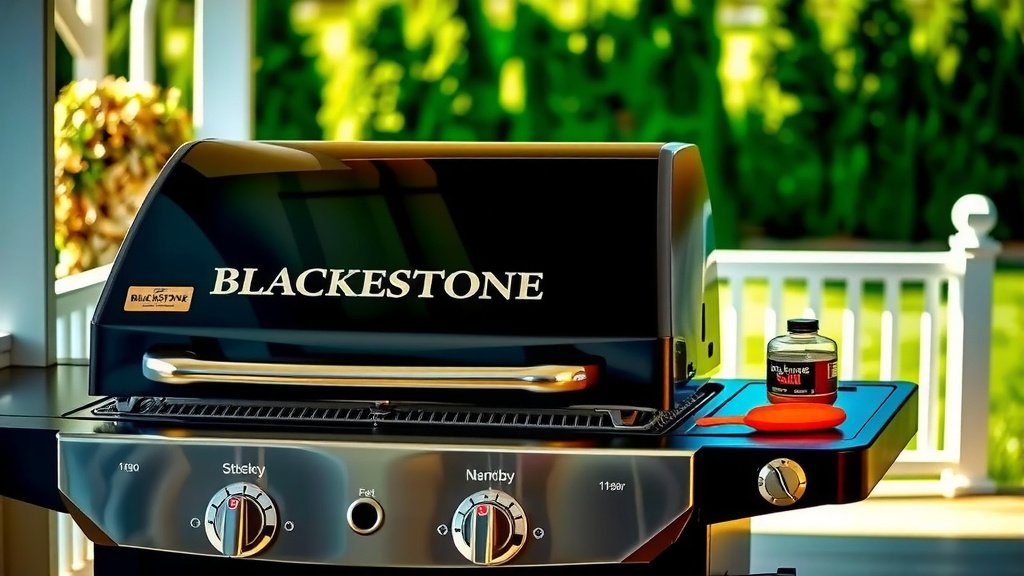
To season a Blackstone grill with oil, you apply thin layers of high smoke point oil like flaxseed or grapeseed oil onto a clean, hot griddle surface. This creates a durable, non-stick cooking layer that protects your grill.
The process involves spreading a small amount of oil, letting it smoke off completely, and repeating these steps several times to build up a robust seasoning.
Here’s the quick lowdown on seasoning your Blackstone grill:
- Clean thoroughly: Ensure your griddle is sparkling clean before you start.
- Choose the right oil: Opt for high smoke point oils such as grapeseed or flaxseed oil.
- Apply thin coats: Use very little oil, spreading it evenly across the hot surface.
- Burn it off: Let each layer of oil smoke completely until the griddle turns dark.
- Repeat several times: For the best results, apply 4-5 layers of oil.
How To Season A Blackstone Grill With Oil?
Seasoning your Blackstone grill with oil means creating a protective and non-stick layer on its cooking surface. You’ll apply thin coats of oil and heat it until it smokes off, building up a durable finish.
Why Is Seasoning Your Blackstone Grill So Important?
Think of seasoning as giving your grill a shield and a superpower. It’s not just an option; it’s essential for the best grilling experience.
Protection from Rust
Your Blackstone griddle is made of steel, which can rust if not protected. A properly seasoned surface creates a barrier, keeping moisture away and preventing corrosion (Blackstone Products Support).
Non-Stick Surface
Nobody enjoys food sticking to the griddle. Seasoning develops a smooth, slick surface that helps food slide off easily, making your cooking much more enjoyable and mess-free.
Flavor Enhancement
Over time, the seasoned layer absorbs flavors from your cooking. This contributes to a richer, deeper taste in your food, creating a distinct “griddle flavor” that you’ll love.
What Type of Oil Should You Use?
Choosing the right oil is a critical first step for successful seasoning. Not all oils are created equal when it comes to high heat.
High Smoke Point Oils
You need an oil that can withstand high temperatures without burning or breaking down too quickly. Oils with a high smoke point are best for forming a strong, lasting bond with the griddle.
Avoid Low Smoke Point Oils
Oils like olive oil or butter have lower smoke points. They will just burn and create a sticky mess, rather than a durable seasoned layer. This can lead to frustration and uneven seasoning.
Many experts we found suggest oils such as flaxseed oil, grapeseed oil, avocado oil, or Blackstone’s own seasoning and conditioning blend. These options perform wonderfully.
| Oil Type | Smoke Point (approx.) | Best For Seasoning? |
|---|---|---|
| Flaxseed Oil | 350°F (177°C) | Excellent (forms a hard, durable layer) |
| Grapeseed Oil | 420°F (216°C) | Very Good (neutral flavor, widely available) |
| Avocado Oil | 520°F (271°C) | Good (very high smoke point, mild flavor) |
| Vegetable Oil | 400°F (204°C) | Acceptable (common, easy to find) |
| Olive Oil | 375°F (190°C) | Not Recommended (lower smoke point, sticky) |
Preparing Your Grill for First Seasoning
Before you begin the seasoning ritual, your grill needs to be perfectly ready. A clean start ensures the best possible results.
Washing the Griddle
If your Blackstone is brand new, wash the cooking surface with warm, soapy water. Use a soft cloth or sponge to remove any factory residue or debris (Griddle Cooking Enthusiasts’ Guide).
Drying Completely
After washing, it’s crucial to dry the griddle thoroughly. Use paper towels or a clean cloth, then heat the griddle on low for a few minutes to evaporate any remaining moisture. This step prevents rust from forming.
Preheating for Readiness
Turn your grill burners to medium-high heat. Allow the griddle to heat up for about 10-15 minutes until it starts to change color, usually turning a slightly darker brown or blue hue. This prepares the metal to bond with the oil.
Step-by-Step Guide to Seasoning Your Blackstone Grill
Now for the main event! Follow these steps carefully to build a strong and lasting seasoning on your griddle.
Applying the First Thin Layer of Oil
Once your griddle is hot, turn off the burners. Pour a small amount of your chosen oil onto the griddle surface—think about a tablespoon or two. Use a paper towel held by tongs to spread the oil thinly and evenly across the entire surface, including the sides. The key is to apply a barely visible layer.
Letting it Smoke Off Completely
Turn the burners back on to high. The oil will begin to smoke. Let it continue smoking until it completely burns off and the smoke subsides. The griddle surface should turn a dark brown or black. This polymerization process is where the oil forms a hard, protective coating.
Repeating the Process (Multiple Coats)
After the first layer has smoked off, let the griddle cool slightly for a few minutes. Then, repeat the entire process: apply another thin layer of oil, spread it, and let it smoke off completely. We found that 4-5 coats are generally needed to achieve a robust, non-stick surface (Blackstone Owners Manual).
Here’s a quick checklist to help you stay on track:
- Clean your griddle thoroughly.
- Heat the griddle until it changes color.
- Apply a pea-sized amount of high smoke point oil.
- Spread the oil very thinly with paper towels.
- Let the oil smoke off completely on high heat.
- Repeat these steps 4-5 times for optimal seasoning.
Common Mistakes to Avoid When Seasoning
Even seasoned grill masters can make mistakes. Avoiding these common pitfalls will save you time and ensure a better seasoning.
Using Too Much Oil
A little oil goes a long way. Using too much oil creates a sticky, uneven, and sometimes gummy surface. This doesn’t help with non-stick properties and can actually hinder your seasoning efforts.
Not Cleaning Properly
Any leftover food particles or factory residue will get cooked into your seasoning. This leads to an inconsistent surface and potential sticking spots, diminishing the overall effectiveness of your efforts.
Skipping Coats
One or two coats simply aren’t enough to build a durable seasoning. Many experts recommend at least 4-5 coats to ensure a strong, long-lasting, and truly non-stick layer. Patience here means a better grilling future.
Maintaining Your Seasoning After Each Cook
Your seasoning isn’t a “set it and forget it” kind of deal. Proper care after every use helps to preserve and improve it.
Scraping and Wiping
After cooking, while the griddle is still warm, scrape off any food debris with a metal scraper. Then, wipe the surface clean with paper towels. This prevents food from hardening on the griddle and damaging the seasoned layer.
Light Oil Reapplication
Once clean, apply a very thin layer of cooking oil, like vegetable or grapeseed oil, to the warm surface. This acts as a protective shield until your next cook, helping to maintain the non-stick finish and prevent rust.
Proper Storage
Always cover your Blackstone grill when not in use. A griddle cover protects it from moisture, dust, and elements that could compromise your seasoning. This simple step helps to extend the life of your griddle.
When Should You Re-Season Your Grill?
Even with excellent maintenance, your griddle will occasionally need a little extra love. Knowing when to re-season keeps your cooking surface in top condition.
Appearance Changes
If you notice light spots, rust, or an uneven color developing on your griddle, it’s a clear sign. These changes indicate that your existing seasoning layer is breaking down and needs to be repaired or refreshed.
Food Sticking
When food starts to stick consistently, even after proper cleaning and oiling, your seasoning might be compromised. This is your griddle telling you it needs a full re-seasoning to regain its non-stick properties.
After Heavy Cleaning
Sometimes, tough messes require a more aggressive cleaning, like using soap and water or even scrubbing. After such a deep clean, it’s essential to re-season the affected areas to restore their protection.
Conclusion
Seasoning your Blackstone grill with oil is a fundamental step to ensure its longevity and provide a superior cooking experience. By selecting the right oils, applying thin layers, and patiently allowing each coat to smoke off, you build a durable, non-stick surface. Remember that ongoing maintenance and occasional re-seasoning are key to keeping your griddle performing at its best for years to come. Enjoy those griddle-cooked meals!
What if my Blackstone griddle gets sticky after seasoning?
If your griddle feels sticky, you likely applied too much oil in one of your layers. The solution is to heat the griddle to a high temperature and scrape off the sticky residue. Then, apply very thin coats of oil, ensuring each layer smokes off completely before adding the next.
Can I use butter or olive oil for seasoning?
No, you should avoid using butter or olive oil for initial seasoning. These oils have lower smoke points and will likely burn, creating a sticky, gummy residue rather than a hard, protective seasoned layer. Stick to high smoke point oils like grapeseed or flaxseed oil.
How many layers of oil do I need for initial seasoning?
For initial seasoning, we recommend applying at least 4 to 5 very thin layers of oil. Each layer must smoke off completely before you apply the next. This builds a robust, durable, and non-stick surface that will serve you well for cooking.
Do I need to clean my Blackstone grill with soap after every use?
No, generally you should avoid using soap after every use as it can strip away your seasoning. After cooking, simply scrape off food debris with a griddle scraper, then wipe the surface clean with paper towels. Finish with a very light coat of cooking oil.
My griddle has some rust spots, what should I do?
If you find rust spots, don’t worry! You can usually remove them by scrubbing the affected area with a grill brick or steel wool. Once the rust is gone, clean the area thoroughly, and then perform a full re-seasoning on that part of the griddle to restore its protection.
