
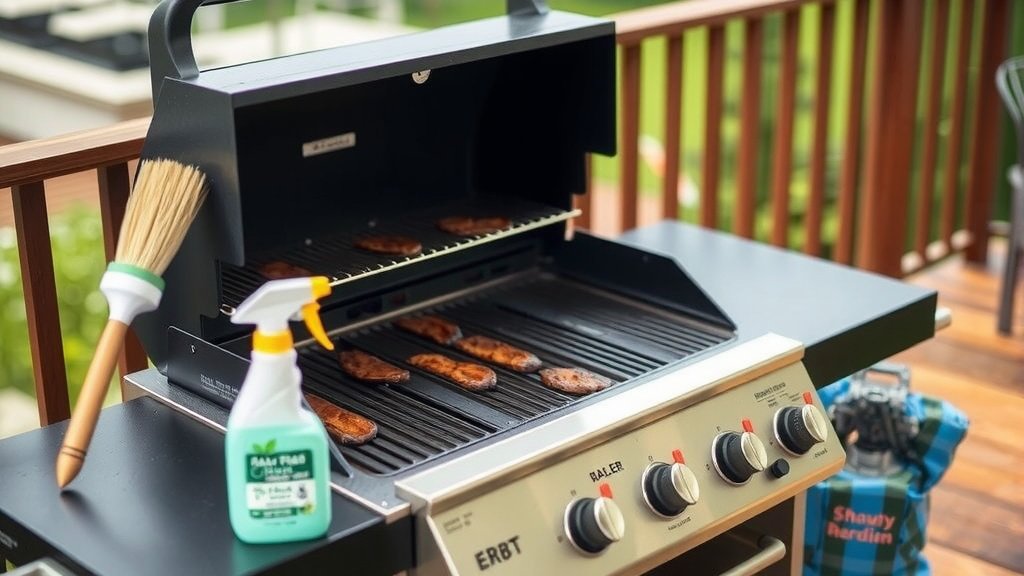
To clean a BBQ grill effectively, you primarily need a sturdy grill brush, a good scraper, and a reliable cleaning solution like warm soapy water or a vinegar-baking soda paste.
For tough grime, you might also use commercial grill cleaners, but always prioritize safety gear like heavy-duty gloves when tackling your BBQ grill.
- Scrape off loose debris while the grill is warm for easier removal.
- Use a grill brush, either bristled or bristle-free, to scrub the grates thoroughly.
- Natural solutions such as vinegar, baking soda, lemon, and salt are effective for many cleanups.
- Commercial cleaners offer extra power for heavy grease but demand careful handling and safety precautions.
- Always ensure your grill is cool to the touch and wear protective gloves throughout the cleaning process.
What To Clean A BBQ Grill With?
You can effectively clean a BBQ grill with essential tools like a grill brush, scraper, and warm soapy water, often paired with natural solutions like vinegar or baking soda for a thorough job.
For stubborn grease, consider specialized commercial grill cleaners, always remembering to follow safety guidelines and protect yourself.
Ah, the joy of a perfectly grilled meal! But what about the aftermath? A dirty grill can spoil future cooking experiences, right?
Cleaning your BBQ grill might seem like a chore, but it’s a vital step for delicious, safe, and long-lasting grilling.
Let’s walk through the best ways to get your grill sparkling clean, making every cookout a success for you.
Why Cleaning Your Grill Matters So Much
Imagine biting into a juicy steak, only to taste last week’s burnt bits. Not ideal, is it?
Regular cleaning keeps your food tasting pure, free from old residue and unpleasant flavors. It’s all about a fresh start for every meal.
Beyond taste, a clean grill promotes even cooking by preventing hot spots caused by clogged grates. Consistent heat distribution means perfectly cooked meals every time.
Many experts, including those focused on food hygiene, point to cleaning as key for preventing bacteria buildup (USDA Food Safety and Inspection Service). Nobody wants unwelcome guests at their BBQ.
Essential Tools for a Sparkling Grill
Think of your cleaning toolkit as your trusty sidekicks. Having the right gear makes all the difference for you.
You wouldn’t tackle a carpentry project without a hammer, would you? The same goes for proper grill cleaning.
The Mighty Grill Brush
Your grill brush is often your first line of attack. Traditional brushes have wire bristles, which are great for scraping.
However, some research highlights concerns about bristles breaking off and getting into food. It’s a real worry for many grill masters, as we found.
Alternatively, consider bristle-free options like coiled wire, abrasive pads, or even grill stones. These can be safer, removing that worry about loose metal bits.
Always inspect your brush before and after use, no matter the type. Safety first, right?
| Grill Brush Type | Pros | Cons | Best For |
|---|---|---|---|
| Wire Bristle Brush | Excellent for tough, baked-on grime; widely available. | Potential for bristles to detach and stick to food. | Heavy-duty cleaning, quick scrub. |
| Bristle-Free Brush | Safer, no risk of detached bristles; often uses coils or pads. | May require more effort for stubborn residue. | Safety-conscious cleaning, regular maintenance. |
| Grill Stone/Pumice | Conforms to grates, effective abrasive cleaning. | Can wear down quickly; creates dust/debris during use. | Deep cleaning, occasional heavy-duty tasks. |
Scrapers and Spatulas
Sometimes, a brush isn’t enough for those really stuck-on bits. That’s where a good scraper comes in.
A sturdy metal spatula or a dedicated grill scraper can lift stubborn, hardened food. Think of it as a chisel for your grill.
Heavy-Duty Gloves
Protecting your hands is not just smart; it’s essential. Heat, grease, and cleaning chemicals can be harsh.
Look for heat-resistant, chemical-resistant gloves. Your hands will thank you later for this simple precaution.
Buckets and Sponges
For mixing cleaning solutions and scrubbing, a couple of buckets are invaluable. One for soapy water, one for rinsing.
Sturdy sponges or abrasive pads work well for scrubbing the grates after the initial scrape. They pick up residue nicely.
Microfiber Cloths
Once everything is clean, you’ll want to dry and polish your grill. Microfiber cloths are perfect for this.
They leave a streak-free shine and soak up moisture, helping to prevent rust. A final wipe-down makes all the difference.
Natural Cleaning Solutions
You don’t always need harsh chemicals to get your grill clean. Mother Nature often provides some great helpers!
These natural options are usually safer for you and kinder to the environment. Plus, you probably have them in your pantry already.
White Vinegar and Baking Soda
This dynamic duo is a cleaning powerhouse. White vinegar is acidic, breaking down grease, while baking soda is an abrasive.
Mix equal parts vinegar and water in a spray bottle. Spray your grates, then sprinkle generously with baking soda. Let it sit for 20 minutes.
The fizzing action helps lift grime, making scrubbing much easier. Rinse well afterward; you’ll be surprised at the shine.
Lemon and Salt
Need a natural abrasive with a fresh scent? Lemon and salt are your friends. This method is surprisingly effective.
Cut a lemon in half, dip the cut side into a small plate of coarse salt, and scrub your grates. The acid from the lemon, combined with the salt’s abrasion, cuts through grime.
Onion Halves
This might sound a little unconventional, but it’s a classic trick for a reason. An onion can help clean your hot grill.
After your grill has heated up a bit (but not too hot to handle), skewer half an onion with a fork. Rub the cut side vigorously over the grates.
The onion’s natural acids and steam help to loosen burnt-on food. It’s like magic, but with vegetables!
Commercial Grill Cleaners
For those super tough, baked-on messes, sometimes you need to bring in the big guns. Commercial cleaners are designed for just that.
These products are formulated to dissolve grease and carbon buildup quickly. They save time when you face a truly neglected grill.
Always read the instructions carefully, as different brands have specific application methods. Ventilation is key when using these products.
Many experts recommend wearing eye protection and gloves, as these cleaners can be quite potent (Occupational Safety and Health Administration guidelines).
- Always work in a well-ventilated area.
- Wear sturdy rubber or chemical-resistant gloves.
- Consider safety glasses to protect your eyes.
- Apply the cleaner to a cool grill surface.
- Allow the product to sit for the recommended time.
- Rinse the grill thoroughly, multiple times, until no residue remains.
Step-by-Step Grill Cleaning Process
Ready to get your hands a little dirty? Follow these steps for a deep clean that will make your grill proud.
A systematic approach ensures you don’t miss any spots and get the most effective clean possible.
Pre-Cleaning Burn-Off
First, heat your grill to its highest setting for 10-15 minutes. This turns food residue into ash, making it easier to scrape.
It’s like giving your grill a little internal furnace to loosen everything up. Let it work its magic.
Scraping and Brushing
Once the grill has cooled slightly (but is still warm), use your scraper to tackle any large, stubborn chunks.
Follow up with your grill brush, moving it in short, firm strokes along the grates. Get into those grooves!
Soaking the Grates
For a really deep clean, remove the grates if possible. Soak them in a large bucket or utility sink.
A mixture of hot water and dish soap, or your vinegar-baking soda solution, works wonders here. Let them soak for at least 30 minutes, or even overnight.
Washing and Rinsing
After soaking, use a sponge or abrasive pad to scrub the grates thoroughly. The grime should come off much more easily.
Rinse them completely with clean water, ensuring all cleaning solution is gone. You want pure flavors, remember?
Drying and Oiling
Dry your grates immediately to prevent rust. A quick wipe with a paper towel or microfiber cloth does the trick.
Finally, lightly coat your grates with a high-heat cooking oil, like vegetable or grapeseed oil. This acts as a protective barrier and helps season the grates for your next cook.
Don’t Forget the Exterior!
A clean interior is great, but a sparkling exterior adds to the overall pride of ownership. Plus, it just looks better.
Wipe down the lid, side tables, and control panel with warm soapy water and a soft cloth. Stainless steel cleaners can bring back that showroom shine.
For painted surfaces, simple soap and water are usually best. Always rinse well to avoid streaks.
Safety First: Key Cleaning Precautions
Cleaning a grill involves heat, grease, and sometimes strong chemicals. Your safety should always be your top priority.
Never clean a hot grill with bare hands or without proper tools. Common sense goes a long way here.
Always ensure your grill is completely cool before starting any deep cleaning. This prevents burns and allows cleaners to work safely.
Wear those heavy-duty gloves we discussed. They are your first line of defense against burns and chemical irritation. Protecting your skin is vital.
If you’re using commercial cleaners, make sure you’re in a well-ventilated area. Open windows or clean outdoors to avoid inhaling fumes (EPA guidelines often mention this for chemical use).
Conclusion
Cleaning your BBQ grill might not be the most glamorous part of grilling, but it’s undoubtedly one of the most important. From enhancing food flavor to ensuring safety and extending your grill’s life, the benefits are clear.
Whether you choose natural solutions like vinegar and baking soda or opt for powerful commercial cleaners, consistency is key. Make cleaning a regular part of your grilling routine, and you’ll enjoy delicious, worry-free meals for years to come.
So, grab your tools, pick your cleaning method, and get ready to enjoy a perfectly maintained grill. Happy grilling!
How often should I clean my BBQ grill?
It’s best to do a quick clean after every use, scraping off any food residue while the grates are still warm. A deep clean, involving soaking and scrubbing, should be performed every 2-3 months, or more often if you grill frequently.
Can I use dish soap to clean my grill grates?
Yes, dish soap is generally safe and effective for cleaning grill grates. Mix it with warm water for a good degreasing solution. Always rinse the grates thoroughly afterward to remove all soap residue before your next cookout.
Are wire grill brushes safe to use?
While effective, wire grill brushes carry a small risk of bristles breaking off and potentially contaminating food. Many grill experts recommend regularly inspecting your brush for damage or considering bristle-free alternatives like coiled wire or abrasive pads for increased safety.
What’s the best way to prevent my grill grates from rusting?
To prevent rust, always dry your grill grates completely after cleaning. Then, apply a light coat of high-heat cooking oil (like vegetable or canola oil) before storing your grill. This creates a protective barrier against moisture.
Can I use an oven cleaner on my BBQ grill?
While some oven cleaners are powerful degreasers, they are often too harsh and not specifically formulated for grill materials. It’s usually safer and more effective to use products designed for grills or stick to natural cleaning agents to avoid damaging your grill’s finish or components.
