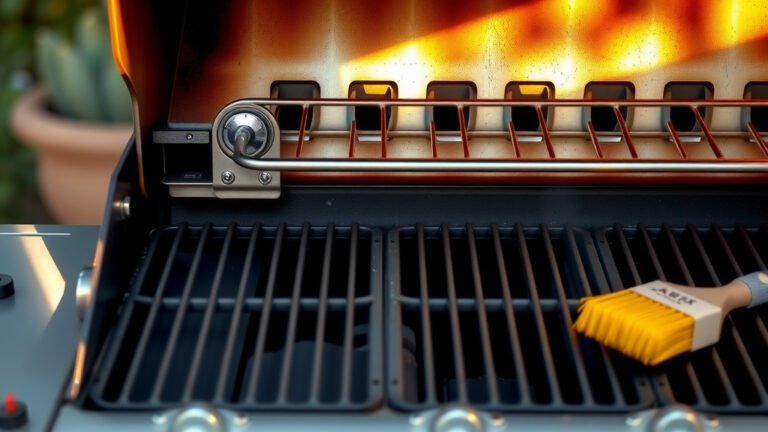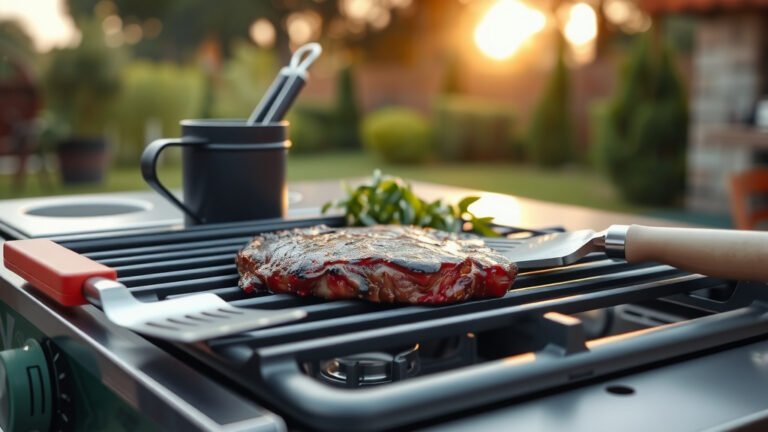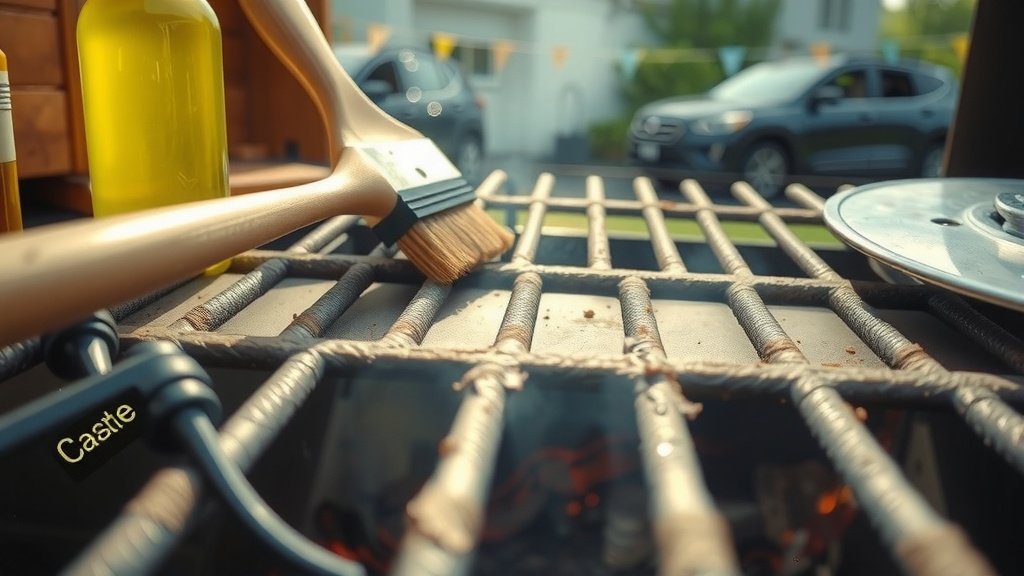
To season BBQ grill grates, first clean them thoroughly, then apply a very thin, even layer of high smoke point oil, and finally heat the grates above the oil’s smoke point to polymerize the oil into a protective, non-stick coating.
Repeat this oiling and heating process several times for the most effective, durable seasoning layer that helps prevent rust and improves food release.
Here’s a quick summary of how to season your grill grates:
- Give your grates a deep clean to remove any old residue.
- Choose an oil with a high smoke point, like grapeseed or flaxseed oil.
- Apply a thin, even coat of oil over all grate surfaces.
- Heat your grill to a high temperature, allowing the oil to polymerize and bond.
- Repeat the oiling and heating cycle a few times for a stronger seasoning.
How To Season BBQ Grill Grates?
Seasoning your BBQ grill grates creates a durable, non-stick surface and protects them from rust. This simple process involves applying a thin layer of oil and baking it onto the metal.
Why Is Seasoning Your Grill Grates So Important?
Think of seasoning like giving your grill grates a protective shield and a better cooking surface. It’s not just a minor step; it’s key to happy grilling.
Preventing Rust and Corrosion
Bare metal, especially cast iron, is prone to rust when exposed to moisture and air. Seasoning creates a barrier that helps shield your grates from these elements. Many outdoor cooking experts agree this is a primary benefit.
It’s like waxing your car; you’re adding a layer of protection. This makes your grill grates last much longer, saving you money in the long run.
Creating a Natural Non-Stick Surface
Who likes food sticking to the grill? Nobody! A well-seasoned grate develops a natural non-stick property. This makes flipping burgers and chicken much easier.
Research into cooking surfaces shows that properly polymerized oil creates a smoother, less porous texture. This means less scrubbing and more enjoyable cooking for you.
What You Need Before You Start
Before you get cooking, gather your supplies. You won’t need much, but having the right tools makes the job smooth and simple.
Choosing the Right Oil
The type of oil you use makes a big difference. You need an oil with a high smoke point that will polymerize effectively. Polymerization is when the oil bakes onto the metal, hardening into a coating.
Culinary experts often suggest oils like grapeseed, flaxseed, canola, or vegetable oil. Flaxseed oil is highly recommended by many for its strong polymerization properties (America’s Test Kitchen).
| Oil Type | Smoke Point (Approx.) | Notes for Seasoning |
|---|---|---|
| Grapeseed Oil | 420°F / 215°C | Neutral flavor, good all-around choice. |
| Flaxseed Oil | 225°F / 107°C | Low smoke point, but forms a very hard, durable layer. Requires lower, slower heat initially. |
| Canola Oil | 400°F / 204°C | Common and affordable, good for general use. |
| Vegetable Oil | 400°F / 204°C | Similar to canola, a blend of different oils. |
| Avocado Oil | 520°F / 270°C | Very high smoke point, great but often more expensive. |
Tools for the Job
You’ll want a sturdy grill brush, some paper towels or a clean cloth, and a pair of tongs. These simple items will help you apply the oil safely and evenly.
Make sure your grill brush is in good condition. You don’t want bristles breaking off onto your cooking surface.
Step-by-Step Guide to Seasoning Grill Grates
Let’s get down to the actual seasoning process. It’s straightforward and will become second nature after a few times.
Clean Your Grates Thoroughly
Start with a clean slate. Any old food bits or grease will prevent the seasoning from bonding properly. Heat your grill to a high temperature for about 15 minutes.
Then, use your grill brush to scrape off all residue. Many experts say a clean, hot grate is the best foundation for seasoning.
Apply a Thin Layer of Oil
This is where precision helps. Dip a paper towel in your chosen oil. Using tongs, carefully wipe a very thin, even coat of oil over all surfaces of the grates. Make sure to get the sides and underside too.
Less is more here. Too much oil will create a sticky, gummy mess rather than a smooth, hard coating.
Heat It Up!
Close your grill lid and turn up the heat. You want to get the grates above the oil’s smoke point. For most oils, aim for around 350-450°F (175-230°C).
Let the grates cook for about 15-20 minutes. You might see some smoke; that’s the oil polymerizing, which is exactly what you want.
Repeat for Best Results
Allow the grates to cool slightly, but while they are still warm, apply another thin layer of oil. Then, repeat the heating process for another 15-20 minutes.
Many grill masters suggest doing this oil-and-heat cycle three to five times for a robust, long-lasting seasoning layer. Think of it like building up layers of paint, each one making the surface stronger.
Specific Considerations for Different Grate Materials
While the general process is similar, some materials appreciate a little extra attention.
Cast Iron Grates Need Extra Love
Cast iron is the most common material that benefits from thorough seasoning. It’s naturally porous and rusts easily. A good seasoning fills those pores and protects the metal.
We found that cast iron grates often need more initial seasoning layers. Don’t rush the process with them!
Stainless Steel Grates Benefit Too
While stainless steel resists rust better than cast iron, it still benefits from seasoning. It helps with food release and prevents tiny food particles from welding themselves to the surface.
You might not need as many layers as cast iron, but a couple of seasoning cycles will definitely improve your grilling experience.
Maintaining Your Seasoned Grates
Once seasoned, a little ongoing care keeps your grates in top shape. It’s about keeping that protective layer intact.
After each cook, while the grates are still warm, give them a quick scrape with your brush. Then, apply a very light coat of cooking oil before storage. This refreshes the seasoning.
Common Seasoning Mistakes to Avoid
Sometimes, what seems like a small error can lead to a sticky situation. Here are some pitfalls to sidestep:
- Using too much oil: A thick layer turns gummy and sticky, not hard and non-stick.
- Not heating hot enough: The oil won’t polymerize correctly if the temperature is too low.
- Not cleaning thoroughly: Food residue creates bumps and prevents even seasoning.
- Using low smoke point oils: These oils burn off before they can properly bond to the metal.
- Forgetting future maintenance: Seasoning isn’t a one-time job; it needs touch-ups.
Conclusion
Seasoning your BBQ grill grates is a fundamental step for any serious griller. It’s a simple process that makes a huge difference in your cooking and the longevity of your equipment. By following these steps, you create a robust, non-stick, and rust-resistant surface that will make your grilling sessions more enjoyable and your clean-up much easier.
Embrace the seasoning process, and your grill grates will thank you with years of delicious, perfectly cooked food. Happy grilling!
What kind of oil is best for seasoning grill grates?
The best oils for seasoning grill grates are those with high smoke points, such as grapeseed oil, canola oil, vegetable oil, or flaxseed oil. Flaxseed oil is particularly known for creating a very durable seasoning layer, though it has a lower smoke point.
How often should I season my grill grates?
You should initially season new grill grates thoroughly before their first use. After that, many grill experts recommend re-seasoning or performing a quick touch-up every few months, or whenever your grates start to look dry, rusty, or food begins to stick more often. Regular light oiling after each cook also helps maintain the seasoning.
Can I use cooking spray to season grill grates?
While cooking spray contains oil, it’s generally not recommended for initial seasoning. Cooking sprays often contain propellants and other additives that can leave a sticky residue rather than a hard, polymerized layer. It’s better to use pure high smoke point oil applied with a cloth for the most effective seasoning.
What happens if I don’t season my grill grates?
If you don’t season your grill grates, especially cast iron, they are much more likely to rust and corrode. Food will also stick to the unseasoned surface more easily, making grilling frustrating and cleanup difficult. The grates will likely wear out faster, requiring replacement sooner.
Should I season both sides of the grill grates?
Yes, for the most comprehensive protection and best performance, you should season both sides of your grill grates. This ensures uniform protection against rust and creates a non-stick surface on both the top and bottom, extending the lifespan of the entire grate.