
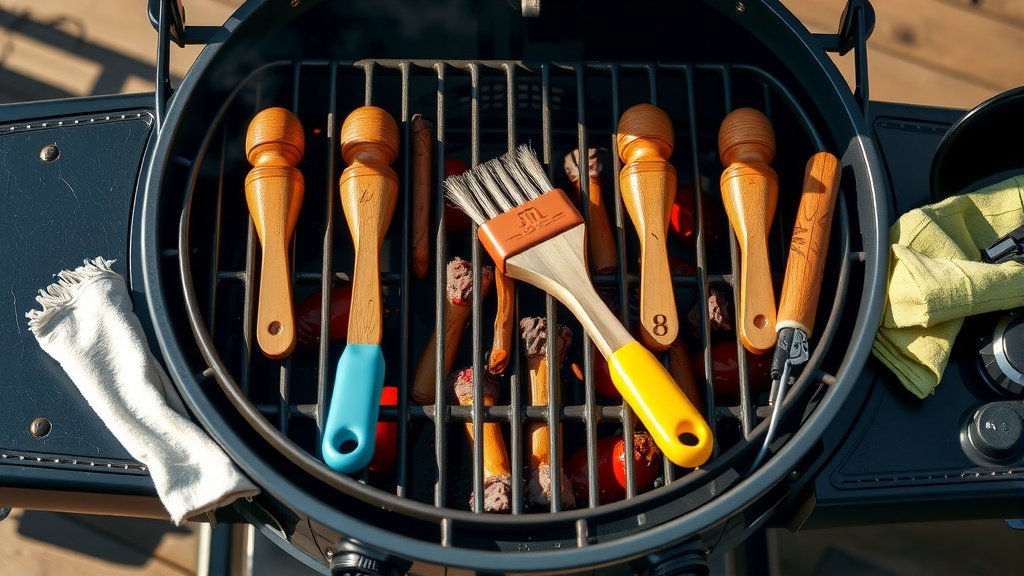
Cleaning your BBQ grill properly extends its lifespan and ensures your food tastes great. You can achieve this by scraping the grates after each use and performing a more thorough clean every few months.
Maintaining a clean BBQ grill prevents rust, avoids flare-ups, and keeps your food safe from old debris and bacteria.
- Clean your grill grates while they are still warm for the easiest removal of stuck-on food.
- Regularly empty the ash catcher and drip pan to prevent grease fires and blockages.
- Perform a deep clean of your entire grill at least once per grilling season or every three to four months.
- Always allow grill components to cool completely before handling them for deep cleaning.
- Season your clean grates with a high-smoke-point oil to protect against rust and non-stick performance.
How To Properly Clean A BBQ Grill?
Cleaning your BBQ grill properly involves a few key steps: scraping grates after every cookout, doing a deeper wash every few months, and caring for components like burners and the drip pan. This approach keeps your grill in top shape and ready for your next culinary adventure.
Why Bother Cleaning Your Grill?
You might wonder if all this cleaning is truly necessary. We found that a clean grill does more than just look good; it significantly impacts your cooking experience and your grill’s longevity. Think of it as caring for any other cooking appliance.
For Better Tasting Food
Imagine cooking fresh burgers on a surface covered in old, burnt scraps. Not very appetizing, right? A clean grill means your food picks up delicious smoky flavors, not the residue from last week’s charred chicken.
To Extend Your Grill’s Life
Grease, food particles, and moisture are enemies of your grill’s metal parts. Regular cleaning helps prevent rust and corrosion, keeping your investment working for many more years. Many experts say proper maintenance is key (Consumer Reports).
For Safer Cooking
Old food bits can harbor bacteria. Plus, excessive grease buildup can cause dangerous flare-ups. Keeping your grill clean reduces these risks, making your grilling experience safer for everyone.
Essential Tools You’ll Need
Before you start, gather your tools. Having the right equipment makes the job much easier and more effective. You likely have most of these items around your home already.
- A sturdy wire brush or scraper (nylon brushes are great for porcelain grates).
- Heat-resistant gloves to protect your hands.
- A bucket of warm, soapy water (dish soap works well).
- Sponges or microfiber cloths for wiping surfaces.
- A high-smoke-point cooking oil (like vegetable or canola oil) for seasoning.
- A small shop vacuum or brush for internal debris (for deep cleaning).
The Post-Cook Quick Clean
This is your most frequent cleaning step, and it takes just a few minutes after you’ve finished cooking. It’s the secret to preventing big clean-up headaches later on.
Hot Grates are Best
The best time to clean your grill grates is when they are still warm, but not scorching hot. The heat helps to loosen any food particles, making them easier to scrape off. Think of it like washing a warm pan.
Turn off your grill, let it cool for about 10-15 minutes, then get to scraping. Use your wire brush or scraper to remove all visible food debris from the grates. This simple action makes a huge difference.
Seasoning the Grates
After scraping, consider applying a thin layer of cooking oil to your grates. This “seasoning” step helps protect against rust and makes the grates more non-stick for your next cookout. It’s like seasoning a cast-iron pan.
The Deep Dive: Seasonal Cleaning
Every few months, or at the start and end of your grilling season, your grill deserves a more thorough cleaning. This goes beyond the grates and tackles the internal components. It’s like giving your car a full tune-up.
Disconnecting Gas Tanks (Safety First!)
For gas grills, your first and most vital step is to turn off and disconnect the propane tank or natural gas line. Safety always comes first when working with gas appliances. You wouldn’t clean your oven with it on, would you?
Removing and Soaking Grates
Take out your cooking grates and immerse them in a bucket of warm, soapy water. Let them soak for about 15-30 minutes. This helps soften any stubborn, baked-on grime, making it easier to scrub away.
Cleaning the Burner Tubes
Carefully remove the burner tubes. Use a small brush (a bottle brush or even an old toothbrush works) to gently clean the burner ports. You want to ensure there are no blockages, which can affect heat distribution. We found that clear ports mean even cooking.
Tackling the Heat Deflectors/Flavorizer Bars
These metal plates sit above the burners and catch drippings, turning them into smoky flavor. Scrape off any carbonized food with a putty knife or scraper. Wipe them down with a damp cloth. Check them for signs of rust or significant wear; replace them if they are too damaged.
Emptying and Cleaning the Drip Tray
This component catches grease and food drippings. If neglected, it can lead to dangerous grease fires. Pull out the drip tray, empty any accumulated grease, and wash it thoroughly with soap and water. Research often connects neglected drip trays with increased fire risk (NFPA).
Wiping Down the Exterior
Don’t forget the outside! Wipe down the lid and side tables with a mild cleaner or warm soapy water. For stainless steel, a specialized stainless steel cleaner can help maintain its shine and prevent streaks. Many people find a clean exterior enhances the overall grilling experience.
Quick Checklist for Grill Maintenance
- Scrape grates after every use.
- Empty drip tray every 3-4 uses.
- Check burner ports monthly.
- Deep clean entire grill seasonally.
- Inspect hoses and connections annually.
What About Different Grill Types?
While the basics apply, cleaning routines can differ slightly based on your grill type. Each type has its own quirks you should consider.
Charcoal Grills
For charcoal grills, regularly remove all ash from the bottom bowl. Ash can retain moisture and promote rust if left sitting. Wash out the bowl with soapy water and ensure it dries completely before your next use. Many experts say complete ash removal is vital for charcoal grill longevity.
Electric Grills
Electric grills usually have non-removable heating elements. Wipe down the cooking surfaces with a damp cloth once cooled. Avoid submerging any electrical components in water. Always consult your owner’s manual for specific cleaning instructions for your model.
Common Cleaning Mistakes to Avoid
You want your grill to last, so steer clear of these common pitfalls. Avoiding them can save you time, money, and frustration.
One common error is neglecting regular cleaning. Putting off the small cleanup after each cook makes the big jobs much harder. Many grill owners learn this the hard way!
Another mistake is using overly harsh chemical cleaners. These can damage your grill’s finish or leave chemical residues that could transfer to your food. Stick to mild dish soap and water unless your manual suggests otherwise.
Finally, ignoring the drip tray or ash catcher is a big no-no. We found that clogged drip trays are a leading cause of grease fires. Make it a point to check and empty these regularly.
| Component | Cleaning Frequency | Method |
|---|---|---|
| Cooking Grates | After every use | Scrape while warm, season with oil |
| Drip Tray / Ash Catcher | Every 3-4 uses | Empty and wash with soap and water |
| Burners / Heat Deflectors | Every 3-4 months (deep clean) | Brush off debris, inspect for damage |
| Exterior Surfaces | Monthly or as needed | Wipe with mild cleaner and cloth |
| Interior (Lid, Firebox) | Every 3-4 months (deep clean) | Scrape, vacuum debris, wipe clean |
Conclusion
Cleaning your BBQ grill properly is a simple yet impactful habit. By following these steps for both quick post-cook cleanups and periodic deep dives, you protect your investment, ensure delicious, safe food, and make every grilling session a pleasure. It’s about more than just hygiene; it’s about making your grill an enjoyable, reliable part of your home for years to come. So, grab your brush, get cleaning, and enjoy the sizzle!
How often should I deep clean my BBQ grill?
You should deep clean your BBQ grill at least once per grilling season, or every three to four months, especially if you use it frequently. This prevents stubborn buildup and keeps all components functioning correctly.
Can I use a self-cleaning oven spray on my grill grates?
No, you should avoid using self-cleaning oven sprays or other harsh chemical cleaners on your grill grates. These products can contain strong chemicals that may damage the grates, leave behind harmful residues, or affect the taste of your food.
What should I do if my grill grates are severely rusted?
If your grill grates are severely rusted, it might be time to replace them. For minor rust, you can try scrubbing with a wire brush and a paste of baking soda and water, then rinse and season well. However, heavy rust can compromise food safety and grate integrity.
Is it necessary to oil the grates after every cleaning?
Yes, it’s highly recommended to lightly oil your grates after every cleaning. This creates a protective barrier that helps prevent rust and creates a non-stick surface, making your next cooking experience smoother and easier.
How do I clean the inside of my grill lid without damaging it?
To clean the inside of your grill lid, use a soft wire brush or a crumpled aluminum foil ball to gently scrape off any flaky carbon buildup. Then, wipe it down with a damp cloth and mild soapy water. Avoid abrasive sponges that could scratch the finish.
