
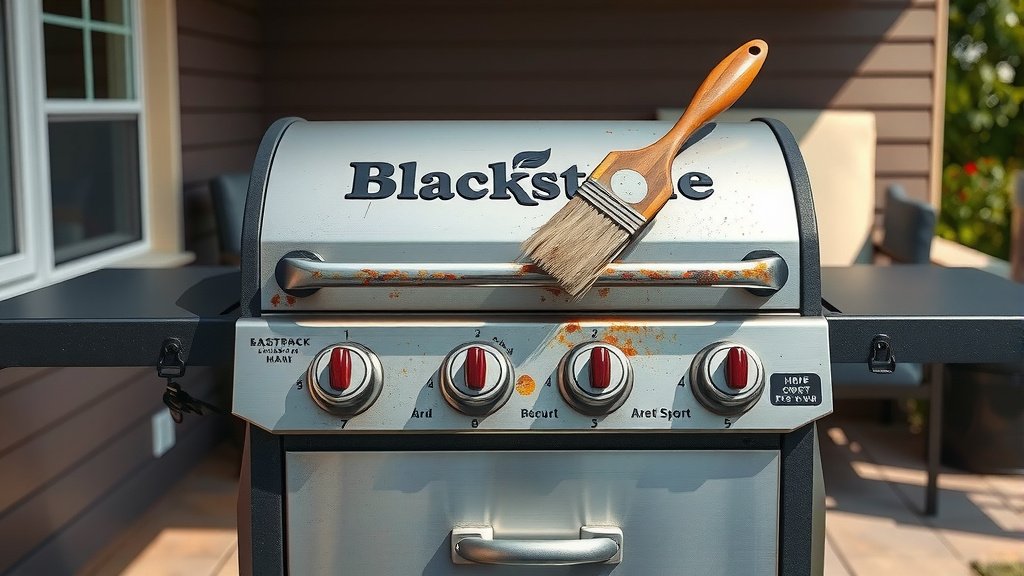
To get rust off your Blackstone grill, start by scraping loose debris, then apply a mild acid like white vinegar or cola to the affected areas, let it sit briefly, and vigorously scrub with a griddle scrubber or steel wool.
After scrubbing, rinse the griddle well with water, dry it immediately to prevent new rust, and then re-season the surface to protect it from future corrosion.
Here’s a quick summary of what you need to know about getting rust off your Blackstone grill:
- Your Blackstone griddle needs care to stay rust-free.
- Start by scraping away any loose rust and food bits.
- Use common household acids, like vinegar, to help break down rust.
- Always re-season your griddle after cleaning off rust to protect it.
- Prevention with proper seasoning and covering is key to avoiding rust long-term.
How To Get Rust Off Blackstone Grill?
You can effectively remove rust from your Blackstone grill using simple tools and household items, restoring its cooking surface to like-new condition with a bit of elbow grease.
The process usually involves cleaning, a mild acid treatment, scrubbing, and essential re-seasoning.
Why Does My Blackstone Rust?
Rust forms when the iron in your griddle’s steel reacts with oxygen and water. This chemical reaction creates iron oxide, which we see as rust.
Leaving your griddle exposed to rain or humidity can accelerate this process significantly. Even condensation from temperature changes can cause problems.
The Enemy: Surface Rust vs. Deep Rust
Not all rust is the same. You might see light surface rust, which looks like a reddish film.
This type of rust is often easy to remove. Deep rust, however, can pit the griddle surface and may require more effort (Blackstone Griddle Owners Manual).
What You’ll Need: Your Rust-Busting Arsenal
Before you begin, gather your supplies. Having everything ready makes the job smoother.
Think of it like preparing for a big cookout; good preparation makes for a better outcome.
- Griddle scraper or metal spatula
- White vinegar or a can of cola
- Griddle scrubbing pad or steel wool (#0 or #00)
- Paper towels or clean cloths
- Water
- High-heat cooking oil (flaxseed, grapeseed, or Blackstone seasoning blend)
- Rubber gloves (optional, but recommended)
Step-by-Step Guide to a Rust-Free Griddle
Let’s get that griddle looking great again. Follow these steps carefully, and you will be back to grilling in no time.
It’s a straightforward process, but attention to detail helps.
Step 1: Scrape Away Loose Debris
First, turn on your griddle to a low heat setting. This helps loosen any caked-on food or loose rust flakes.
Use your griddle scraper or a sturdy metal spatula to gently push off any larger pieces. You are aiming for a relatively clean surface to start.
Step 2: Apply a Griddle-Safe Acid (Vinegar or Cola)
Now, let’s tackle the rust itself. You will need something to help break it down.
White vinegar or even a can of cola can work wonders for this stage.
Using White Vinegar
Many experts say white vinegar is excellent for rust removal (Consumer Reports). It is a mild acid that reacts with rust.
Pour a generous amount of white vinegar directly onto the rusty areas. Let it sit for about 10-15 minutes, allowing it to penetrate the rust.
Cola for Stubborn Spots?
Some people find that cola also works because of its phosphoric acid content. Pour a can of cola over the rust spots.
Let it sit for a similar period, about 15 minutes. This can be a good option for really stubborn rust patches.
Step 3: Scrub, Scrub, Scrub!
This is where the real work begins. You need to apply some good old-fashioned scrubbing power.
The goal is to physically remove the rust that the acid has loosened.
The Power of a Griddle Scrubber
Grab your griddle scrubbing pad or steel wool. Start scrubbing the rusty areas vigorously.
You might see a dark, rusty slurry forming; that is the rust coming off. Keep going until the metal surface looks clear.
Step 4: Rinse and Dry Thoroughly
Once you are satisfied that the rust is gone, it is time to clean up the griddle.
Pour some water over the surface to rinse away the rust slurry and any remaining vinegar or cola. Wipe it clean with paper towels.
Immediately turn on the griddle to medium heat to completely dry the surface. Moisture is rust’s friend, so leave no damp spots.
Step 5: Season Your Griddle Again
This step is absolutely critical. After rust removal, your griddle’s protective seasoning layer is gone in the affected areas.
Without re-seasoning, new rust will appear very quickly. Pour a small amount of high-heat cooking oil onto the warm griddle.
Use paper towels to spread a thin, even layer across the entire surface. Let it smoke off completely, then repeat this process 3-4 times. This builds a new protective barrier.
Keeping the Rust Away: Prevention Tips
Once you have gone through the effort of removing rust, you definitely want to keep it from coming back. Prevention is much simpler than removal.
Think of it as routine maintenance for your favorite outdoor cooking appliance.
Regular Cleaning is Non-Negotiable
After every cook, clean your griddle. Scrape off food residue while the griddle is still warm.
A quick wipe-down prevents food particles from holding moisture against the surface. Many experts emphasize that daily cleaning prevents issues (Weber Grill Guide).
Proper Seasoning: Your Griddle’s Shield
A well-seasoned griddle is your best defense against rust. The oil polymerizes, creating a non-stick, rust-resistant barrier.
Regularly apply a thin coat of cooking oil after each clean-up. This keeps the seasoning layer strong and healthy.
Cover Up! Protection From Elements
Leaving your griddle exposed to rain, dew, or even just high humidity is an open invitation for rust.
Invest in a good-quality griddle cover. This protects it from the elements and keeps it dry. Store it indoors if possible during long periods of non-use.
Table: Rust Removal Methods Quick Comparison
| Method | Pros | Cons | Best For |
|---|---|---|---|
| White Vinegar | Affordable, readily available, effective. | Requires scrubbing, can smell strong. | General surface rust. |
| Cola | Phosphoric acid helps with tough rust. | Sticky residue, requires good rinse. | Stubborn, localized rust spots. |
| Griddle Scrubber/Steel Wool | Physical removal, very effective. | Requires effort, can be abrasive. | All rust types, essential step. |
Humidity’s Role in Rust Formation
Even if it doesn’t rain, high humidity in the air can cause rust. This is especially true in coastal areas or during humid summers.
We found that storing your griddle under a cover and ensuring it’s always well-oiled helps fight this invisible enemy. A dry environment is a rust-free environment.
Conclusion
Getting rust off your Blackstone grill does not have to be a daunting task. With the right tools, a little patience, and a bit of scrubbing, you can restore your griddle to its former glory.
Remember that the key steps are careful cleaning, a mild acid treatment, thorough scrubbing, proper rinsing, and most importantly, re-seasoning to protect your investment.
By following these guidelines and maintaining a routine of cleaning and seasoning, you will keep your Blackstone griddle ready for many delicious meals to come. Happy grilling!
How do I know if my griddle rust is too severe to remove?
If the rust has pitted the metal deeply, causing uneven surfaces or actual holes, it might be too severe. Surface rust, even extensive, can usually be scrubbed away. If the structural integrity seems compromised, replacement might be the only safe option.
Can I use harsh chemicals to remove rust?
We recommend avoiding harsh chemical rust removers. These can leave residues that are unsafe for cooking surfaces. Stick to mild acids like vinegar or cola, which are food-safe when thoroughly rinsed and followed by seasoning.
How often should I re-season my Blackstone after rust removal?
After removing rust, you should re-season your griddle immediately with at least 3-4 layers of high-heat oil. Then, after every subsequent use, apply a thin maintenance layer of oil to keep the seasoning strong and prevent new rust.
Will rust affect the taste of my food?
Cooking on a rusty griddle is not advised and can transfer a metallic taste to your food. Removing the rust ensures a clean, safe cooking surface that allows the true flavors of your food to shine.
Can a rusty griddle be dangerous to use?
While generally not immediately dangerous in terms of health risks from consuming small amounts of rust, a rusty griddle can lead to uneven cooking, food sticking, and further damage to the cooking surface. It is always best to remove rust before cooking.
