
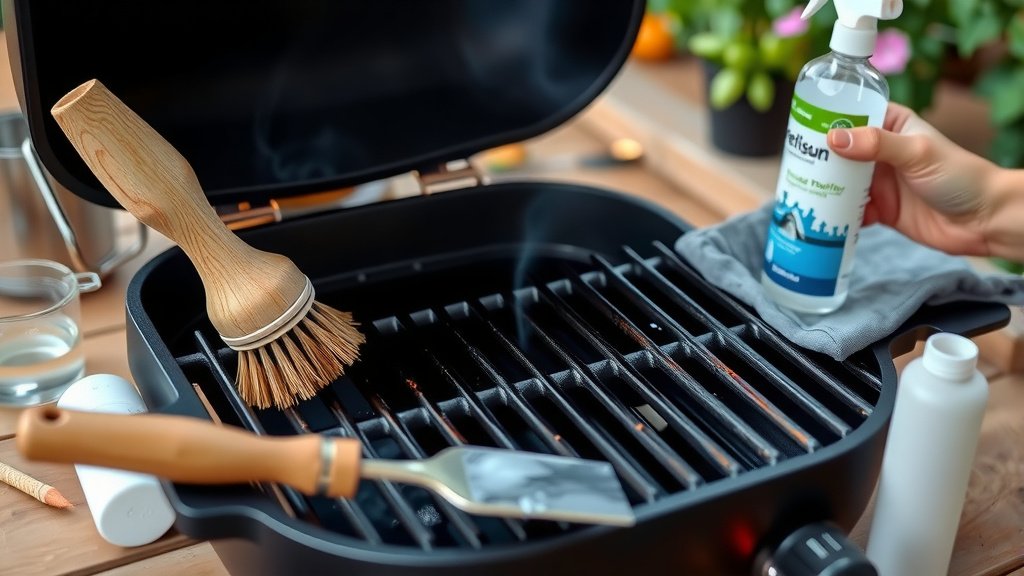
To get rust off a cast iron BBQ grill, you’ll need to remove the rust and then re-season the grates. This involves cleaning methods like using baking soda and vinegar or a wire brush, followed by applying a protective oil layer.
You can effectively tackle rusty cast iron grates with common household items or dedicated tools, restoring them for many more delicious cookouts.
Here’s the TL;DR for quickly removing rust from your cast iron grill grates:
- Start by scraping off loose rust with a wire brush.
- Apply a paste of baking soda and water, or a mix of vinegar and salt.
- Let it sit for a while, then scrub thoroughly.
- Rinse the grates completely and dry them immediately.
- Finally, season the clean grates with a high-smoke point oil to prevent future rust.
How To Get Rust Off Cast Iron BBQ Grill?
Removing rust from your cast iron BBQ grill is a manageable task that extends its life and keeps your food tasting great. It typically involves a few simple steps: cleaning, scrubbing, rinsing, drying, and re-seasoning.
Why Does Your Grill Get Rusty?
Cast iron is an amazing material for grilling. It heats evenly and holds that heat beautifully. But it’s also prone to rust if not cared for properly. Rust forms when iron reacts with oxygen and moisture. This can happen if your grill sits outside uncovered, or if you don’t dry your grates after cleaning them.
Think of it like this: a little bit of moisture is like an invitation for rust to start its party. The key is to keep those grates dry and protected. Many experts say a well-seasoned grate resists rust much better (Cook’s Illustrated).
Tools You’ll Need For Rust Removal
Before you dive in, gather your supplies. Having everything ready makes the job smoother. You don’t want to be halfway through scrubbing and realize you’re missing something crucial, right?
- Safety Gloves: Protect your hands from rust and cleaning agents.
- Wire Brush or Scraper: For removing loose rust flakes.
- Baking Soda: A gentle abrasive.
- White Vinegar: Helps dissolve rust.
- Coarse Salt: Another natural abrasive.
- Potatoes: A surprising rust-fighting helper.
- Stiff Nylon Brush or Sponge: For scrubbing without damaging the surface.
- Clean Rags or Paper Towels: For drying.
- High-Smoke Point Oil: Such as flaxseed, canola, or grapeseed oil for seasoning.
- Bucket or Large Basin: For soaking if needed.
Effective Rust Removal Methods for Cast Iron Grates
There isn’t just one way to tackle rust. Different levels of rust call for different strategies. We’ve found that a few tried-and-true methods work best. Choose the one that fits your grates’ condition and your comfort level.
The Baking Soda and Vinegar Combo
This method is great for moderate rust. It uses common household items, making it accessible. The acid in vinegar helps break down the rust, while baking soda provides a gentle abrasive scrub.
Step-by-Step for Baking Soda & Vinegar:
First, remove your cast iron grates from the grill. Place them in a large basin or bucket. Then, generously spray them with white vinegar. Let them sit for a good hour or two. Next, sprinkle a generous amount of baking soda over the grates. You’ll see a fizzing reaction, which is completely normal. This bubbling helps lift the rust.
Now, grab your stiff brush or sponge. Scrub the grates vigorously. You’ll notice the rust starting to come off. Once you’re satisfied, rinse the grates thoroughly with warm water. Make sure no residue remains.
The Salt and Potato Trick
This might sound a bit quirky, but it’s an old trick that many grill enthusiasts swear by for lighter rust spots. The oxalic acid in the potato combined with the abrasive salt creates a natural scrubbing tool.
How To Use Potato & Salt:
Cut a raw potato in half. Dip the cut side into coarse salt. Then, use the salt-covered potato half to scrub your rusty grates. The potato’s juices and the salt work together to break down the rust. You might need to re-dip the potato in salt several times. This method is surprisingly effective for smaller, surface rust patches.
Wire Brush and Elbow Grease
For tougher, thicker rust, sometimes you just need good old-fashioned scrubbing. A sturdy wire brush can be your best friend here. Always remember to wear safety glasses and gloves when using a wire brush. Small metal bristles can fly off.
When to Use a Wire Brush:
This method is best when the rust is flaky and stubborn. Use the wire brush to scrape away the worst of the rust. Then, you can follow up with one of the other methods for a finer clean. Always brush in one direction to avoid scratching the cast iron unnecessarily. After brushing, you will still need to wash and season your grates.
Electrolysis (Advanced Method)
If you’re dealing with severely rusted cast iron and have some technical know-how, electrolysis can be a powerful solution. This method uses an electrical current to convert rust back into iron. It’s more involved but can yield amazing results for very rusty pieces (often found in antique cast iron restoration).
A Word of Caution:
Electrolysis requires proper equipment and understanding of electrical safety. It’s not a casual afternoon project. If you’re new to it, research thoroughly or consider a professional. This method should only be attempted by those with experience in electrical setups.
Post-Cleaning Steps: Crucial for Longevity
Cleaning the rust is only half the battle. The steps you take immediately after are just as important. These steps prevent new rust from forming and prepare your grates for delicious grilling.
Rinsing and Drying Thoroughly
After scrubbing, rinse your grates completely. Any leftover cleaning solution or rust particles can cause issues. The most important step here is drying. Cast iron is very susceptible to flash rust if left wet. Use clean rags or paper towels to dry every nook and cranny. Some people even put them back on the grill over low heat for a few minutes to ensure they are bone-dry.
Seasoning Your Grill Grates
Seasoning creates a protective, non-stick layer on your cast iron. This layer is what prevents rust. It’s a simple process but requires attention to detail. Many experts say a well-seasoned grate is your best defense against rust (Fine Cooking). Here’s a quick guide:
| Step | Description | Pro Tip |
|---|---|---|
| 1. Oil Application | Apply a very thin, even layer of high-smoke point oil (e.g., flaxseed, grapeseed, canola) to all surfaces of the grates. | Less is more! Too much oil will result in a sticky, gummy surface. |
| 2. Heating | Place the grates in your grill (or oven) and heat to 350-400°F (175-200°C). | Ensure good ventilation if doing this indoors. |
| 3. Baking/Curing | Allow the grates to “bake” for 1 hour at this temperature. The oil will polymerize, creating a hard, protective coating. | You might see some smoke – this is normal. |
| 4. Cooling | Turn off the heat and let the grates cool down slowly inside the grill or oven. | Resist the urge to touch them until they’re cool. |
| 5. Repeat (Optional) | For a stronger seasoning, repeat steps 1-4 a few times. | This builds up a really durable layer over time. |
Preventing Future Rust
An ounce of prevention is worth a pound of cure, right? Keep your cast iron grates happy and rust-free by making these habits a regular part of your grilling routine. It’s not just about cleaning; it’s about regular care.
Checklist for Rust Prevention:
- Always clean grates after each use, removing food residue.
- Dry grates immediately and thoroughly after cleaning.
- Apply a very light coat of cooking oil after each cleaning and drying.
- Store your grill in a dry place or use a weatherproof cover.
- Avoid harsh soaps when cleaning; they strip away seasoning.
- Inspect your grates regularly for any signs of rust and address them quickly.
When to Consider Replacement
Sometimes, rust can be too far gone. If your cast iron grates are severely pitted, cracked, or crumbling, it might be time for new ones. Deep pitting can make seasoning ineffective and create hotspots, affecting your cooking. A little rust is fixable, but major structural damage might mean replacement is the safer, more practical choice.
Conclusion
Getting rust off your cast iron BBQ grill doesn’t have to be a daunting task. With the right tools and a little effort, you can bring your grates back to life. Remember, the journey from rusty to ready-to-grill involves effective cleaning followed by diligent seasoning. Regular maintenance is your best friend here. Keep those grates oiled, dry, and covered, and they’ll serve you up perfect meals for years to come. Now, go fire up that grill!
FAQs About Cast Iron Grill Rust
How often should I season my cast iron grill grates?
Ideally, you should lightly re-season your cast iron grill grates after every thorough cleaning. If you’re using them frequently, a quick oil wipe-down after each use helps maintain the protective layer. We found that seasoning at least a few times a year, or whenever they start to look dry, is generally a good practice.
Can I use dish soap to clean rusty cast iron grates?
While some experts say a little mild dish soap won’t ruin a well-established seasoning, for very rusty grates or after a deep clean, it’s generally best to avoid strong dish soaps. They can strip away the hard-earned seasoning that protects your grates. Stick to hot water and a stiff brush, or natural solutions like salt and potato, then re-season.
Is it safe to cook on a slightly rusty cast iron grill?
Cooking on a grill with minimal surface rust is generally not considered a major health risk. However, you should always remove rust before cooking. Rust can affect the taste of your food and prevent proper seasoning from forming. It’s always best to have a clean, properly seasoned surface for optimal grilling and food quality.
What kind of oil is best for seasoning cast iron grates?
For seasoning cast iron grates, oils with a high smoke point are best. Options like flaxseed oil, grapeseed oil, canola oil, or vegetable oil work well. Flaxseed oil is often recommended for creating a very hard, durable seasoning layer, though it can be a bit more expensive. Choose an oil that you have readily available and that suits your budget.
Can I use steel wool on my cast iron grill grates?
Using steel wool or harsh abrasive pads is generally not recommended for cast iron grates. While it might remove rust, it can also scratch the cast iron surface and strip away valuable seasoning. This can make your grates more prone to future rust. A stiff nylon brush or a gentle wire brush (followed by proper re-seasoning) is a better choice.
