
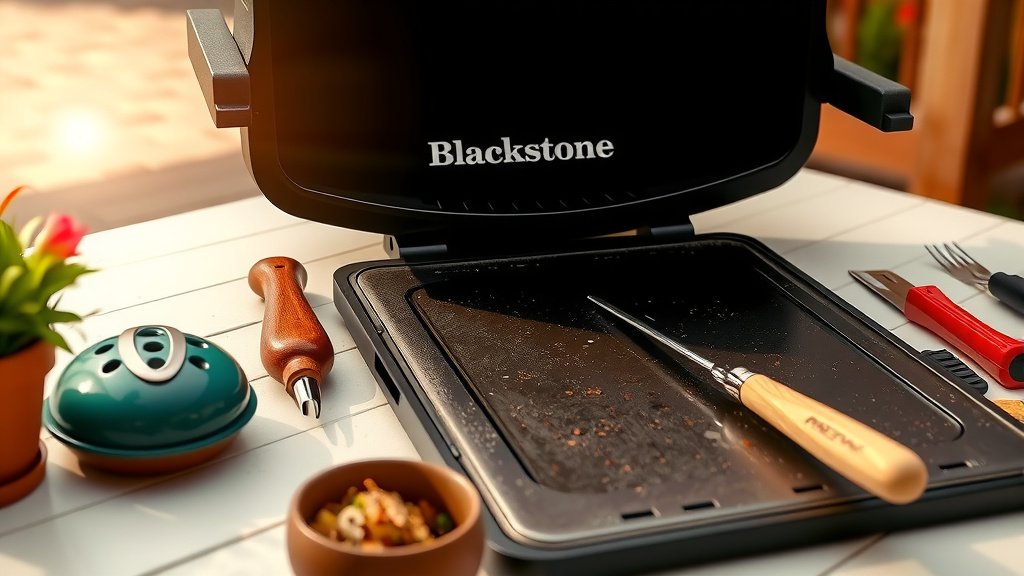
To effectively clean a Blackstone Grill Top, scrape off food debris while the griddle is warm, then use water to deglaze the surface before wiping it dry and applying a thin layer of cooking oil.
Maintaining a clean Blackstone Grill Top after each use helps prevent rust and ensures your next meal tastes amazing, making the cleaning process simple and quick.
- To clean your Blackstone grill top, always scrape off food when it is warm.
- After scraping, pour a little water on the griddle to lift any stuck-on bits.
- Wipe the surface dry with paper towels until it’s clean.
- Finish by applying a very thin coat of cooking oil to protect the surface.
- Regular cleaning keeps your griddle ready for delicious cooking and prevents rust.
How To Clean A Blackstone Grill Top?
Cleaning your Blackstone Grill Top correctly means you can enjoy many years of delicious meals. It is not just about wiping it down, but about protecting your investment and ensuring food safety.
Why Cleaning Your Blackstone Griddle Matters So Much
Think of your griddle as a cast-iron pan; proper care is key. A clean griddle preserves the tasty flavors from your cooking, rather than mixing old residues into new food. We found that clean cooking surfaces consistently deliver better taste.
Regular cleaning also extends the life of your griddle. It helps prevent rust, which is the enemy of any metal cooking surface. Many experts say that rust can significantly shorten the lifespan of your griddle if not addressed (Blackstone Products Support).
More importantly, keeping your griddle clean is about food safety. Old food particles can attract pests or grow bacteria. A well-maintained surface gives you peace of mind that your family is eating healthy food.
What You’ll Need: Your Griddle Cleaning Toolkit
You do not need many fancy gadgets to clean your Blackstone. A few basic tools will do the trick. Gathering these items beforehand makes the process much smoother and faster for you.
Your primary tool will be a sturdy metal scraper. This helps push off food bits and carbonized residue. You will also need a stack of paper towels, ready for wiping.
Having a bottle of water, either hot or warm, is essential for deglazing. Finally, a good cooking oil, like vegetable or flaxseed, is vital for re-seasoning. We found that a Blackstone Griddle Cleaning Kit often includes several helpful items.
Safety First: Quick Tips Before You Start
Before you get started, remember a couple of important safety tips. Always wear heat-resistant gloves if your griddle is still quite hot. Protecting your hands is always smart.
It is best to clean your griddle when it is warm, but not scorching hot. This makes scraping easier and safer. A surface that is too hot can cause water to steam up quickly, which might burn you.
The Quick Clean: After Every Use
This is your go-to routine after every single cooking session. It is quick, easy, and truly makes a difference. Think of it as putting your griddle to bed properly for the night.
The core of this quick clean involves scraping, deglazing with water, and re-oiling. Following these steps consistently will keep your griddle in top shape. It only takes a few minutes of your time.
Step-by-Step: Your Daily Griddle Cleanup
- Scrape Food Debris: While your griddle is warm, use your metal scraper to push off all food bits and excess oil into the grease trap. Be firm but gentle.
- Pour Water: Carefully pour a small amount of water onto the warm griddle surface. The water will sizzle and help lift any remaining stuck-on food.
- Scrape Again: Use your scraper or a griddle pad to work the water and loosened debris into the grease trap. The steam helps release stubborn spots.
- Wipe Dry: Grab a few paper towels and wipe the entire surface until it is completely dry and clean. You want no moisture left behind.
- Apply Oil: Finish by pouring a dime-sized amount of cooking oil onto the griddle. Spread it thinly and evenly with a paper towel. This protects the surface.
Deep Cleaning: When Your Griddle Needs Extra Love
Sometimes, your griddle gets a bit sticky or has some baked-on buildup despite daily cleaning. This is when a deep clean becomes necessary. It is like giving your griddle a spa day.
For these tougher jobs, you might use specific griddle cleaning pads or even a griddle stone. These tools are designed to help you remove more stubborn grime without damaging the seasoned surface too much. You are working to restore its smooth finish.
Tackling Stubborn Food Residue and Gunk
You have those spots that just will not come off, right? Do not worry; there are some clever tricks to handle them. These methods are safe for your Blackstone and really get the job done.
One popular method involves using ice cubes to create thermal shock. Another effective approach is making a paste with salt and oil. Both strategies aim to lift and scour away that persistent gunk effectively.
The Ice Cube Method: A Cool Trick
For some serious stuck-on messes, try the ice cube method. While the griddle is still warm (but not sizzling hot), toss a handful of ice cubes onto the problematic areas. The cold ice hitting the warm metal creates steam, which helps loosen the grime.
Use your scraper to push the melting ice and loosened food into the grease trap. This method is surprisingly effective for really caked-on residue. Many users find this trick very satisfying to watch.
Salt and Oil Paste: For Serious Scouring
If ice cubes are not quite enough, a paste of coarse salt and cooking oil can work wonders. Pour a generous amount of coarse salt onto the griddle surface, then add enough cooking oil to create a thick paste. We found that sea salt works well.
Using a griddle pad or heavy-duty paper towels, scrub the paste over the dirty areas. The salt acts as a gentle abrasive, while the oil helps lift the grime. Scrape it all off into the grease trap when finished, then wipe clean.
Dealing with Rust on Your Blackstone Griddle
Seeing rust on your griddle can be alarming, but do not panic! Most surface rust is treatable. The key is to act quickly before it gets worse. You want to remove the rust and then re-season.
For light rust, steel wool or a scouring pad combined with cooking oil often does the trick. For heavier rust, more elbow grease might be needed. The goal is to get down to the clean metal.
Seasoning Your Blackstone Griddle After Cleaning
After a deep clean, especially if you have had to scrub away rust, re-seasoning your griddle is not optional; it is essential. This process creates a natural non-stick surface and protects the metal.
Seasoning involves applying very thin layers of cooking oil and heating the griddle. This bakes the oil onto the surface, forming a protective, dark, and smooth layer. Think of it as giving your griddle a fresh start.
A Quick Guide to Re-Seasoning Your Griddle
| Step | Action | Why It Helps |
|---|---|---|
| 1 | Clean Thoroughly | Removes old debris and any rust, preparing a fresh surface. |
| 2 | Apply Thin Oil | Covers the griddle with a protective layer, essential for seasoning. |
| 3 | Heat Griddle | Bakes the oil into the surface at high heat, transforming it. |
| 4 | Repeat Layers | Builds a strong, non-stick, and durable finish over time. |
Common Cleaning Mistakes to Avoid
Even with good intentions, some cleaning habits can actually harm your Blackstone. Knowing what to avoid is just as important as knowing what to do. You want to protect that valuable seasoning.
One major mistake is using dish soap, which can strip away your hard-earned seasoning. Another is neglecting to re-oil the griddle, leaving it exposed to moisture. Be mindful of these pitfalls.
Keeping Your Griddle Pristine: Beyond Cleaning
Cleaning is just one part of griddle care. How you store and protect your Blackstone also plays a huge role in its longevity. You have put in the work, so let us keep it looking great.
Always cover your griddle when it is not in use, especially if it lives outdoors. A griddle cover protects it from rain, dust, and debris. Proper storage keeps moisture away and prevents rust from forming.
Conclusion
Cleaning your Blackstone Grill Top might seem like a chore, but it is truly a simple process that pays off with every meal. By following these practical steps, you are not just cleaning; you are preserving the heart of your outdoor cooking setup. Regular care ensures delicious, healthy food and a long life for your griddle. You have got this!
What should I use to scrape my Blackstone griddle?
You should use a sturdy metal griddle scraper. Many Blackstone owners find that specialized griddle scrapers work best because they are designed to fit the flat top surface and effectively remove food debris without causing damage.
Can I use soap to clean my Blackstone griddle?
No, you should avoid using dish soap to clean your Blackstone griddle. Dish soap can strip away the griddle’s seasoning, which is the protective, non-stick layer built up from baked-on oil. Stick to water and scraping for most cleaning.
How often should I re-season my Blackstone griddle?
You should re-season your Blackstone griddle after every deep clean, or any time the seasoning looks thin, flaky, or if you notice rust. For regular daily cleaning, simply applying a thin layer of oil after wiping dry is usually sufficient to maintain the existing seasoning.
What kind of oil is best for seasoning a Blackstone griddle?
Many experts say that high smoke point oils are best for seasoning a Blackstone griddle. Options like flaxseed oil, avocado oil, grapeseed oil, or even regular vegetable oil work well. These oils polymerize effectively when heated, creating a durable, non-stick surface.
My Blackstone griddle has rust spots, what should I do?
If your Blackstone griddle has rust spots, you should clean them off immediately. Use a griddle stone, steel wool, or a scouring pad with a little cooking oil to scrub away the rust. After removing all the rust, thoroughly clean the area and then re-season the griddle with multiple thin layers of oil.
