
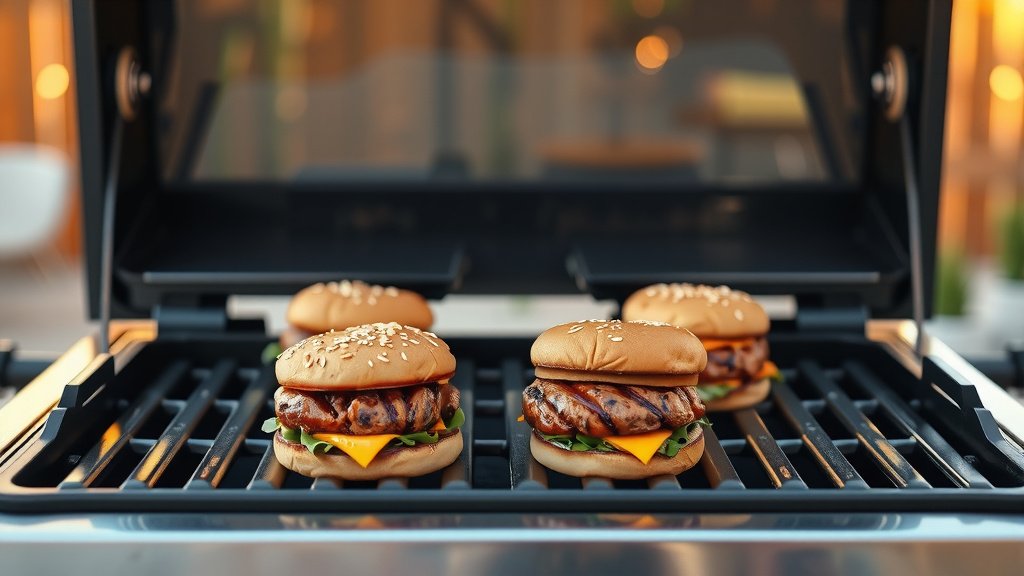
Cooking hamburgers on a gas grill usually takes about 8 to 12 minutes for a medium-rare to medium doneness, flipping halfway through.
The exact time to cook hamburgers on a gas grill depends on patty thickness and your desired level of doneness, with thinner patties cooking faster.
For quick answers and perfect burgers, here’s what you need to know:
- Aim for an internal temperature of 160°F for safe eating (USDA).
- Thicker burgers need more time on the grill.
- Medium-high heat (375-400°F) is ideal for gas grilling.
- Flip your burgers only once for the best crust.
How Long Cook Hamburgers On Gas Grill?
You can cook hamburgers on a gas grill for 8 to 12 minutes, aiming for an internal temperature of 160°F for a safely cooked patty. This range covers most standard burger thicknesses and preferred doneness levels.
Prepping Your Grill: The First Step to Success
Before any patty hits the grates, proper grill prep is a must. Think of it like setting the stage for a great performance. You want a clean, hot surface every time.
Many experts suggest preheating your gas grill to a medium-high temperature. This means reaching about 375-400°F. A good preheat ensures those beautiful sear marks you crave.
Why Grill Temperature Matters
Ever wonder why sometimes your burgers stick or don’t get a nice crust? It often comes down to grill temperature. Too low, and they steam; too high, and they burn outside before cooking inside.
We found that a steady medium-high heat is the sweet spot. This allows the exterior to brown nicely while the inside cooks through. It’s a balanced approach to grilling.
Understanding Burger Thickness
Not all burger patties are created equal. A thin patty will cook much faster than a thick, half-pound monster. Always consider this when timing your cook.
For standard 1/3-pound patties, the 8-12 minute range is quite accurate. If you’re grilling thicker patties, you will need a bit more patience.
Standard Burger Doneness Guide
What kind of burger person are you? Do you like it pink in the middle, or prefer it well done? Your preference directly impacts the grilling time.
Many guidelines point to 160°F as a safe internal temperature for ground beef (USDA). Use a reliable meat thermometer for accuracy. It’s your best friend here.
| Doneness Level | Internal Temperature | Approximate Grill Time (per side) |
|---|---|---|
| Medium-Rare | 130-135°F | 3-4 minutes |
| Medium | 135-140°F | 4-5 minutes |
| Medium-Well | 140-150°F | 5-6 minutes |
| Well Done | 155-160°F | 6-7 minutes |
The Art of Flipping: Once is Enough
It’s tempting to flip your burgers constantly, isn’t it? Resist that urge! Think of it like a pancake; too much fussing, and it won’t brown correctly.
Research often suggests flipping your burger only once. This method allows a strong crust to form on each side. This creates that delicious, caramelized flavor you’re looking for.
When to Flip Your Burger
How do you know when it’s time to flip? Look for visible juices pooling on the top surface. The edges should also start to look cooked and firm.
Typically, this happens after about 4-6 minutes on the first side. After flipping, continue cooking for another 4-6 minutes, or until your desired doneness is reached.
Don’t Press the Patty!
You might have seen people press burgers with a spatula while grilling. Please don’t do this! It squeezes out all the juicy goodness that makes a burger moist and flavorful.
Think of those delicious juices as the burger’s lifeblood. Keeping them inside ensures a tender, tasty bite every time. We found that letting them cook undisturbed works best.
Resting Your Burgers After Grilling
Just like steaks, burgers benefit from a short rest. Take them off the grill and let them sit for 3-5 minutes before serving. This step is a small but mighty one.
During this rest, the juices redistribute throughout the patty. This makes for a more evenly moist and flavorful burger. It’s a simple trick for a big impact.
Essential Tools for Perfect Burgers
Having the right tools makes grilling so much easier and more effective. You don’t need a fancy kitchen, but a few key items are truly game-changers.
A good meat thermometer is non-negotiable for food safety and precision. Long-handled tongs and a sturdy spatula are also very helpful.
- Meat Thermometer: For checking internal temperature accurately.
- Long-Handled Tongs: Safely move burgers without burning your hands.
- Sturdy Spatula: For easy flipping and removal from the grill.
- Grill Brush: To clean grates before and after use.
- Timer: Helps keep track of cooking times, especially for multiple burgers.
Making the Perfect Patty
The journey to a great grilled burger starts long before it hits the heat. Forming your patties correctly can prevent issues like shrinking or bulging.
Form patties gently, making them slightly wider than your bun. Also, press a small dimple in the center of each patty. This helps them cook flat and even.
Choosing the Right Ground Beef
What kind of ground beef should you use? Many grill masters prefer an 80/20 lean-to-fat ratio. This balance gives you good flavor and moisture.
Higher fat content means more juiciness, but also more flare-ups. Leaner beef can be drier, so adjust your expectations and techniques accordingly.
Troubleshooting Common Burger Grilling Issues
Even seasoned grillers face challenges sometimes. What if your burgers are sticking? Or they cook too fast on the outside?
For sticking, ensure your grill grates are clean and oiled. If they’re burning too fast, your grill might be too hot. Reduce the heat or move them to a cooler zone.
My Burger is Dry! What Went Wrong?
Dry burgers are a common complaint. This usually happens from overcooking or using very lean meat. Remember, an internal temperature of 160°F is for safety, not dryness.
Pull them off the grill as soon as they reach that safe temperature. You can also add mix-ins like shredded onion or cheese to your patties for extra moisture.
Quick Checklist for Grilling Hamburgers
Here’s a quick mental run-through before you fire up the grill:
- Preheat grill to 375-400°F (medium-high).
- Form patties gently, add a thumbprint.
- Oil your clean grill grates.
- Place burgers, cook 4-6 minutes per side.
- Flip once when juices appear.
- Check internal temp (160°F safe, 130-150°F for doneness).
- Rest burgers 3-5 minutes before serving.
Conclusion
Grilling perfect hamburgers on a gas grill is quite achievable with a few simple steps. Focus on proper grill temperature, understanding patty thickness, and using a meat thermometer for accuracy. Remember, a good burger is all about balance: a nice sear, juicy interior, and safe cooking. With these tips, you’re ready to grill amazing burgers every time you light up the flame. Happy grilling!
How do I know when my hamburger is fully cooked without a thermometer?
While a thermometer is best, you can check for clear juices and firm texture. If the juices run clear when you press the patty, it’s likely cooked through. However, this is less reliable than a thermometer for food safety.
Can I grill frozen hamburgers directly on a gas grill?
Yes, you can grill frozen hamburgers directly. However, they will take significantly longer to cook, possibly 15-20 minutes or more. It’s always safer and results in a better texture to thaw them first.
What heat setting is best for grilling hamburgers on a gas grill?
A medium-high heat setting is generally best for grilling hamburgers. This means the grill grates should be around 375-400°F. This temperature provides a good sear without burning the outside too quickly.
Should I put a lid on the grill when cooking hamburgers?
Closing the lid while grilling hamburgers helps to cook them more evenly by trapping heat. This acts like an oven, cooking the top side as well. Keep the lid closed between flips for consistent results.
How can I prevent my hamburgers from sticking to the grill?
To prevent sticking, ensure your grill grates are clean and well-oiled before placing the patties. Preheat the grill thoroughly to the correct temperature, as a hot, clean, and oiled surface is key to non-stick grilling.
