
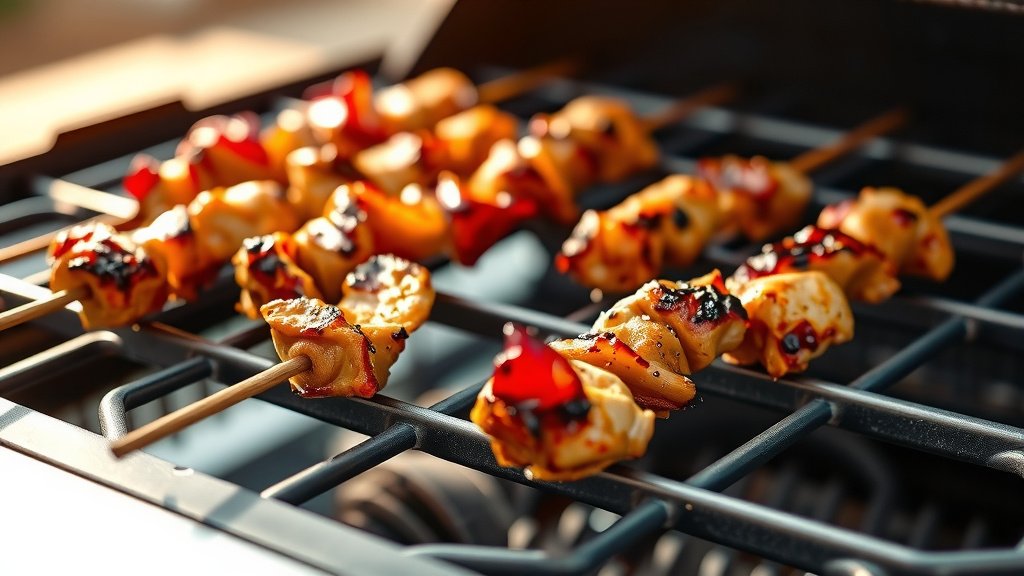
Grilling chicken skewers on a gas grill usually takes about 8 to 12 minutes, aiming for an internal temperature of 165°F (74°C).
This timing depends on your chicken piece size, how hot your grill is, and if you’re using boneless chicken breast or thigh meat.
- TL;DR: Plan on 8-12 minutes for chicken skewers on a gas grill set to medium-high heat.
- Ensure your grill is preheated well before you start cooking.
- Turn your skewers every 2-3 minutes to get an even cook and nice char marks.
- Always check for an internal temperature of 165°F (74°C) using a meat thermometer for food safety.
- Don’t overcrowd the grill; give each skewer space to cook properly.
How Long To Grill Chicken Skewers On Gas Grill?
You’ll generally grill chicken skewers for 8 to 12 minutes on a gas grill, making sure they reach a safe internal temperature.
This time frame works well for most bite-sized pieces of chicken breast or thigh.
Why Does Grill Time Vary?
You might wonder why there isn’t one exact number for grilling time. The truth is, several factors really change how long your chicken skewers need on the grill. It’s not a one-size-fits-all situation.
Understanding these points helps you cook perfect skewers every time. We all want that juicy, tender result, right?
Thickness of Chicken Pieces
If your chicken pieces are cut thicker, they’ll need more time on the grill. Thinner pieces cook much faster. Aim for uniform sizes for even cooking.
This simple trick stops some pieces from drying out while others are still raw. It’s a game-changer for consistency.
Grill Temperature
A hotter grill cooks faster, but it also increases the risk of burning the outside before the inside is done. A medium-high heat, around 375-400°F (190-200°C), is often ideal for chicken skewers (USDA).
Keeping your grill at the right temperature is key to achieving that perfect balance of char and tenderness.
Desired Doneness
While food safety demands 165°F (74°C), some people like a little more char or crispness on their chicken. This extra browning might add a minute or two to the total cooking time.
Just remember that extra time risks dryness, so watch them closely.
Essential Prep for Perfect Skewers
Before your chicken even touches the grill, a little preparation makes a huge difference. Think of it as setting the stage for a great performance.
These steps help keep your chicken juicy and full of flavor. You’ll thank yourself later for the extra effort.
Marinating Tips
Marinating your chicken for at least 30 minutes, or even a few hours, adds great flavor and helps tenderize the meat. Acids in marinades, like lemon juice or vinegar, break down tough fibers. Just remember, don’t over-marinate with acid, or the texture changes.
We found that a good marinade really prevents dry chicken, especially on a hot grill.
Skewering Technique
When you skewer the chicken, don’t pack the pieces too tightly. Leave a little space between them so heat can circulate evenly. This promotes consistent cooking.
Also, if you’re using wooden skewers, soak them in water for 30 minutes before grilling. This stops them from burning to a crisp on your grill.
The Grilling Process: Step-by-Step
Now, let’s get down to the actual grilling. This is where your planning comes to life, and delicious aromas fill the air.
Follow these steps for a smooth grilling experience. You’ll be a skewer master in no time!
Preheat Your Gas Grill
Turn your gas grill to medium-high heat and let it preheat for 10-15 minutes. This ensures the grates are hot enough for a good sear and helps prevent sticking. Many experts say a well-preheated grill is essential for any successful cookout.
A properly hot grill also cooks more efficiently, giving you those appealing grill marks.
Placement and Turning
Place your skewers directly over the heat, but don’t overcrowd the grill. Give them space. Turn the skewers every 2-3 minutes to cook all sides evenly and get a nice char without burning.
You’ll want to rotate them about four times total for a full cook. This method makes sure every part of the chicken gets attention.
Checking for Doneness
The only sure way to know if your chicken is done is with a meat thermometer. Insert it into the thickest part of a chicken piece, avoiding the skewer.
- Aim for 165°F (74°C) for safe consumption.
- Look for opaque white chicken; no pink areas should remain.
- Juices should run clear when pierced.
- Feel the chicken; it should feel firm but still springy.
- Remember, visual cues help, but temperature is king.
Troubleshooting Common Skewer Issues
Even seasoned grillers face challenges sometimes. Don’t worry if things don’t go perfectly on your first try. We’re here to help you fix common problems.
Learning from these small hiccups makes you a better griller in the long run. It’s all part of the fun!
Burning Outside, Raw Inside?
If your skewers are charring too quickly, your grill might be too hot. Try lowering the heat, or move the skewers to a cooler part of the grill if you have multiple zones. Covering the grill also helps cook through.
We found that a slightly lower, more controlled heat gives chicken time to cook without burning.
Sticking to the Grates?
Chicken skewers can sometimes stick, leading to torn meat. This is usually due to dirty grates or not enough oil. Always clean your grates before grilling. Then, lightly oil the grates with a high smoke point oil, like vegetable or grapeseed oil.
- Clean your grill grates thoroughly before heating.
- Use a grill brush to remove old food bits.
- Lightly coat the grates with cooking oil using a paper towel.
- Make sure your grill is hot enough before adding food.
- Don’t try to move the skewers too soon; let them sear for a minute.
Safety First: Internal Temperature
Food safety is non-negotiable when grilling chicken. Eating undercooked chicken is a risk you don’t want to take (CDC).
Always use a reliable meat thermometer to ensure your chicken reaches the safe internal temperature of 165°F (74°C). This is the most important safety step.
| Chicken Type | Cut Size | Gas Grill Temp | Approx. Grill Time | Internal Temp Target |
|---|---|---|---|---|
| Chicken Breast | 1-inch cubes | Medium-High (375-400°F) | 8-10 minutes | 165°F (74°C) |
| Chicken Thigh | 1-inch cubes | Medium-High (375-400°F) | 10-12 minutes | 165°F (74°C) |
| Thicker Cuts | 1.5-inch cubes | Medium (350-375°F) | 12-15 minutes | 165°F (74°C) |
Conclusion
Grilling chicken skewers on a gas grill is a fun and rewarding experience when you know the ropes. While 8 to 12 minutes is a general guideline, remember to adjust based on chicken thickness, grill heat, and careful monitoring.
Always prioritize food safety by checking that internal temperature. With a little practice and these tips, you’ll be serving up perfectly grilled, juicy chicken skewers that everyone will love. Happy grilling!
How do I know if my chicken skewers are done without a thermometer?
While a thermometer is best, you can check by cutting into a thicker piece of chicken; it should be opaque white throughout with no pink, and the juices should run clear. However, visual checks are less reliable than temperature readings.
Can I grill chicken skewers from frozen?
No, you should never grill chicken directly from frozen. Always thaw chicken completely in the refrigerator before grilling. Grilling frozen chicken can result in uneven cooking, with the outside burning while the inside remains raw.
What kind of chicken is best for skewers?
Both boneless, skinless chicken breast and thigh meat work well for skewers. Chicken breast is leaner and cooks quicker, while chicken thighs are juicier and more forgiving if overcooked slightly. Choose based on your preference for texture and fat content.
Should I oil the chicken or the grill grates?
It’s generally better to oil the grill grates, not the chicken. Lightly coat your clean, preheated grates with a high smoke point oil using a paper towel. This prevents sticking without burning off excess oil on the chicken itself, which can cause flare-ups.
How far in advance can I marinate chicken skewers?
You can marinate chicken skewers for at least 30 minutes, but for more flavor, you can marinate them for up to 4-6 hours in the refrigerator. If your marinade contains a lot of acid, like lemon juice, don’t marinate for longer than 2 hours to avoid a mushy texture.
