
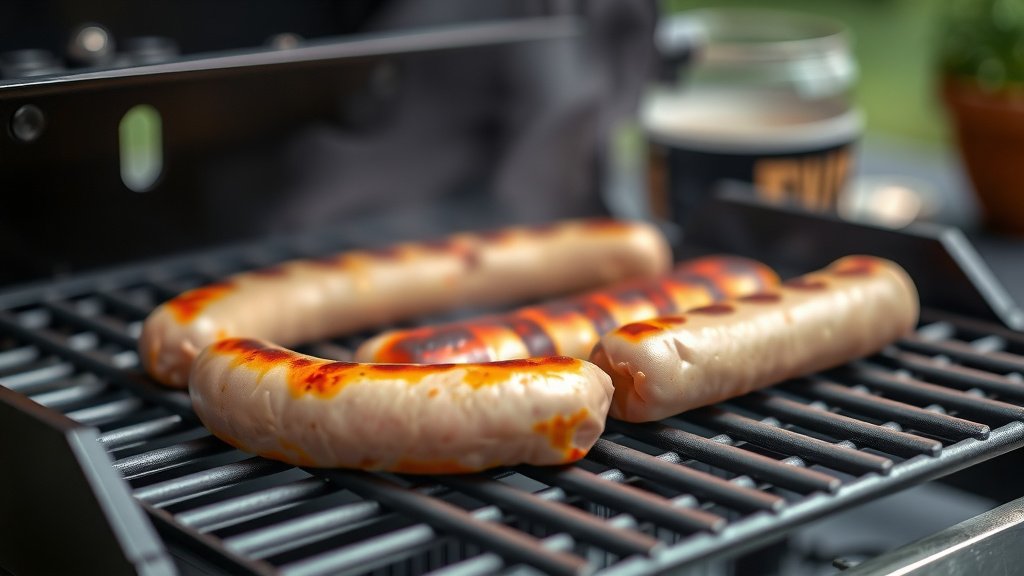
Cooking brats on a pellet grill usually takes around 30 to 45 minutes when the grill is set between 300°F and 350°F. Your main goal is to reach an internal temperature of 160°F for food safety.
The exact time to cook brats on your pellet grill can change based on the bratwurst’s thickness and how consistent your specific grill runs. Always use a meat thermometer to confirm doneness.
- Set your pellet grill to a medium temperature, often 300-350°F, for best results.
- Expect brats to cook for about 30 to 45 minutes, maybe a bit longer for thicker sausages.
- The safe internal temperature for brats is a firm 160°F, which you must check with a reliable thermometer.
- Turn your brats every 5-7 minutes to ensure even browning and prevent burning.
- Avoid piercing the brats; this keeps the delicious juices inside, making them more flavorful.
How Long To Cook Brats On Pellet Grill?
You’re ready to grill some fantastic brats, right? On a pellet grill, you’re looking at a cooking time of about 30 to 45 minutes. This timeframe works well when your grill is holding a steady temperature between 300°F and 350°F.
The Sweet Spot for Temperature
Setting your pellet grill to the right temperature is key for perfect brats. We found that a range of 300°F to 350°F creates the ideal environment. This heat lets the brats cook through without drying out too quickly.
Some people like a slightly lower temperature, perhaps 275°F, for a slower cook and more smoke flavor. Others crank it up to 375°F for quicker browning. You can experiment, but 325°F is a great starting point for most pellet grills.
Preheating Your Pellet Grill
Don’t rush the preheating process. Your pellet grill needs time to reach and hold a stable temperature. This can take anywhere from 10 to 15 minutes, depending on your model. You want a consistent heat from the start.
A well-preheated grill ensures that your brats start cooking evenly the moment they hit the grates. It helps prevent sticking and provides a beautiful, consistent sear on the outside.
Checking for Grill Temperature Stability
How do you know your grill is ready? Most pellet grills have a built-in thermometer. However, research often suggests that an external probe placed near your food gives a more accurate reading (Food Safety.gov). This helps you trust your cooking environment.
The Magic Number: Internal Temperature
The cooking time for brats is just an estimate; the true indicator of doneness is their internal temperature. You’re aiming for a safe and delicious 160°F (71°C). This temperature ensures your brats are fully cooked and safe to eat (USDA).
A good quality instant-read meat thermometer is your best friend here. Insert it into the thickest part of the brat, being careful not to touch any bone or the grill grate. This gives you the most reliable reading every time.
Why Internal Temperature Matters Most
Relying solely on visual cues like browning can be misleading. A brat might look perfectly cooked on the outside but still be undercooked inside. Prioritizing internal temperature takes the guesswork out and keeps your family safe.
Step-by-Step Brat Cooking on Your Pellet Grill
Ready to get those brats sizzling? Here’s a simple guide to follow:
- Preheat Your Grill: Set your pellet grill to 325°F and let it preheat for 10-15 minutes until stable.
- Place the Brats: Lay your brats directly on the grill grates, giving them a little space between each one.
- Cook and Turn: Cook for about 15-20 minutes, then turn them over. Continue cooking, turning every 5-7 minutes.
- Check Temperature: After about 30-35 minutes, start checking the internal temperature with a thermometer.
- Rest and Serve: Once they hit 160°F, remove them from the grill, let them rest for a few minutes, then serve!
The Art of Turning Brats
Turning your brats regularly is more important than you might think. It ensures they cook evenly on all sides and develop a beautiful, consistent brown crust. Many experts suggest turning them every 5 to 7 minutes.
Gentle turning prevents one side from burning while the other remains pale. It’s a small step that makes a big difference in the final taste and texture of your brats. Think of it as painting a masterpiece with heat!
Common Mistakes to Avoid
We all make mistakes, especially when learning new grilling techniques. Here are a couple of common pitfalls to steer clear of when cooking brats:
- Piercing the Casing: Resist the urge to poke holes in your brats. This lets all the delicious juices and fats escape, leaving you with dry, less flavorful sausages.
- Overcooking: While safety is key, cooking brats much past 160°F can make them dry and tough. Once they hit the target temperature, they are done.
- Too High Heat: Starting with very high heat can burn the outside before the inside cooks through. Stick to the medium-low range.
Adding Flavor with Smoke
One of the best parts about a pellet grill is the smoke flavor. You can enhance your brats by using different wood pellets. Hickory, apple, or cherry pellets are popular choices for sausage.
For a stronger smoke flavor, you could even start the brats at a lower temperature, say 225°F, for 15-20 minutes. Then, increase the temperature to 325°F to finish cooking and get that nice sear. This two-zone method can really boost the taste.
Table: Brat Cooking Time & Temperature Guide
| Pellet Grill Temperature | Approximate Cooking Time | Internal Temperature Target |
|---|---|---|
| 275°F (135°C) | 45-60 minutes | 160°F (71°C) |
| 300°F (149°C) | 35-45 minutes | 160°F (71°C) |
| 325°F (163°C) | 30-40 minutes | 160°F (71°C) |
| 350°F (177°C) | 25-35 minutes | 160°F (71°C) |
Remember, these are guidelines. Always use your meat thermometer for the most accurate results. Every grill is a little different, just like every brat!
Resting Your Brats
Once your brats hit that perfect 160°F, pull them off the grill. Don’t slice into them right away! Letting them rest for 5-10 minutes under a loose foil tent allows the juices to redistribute. This makes for a more tender and juicy brat.
What About Cooking Brats in Beer?
Many grilling enthusiasts love the idea of boiling brats in beer before grilling. This method pre-cooks them, making the final grill time shorter, usually just 10-15 minutes to get a good sear and color. It also infuses flavor.
If you choose this method, just be sure the beer bath brings the internal temperature to at least 150°F before they hit the grill. Then, finish on the pellet grill until they reach the final 160°F. This provides a tender inside and crispy outside.
Making Your Brat Experience Better
Here’s a quick checklist for perfect brats every time:
- Preheat your pellet grill thoroughly.
- Use a reliable meat thermometer.
- Turn brats often for even cooking.
- Avoid piercing the casings.
- Let them rest before serving.
Conclusion
Cooking brats on a pellet grill is a rewarding experience that balances smoke flavor with consistent heat. While 30 to 45 minutes at 300-350°F is a solid estimate, your best bet is always to rely on an instant-read thermometer. Aim for an internal temperature of 160°F, and you’ll achieve perfectly cooked, juicy brats every time. Enjoy your grilling!
FAQs
Can I cook frozen brats directly on a pellet grill?
No, it’s best to thaw frozen brats completely before grilling them on a pellet grill. Cooking from frozen can lead to uneven cooking, where the outside burns before the inside reaches a safe temperature. Thawing ensures a more consistent and safer cook.
What’s the ideal thickness for brats on a pellet grill?
Standard bratwurst thickness works perfectly on a pellet grill. If you have particularly thick brats, you might need to add an extra 5-10 minutes to the total cooking time, always checking the internal temperature for doneness.
How do I prevent brats from drying out on a pellet grill?
To prevent dry brats, avoid overcooking them past the 160°F internal temperature. Also, do not pierce the casings, as this allows the natural juices to escape. Cooking at a moderate temperature (around 325°F) helps keep them juicy too.
Should I use a water pan when grilling brats on a pellet grill?
While a water pan isn’t strictly necessary for brats, some grillers use one to add humidity, which can help keep the brats moist, especially during longer cooks or in very dry climates. It’s a personal preference and can be a good experiment.
What kind of wood pellets are best for brats?
For brats, milder and fruitier wood pellets like apple, cherry, or maple are often recommended as they provide a subtle smoke flavor that complements the sausage. Hickory also works well if you prefer a slightly stronger, more traditional smoke taste.
