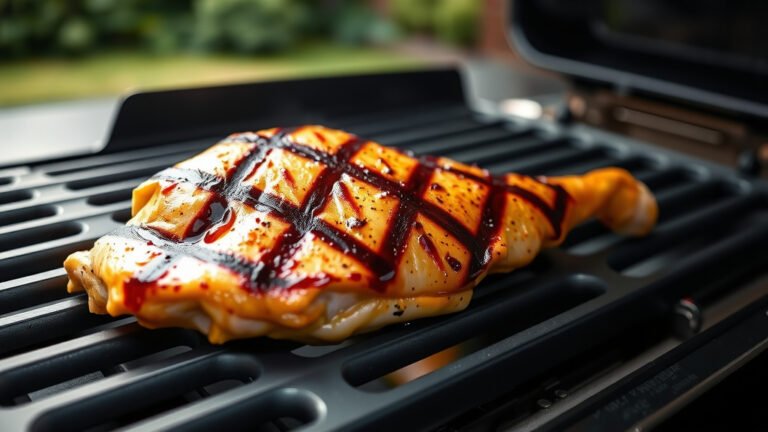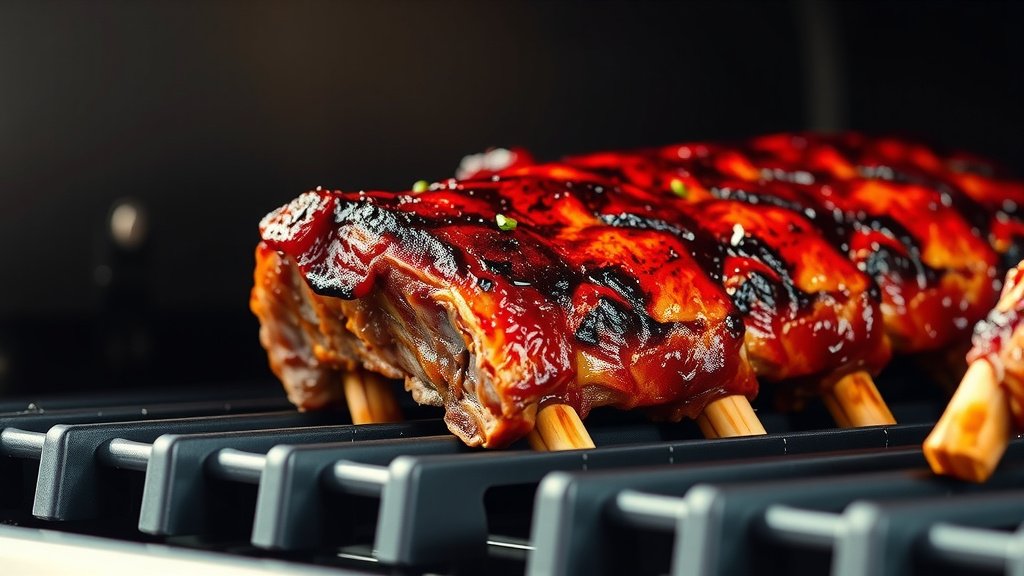
To slow cook ribs on a gas grill, you need to set up your grill for indirect heat, maintaining a consistent low temperature of around 225-250°F (107-121°C).
This method involves prepping your ribs, applying a rub, and then cooking them slowly over many hours until they are tender and fall-off-the-bone delicious.
Here’s a quick overview of how to get those amazing ribs:
- Prepare your ribs by removing the membrane and applying a delicious rub.
- Set up your gas grill for indirect cooking at a low temperature (225-250°F).
- Add a smoke box or foil packet for that classic smoky flavor.
- Cook low and slow for several hours, basting occasionally.
- Finish with sauce for a final caramelization and tenderness.
How To Slow Cook Ribs On A Gas Grill?
You can slow cook ribs on a gas grill by using an indirect heat setup, maintaining a steady low temperature, and applying a flavor-packed dry rub for hours of gentle cooking.
Why Slow Cook Ribs on a Gas Grill?
You might wonder if a gas grill can truly deliver that barbecue perfection. The answer is a resounding yes! A gas grill offers incredible temperature control and convenience, making it ideal for low and slow cooking.
It lets you achieve incredibly tender ribs without needing a dedicated smoker. Plus, you can still infuse them with a delightful smoky flavor.
The Secret to Tender Ribs: Low and Slow
The magic of tender ribs lies in the “low and slow” approach. Cooking at lower temperatures over an extended period breaks down the tough connective tissues in the meat.
This process results in that succulent, melt-in-your-mouth texture everyone loves. It is a patient journey, but oh-so-rewarding.
Choosing the Right Ribs for Your Grill
Picking the correct ribs sets the stage for success. You will usually choose between Baby Back Ribs and St. Louis Style Ribs.
Baby Backs are leaner and cook faster, while St. Louis ribs are meatier and take a bit longer. Both can be spectacular on your gas grill.
Your Rib Prep Checklist
Preparation is key for the best results. A little work upfront saves you headaches later.
- Remove the membrane from the back of the ribs.
- Trim any excess fat.
- Apply a generous dry rub.
- Allow ribs to sit with rub for at least 30 minutes.
- Gather your grilling tools.
Removing the Membrane: A Crucial Step
Many experts say removing the membrane from the back of the ribs is non-negotiable. This thin, silverskin layer does not break down during cooking.
Leaving it on can result in chewy, less tender ribs. Just slide a knife under one edge and pull it off with a paper towel for grip.
Crafting Your Perfect Dry Rub
A good dry rub adds a phenomenal layer of flavor. You can buy pre-made rubs, or mix your own.
Common ingredients include paprika, brown sugar, salt, pepper, garlic powder, and onion powder. Be generous; your ribs will thank you for the flavor boost.
Setting Up Your Gas Grill for Indirect Heat
This is where the gas grill really shines for slow cooking. You need to create a cooler zone away from the direct flame.
For a multi-burner grill, you will typically turn on one or two burners on one side and leave the others off. This creates your indirect cooking zone.
Maintaining the Right Temperature
Your target temperature is 225-250°F (107-121°C). This range is optimal for slow cooking ribs.
Use your grill’s built-in thermometer, but for true accuracy, we found that a good quality wireless grill thermometer placed near the ribs is best (USDA guidelines recommend precise temperature monitoring for safety).
| Grill Configuration | Burner Setup (Example) | Target Temperature |
|---|---|---|
| 2-Burner Grill | One burner on low | 225-250°F |
| 3-Burner Grill | Outer burners on low, middle off | 225-250°F |
| 4+ Burner Grill | Outer 2 burners on low, middle off | 225-250°F |
Adding That Smoky Flavor to Gas Grill Ribs
A gas grill might not be a smoker, but you can absolutely get great smoke flavor. Wood chips are your best friend here.
Soak wood chips (like hickory or apple) for about 30 minutes, then place them in a foil packet with holes or a dedicated smoker box. Place this packet directly over a lit burner to create smoke.
When to Add Your Smoke Box
Add your smoke box at the beginning of the cook. The ribs absorb smoke flavor best in the initial hours.
You may need to refresh the chips once or twice during the first few hours for a continuous smoke bath.
The 3-2-1 Rib Method (or similar)
Many people find success with the 3-2-1 method for St. Louis style ribs (or 2-2-1 for baby backs). This breaks the cook into three phases:
- 3 hours (or 2) of direct smoke on the grill.
- 2 hours wrapped in foil with liquid.
- 1 hour unwrapped, often with sauce.
Wrapping Your Ribs for Tenderness
Wrapping the ribs in foil after a few hours helps tenderize them even further. You can add a splash of apple juice, cider vinegar, or beer inside the foil.
This liquid creates a moist environment, steaming the ribs to perfection. It is a fantastic way to ensure maximum juiciness and tenderness.
Saucing and Finishing Your Ribs
Once your ribs are nearly done and tender, it is time for the sauce, if you like it. Apply your favorite BBQ sauce during the final hour of cooking.
The heat will caramelize the sauce, creating a delicious sticky glaze. Be careful not to apply sauce too early, or it could burn.
How Do You Know When Ribs Are Done?
The “bend test” is a popular method: pick up a rack of ribs with tongs in the middle. If the meat cracks and starts to separate, they are ready.
Another sign is when the meat pulls back from the bone tips. The internal temperature will be around 195-205°F (90-96°C) (FoodSafety.gov). Remember, the goal is tenderness, not just a specific temperature.
Resting Your Masterpiece
Just like any great piece of meat, ribs benefit from resting. Once off the grill, cover them loosely with foil for 10-15 minutes.
This allows the juices to redistribute throughout the meat, resulting in an even more flavorful and moist eating experience. Patience truly pays off!
Conclusion
Slow cooking ribs on a gas grill is not just possible; it is a fantastic way to achieve incredible results with careful setup and patience. By using indirect heat, maintaining a steady low temperature, and adding some smoky flavor, you can transform a simple rack of ribs into a tender, juicy, and delicious meal.
It takes a bit of time and attention, but the reward of those perfectly cooked ribs, right from your own gas grill, is truly worth every moment. So, fire up your grill and get ready to impress!
Can I slow cook ribs on a gas grill without a smoker box?
Yes, you can absolutely slow cook ribs on a gas grill without a smoker box. The ribs will still be incredibly tender and delicious from the low and slow cooking process, just without the added smoky flavor. You can focus on the dry rub and finishing sauce for flavor.
How long does it take to slow cook ribs on a gas grill?
The cooking time for slow-cooked ribs on a gas grill varies depending on the type of ribs and your specific grill. Generally, expect 5-7 hours for St. Louis style ribs and 4-6 hours for baby back ribs, maintaining a temperature of 225-250°F.
What is indirect heat grilling?
Indirect heat grilling means cooking food not directly over the heat source, but next to it. For a gas grill, this involves turning on burners on one side of the grill and placing the food over the unlit burners. This creates a convection-like oven effect, ideal for low and slow cooking.
Do I need to flip ribs while slow cooking on a gas grill?
You generally do not need to flip ribs frequently when slow cooking with indirect heat on a gas grill. It is best to let them sit undisturbed in the indirect zone. You might turn them once or twice during the entire cook, especially if you are unwrapping them or applying sauce, but constant flipping is not necessary.
Can I use aluminum foil to wrap ribs on a gas grill?
Yes, you can and should use heavy-duty aluminum foil to wrap your ribs during the middle phase of slow cooking on a gas grill. This technique helps to trap moisture and steam the ribs, making them incredibly tender and ensuring they do not dry out during the long cook time.