
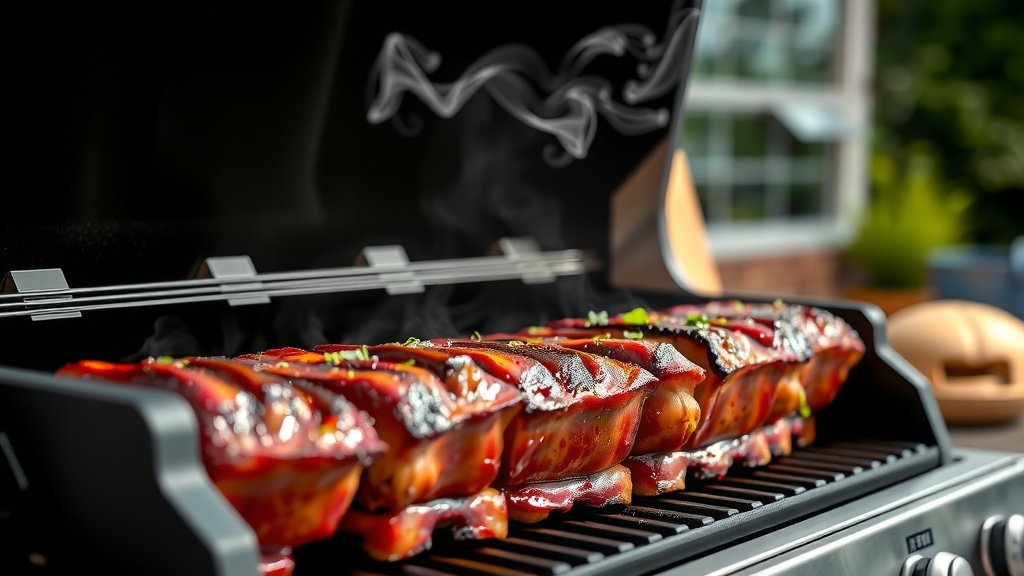
To cook ribs on a wood pellet grill, you typically follow a 3-2-1 method: smoke for 3 hours, wrap and braise for 2 hours, then unwrap and sauce for 1 hour.
This low-and-slow process on a pellet grill ensures tender, smoky ribs with consistent results and minimal effort.
- Get started by prepping your ribs: remove the membrane and apply your chosen rub.
- Set your pellet grill to a low temperature, usually around 225-250°F, for steady smoke.
- Follow the 3-2-1 method: 3 hours smoking, 2 hours wrapped, and 1 hour unwrapped with sauce.
- Always check for tenderness using the bend test before resting your ribs for perfect juiciness.
How To Cook Ribs On A Wood Pellet Grill?
Cooking ribs on a wood pellet grill is all about low and slow heat. This method brings out that delicious smoky flavor you crave.
You can achieve incredibly tender, juicy ribs with consistent results, making your backyard cookout a true success.
Why Choose a Pellet Grill for Ribs?
Pellet grills are a fantastic choice for ribs. They blend the ease of a gas grill with the authentic flavor of charcoal or wood smokers.
Picture this: you set a temperature, and the grill manages the fire and smoke for you. It’s a set-it-and-forget-it experience, mostly.
Consistent Temperature Control
One big advantage is the precise temperature control. Pellet grills hold a steady temperature, much like an oven (Many experts agree).
This consistency helps your ribs cook evenly without hot spots, preventing burnt or undercooked sections.
Effortless Smoke Flavor
You get genuine wood smoke without constantly feeding logs. The grill automatically feeds pellets, creating a clean, continuous smoke.
This steady smoke infuses your ribs with a rich, natural flavor that’s hard to beat.
Getting Started: Your Ribs & Your Grill
Before the smoke begins, a little preparation goes a long way. This ensures your ribs are ready for their flavorful journey.
Let’s make sure you have the right ribs and know how to prep them.
Choosing Your Ribs
You typically choose between two main types: baby back ribs and spare ribs.
Baby back ribs are leaner and cook faster. Spare ribs (or St. Louis cut, which are trimmed spare ribs) are meatier and have more fat, offering a richer flavor.
Your preference usually guides this choice. Both cook beautifully on a pellet grill.
Prepping Your Ribs for Perfection
First, remove the thin membrane from the bone side of the ribs. It gets tough when cooked, and removing it lets your rub and smoke penetrate better.
Just slide a knife under one edge, grab with a paper towel for grip, and peel it off. Trim any excess fat if you wish, then rinse the ribs and pat them dry.
Finally, apply a generous amount of your favorite dry rub. Don’t be shy; cover every surface for maximum flavor. Let them sit for at least 30 minutes, or even overnight in the fridge.
Selecting the Best Wood Pellets
The type of wood pellets you use will impact the flavor. Some popular choices for ribs include hickory, apple, cherry, and pecan.
Hickory offers a strong, classic smoky taste. Apple and cherry give a milder, slightly sweet fruitwood smoke. Pecan provides a nutty, medium smoke flavor.
Feel free to mix and match. Many enthusiasts blend different woods to create unique flavor profiles.
The 3-2-1 Method: A Rib-Cooking Roadmap
The 3-2-1 method is a widely accepted approach for perfectly tender ribs, especially on a pellet grill (Food Network Kitchen experts often discuss this).
It breaks the cooking process into three distinct phases. Are you ready to dive in?
Phase 1: The Smoke (3 Hours)
Set your pellet grill to 225°F. Place your seasoned ribs directly on the grill grates, bone-side down.
This is where the magic of the smoke ring happens. During these three hours, the ribs absorb most of their smoky goodness.
You can spritz them with apple juice, apple cider vinegar, or water every hour or so. This keeps them moist and helps build a nice bark.
Phase 2: The Wrap (2 Hours)
After three hours, it’s time to wrap. Take your ribs off the grill and place them on large sheets of heavy-duty aluminum foil or butcher paper.
Add a splash of liquid inside the wrap – apple juice, beer, or broth works well. This steams the ribs, making them incredibly tender.
Wrap them tightly to create a sealed packet, then return them to the grill, still at 225°F, for two more hours. This phase focuses on developing that fall-off-the-bone tenderness.
Phase 3: The Finish (1 Hour)
Once the two hours are up, carefully unwrap your ribs. Be gentle, as they will be very tender.
Brush them generously with your favorite BBQ sauce, if you’re using one. You can also leave them dry for a crispier bark.
Increase your grill temperature to 275-300°F and put the unwrapped, sauced ribs back on for the final hour. This allows the sauce to caramelize and helps the bark firm up.
Temperature Matters: Setting Your Pellet Grill
For ribs, a consistent low temperature is your best friend. Many people find 225°F to 250°F works wonderfully.
If you prefer a quicker cook or a slightly firmer texture, you might go up to 275°F during the final hour.
Sauce or Dry Rub? Your Flavor Journey
The choice between sauce and dry rub is a delightful personal preference. Each offers a unique experience.
Some barbecue purists say a good rub is all you need. Others crave that sticky, sweet, or tangy sauce.
| Feature | Dry Rub | BBQ Sauce |
|---|---|---|
| Flavor Profile | Spicy, savory, earthy | Sweet, tangy, smoky |
| Texture | Forms a “bark” | Sticky, glazed finish |
| Application | Before cooking | During final cooking phase |
| Key Benefit | Deep, layered flavor | Caramelized, rich exterior |
When Are Ribs Done? The Bend Test
How do you know when your ribs are ready? Forget the thermometer for this one; it’s about feel.
The “bend test” is a reliable method. Pick up the ribs with tongs in the middle.
If they are done, the ribs should bend significantly and almost break in half. The meat will show signs of pulling back from the bones. This indicates they are tender and ready to enjoy.
Resting Your Ribs: A Must-Do Step
You’ve waited patiently, but don’t cut into those beautiful ribs just yet! A crucial step is resting them.
Take the ribs off the grill, tent them loosely with foil, and let them rest for 15-20 minutes.
This allows the juices to redistribute throughout the meat, resulting in a more flavorful and moist bite. It’s a small wait for a big payoff.
Common Rib Cooking Mistakes to Avoid
We all make mistakes, especially when learning something new. Here are some common pitfalls to watch for:
- Not removing the membrane: This makes ribs chewy, not tender.
- Cooking at too high a temperature: Leads to dry, tough ribs and no smoke ring.
- Opening the grill too often: “If you’re looking, you’re not cooking!” Every peek releases heat and smoke.
- Not resting the ribs: Cuts into dry ribs as juices escape.
- Sauceting too early: Sauce can burn if applied too soon.
- Skipping the wrap phase: This often results in less tender ribs.
Conclusion
Cooking ribs on a wood pellet grill is a rewarding experience. It combines the ease of modern grilling with the timeless appeal of smoked meats.
By following the 3-2-1 method, paying attention to temperature, and avoiding common errors, you’re set to create mouth-watering, tender ribs every time.
So, fire up your pellet grill, gather your ingredients, and get ready to enjoy some fantastic barbecue. Your guests (and your taste buds) will thank you!
What is the ideal temperature for smoking ribs on a pellet grill?
The ideal temperature for smoking ribs on a pellet grill is generally between 225°F and 250°F. This lower temperature allows the ribs to cook slowly, absorbing plenty of smoke flavor and breaking down tough connective tissues for tenderness.
Should I remove the membrane from ribs?
Yes, you should definitely remove the membrane from the bone side of the ribs. This thin layer of tissue becomes tough and chewy when cooked. Removing it ensures your ribs are more tender and allows your dry rub and smoke to penetrate the meat better.
Can I cook frozen ribs on a wood pellet grill?
It’s not recommended to cook ribs directly from frozen on a wood pellet grill. For best results, always thaw your ribs completely in the refrigerator before seasoning and placing them on the grill. This ensures even cooking and proper smoke absorption.
How do I prevent my ribs from drying out?
To prevent ribs from drying out, keep your grill temperature low and consistent, spritz them occasionally during the initial smoke phase, and wrap them tightly with a liquid (like apple juice or broth) during the middle cooking phase. Not overcooking them and always resting them after removal also helps retain moisture.
What type of wood pellets are best for ribs?
For ribs, popular wood pellet choices include hickory for a strong, traditional smoke flavor; apple or cherry for a milder, sweeter, fruity smoke; and pecan for a rich, nutty profile. Many grillers also enjoy blending different wood types to create unique flavor combinations.
