
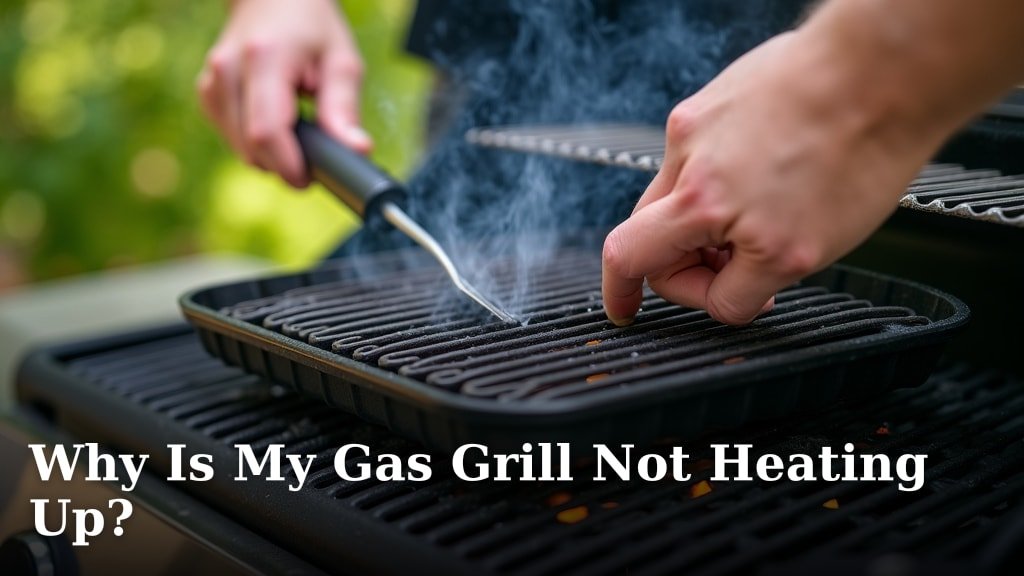
Your gas grill is not heating up, most likely because the propane tank’s OPD valve has tripped, or you have a clogged burner tube. We found these are the most common issues for gas grills. Don’t worry, it’s usually an easy fix.
There are several reasons your grill might be acting up. Maybe your propane tank is low, or perhaps a spider has decided to call your burner tube home. We know how frustrating it is when your grill won’t light, especially when you’re ready to cook.
- OPD valve tripped
- Low propane tank
- Clogged burner tubes
- Faulty regulator or hose
Let’s dive into these common problems and get your grill back to sizzling in no time. We’ll walk you through how to check and fix each one, step by step.
Common Reasons Your Gas Grill Isn’t Heating Up
When your gas grill isn’t heating up, it’s often due to a few common culprits. We’ll walk you through these issues and how to tackle them.
The OPD Valve Tripped: Your Grill’s Safety Feature
Have you ever noticed your grill only heating to a low temperature, even with a full tank? This is a common sign that your grill’s Overfill Prevention Device (OPD) valve has tripped. It’s a safety mechanism designed to prevent overfilling your propane tank and ensure safe operation (National Fire Protection Association).
What an OPD Valve Does
The OPD valve is inside your propane tank. It stops the tank from being filled beyond 80% capacity. This leaves room for the liquid propane to expand safely as temperatures change. If the valve senses an issue, like a sudden rush of gas, it can trip. This restricts gas flow to your grill.
How to Reset a Tripped OPD Valve
Resetting the OPD valve is often the first thing to try. It’s a simple process. First, turn off all the burner knobs on your grill. Next, turn off the gas valve on your propane tank. Detach the regulator hose from the tank. Wait a few minutes, maybe 5-10. This allows the system to reset. Then, reconnect the regulator hose tightly to the tank. Slowly open the tank’s gas valve all the way. Finally, open your grill lid and turn on one burner to “high.” Ignite it. If it lights and heats up normally, you’ve likely fixed the problem!
Is Your Propane Tank Running Low?
This might seem obvious, but a low propane tank is a frequent cause of grill issues. Sometimes, it’s not completely empty, but just low enough to prevent full heat. Have you checked your tank lately?
Checking Your Propane Level
There are a few ways to check your propane level. Some tanks have a built-in gauge. If yours doesn’t, you can do a simple water test. Get a cup of hot tap water. Pour it slowly down the side of the tank. Then, feel the side of the tank with your hand. The tank will be cool to the touch at the liquid level. The part above the liquid will be warm. This will show you roughly how much propane is left.
When to Replace or Refill
If your tank is low, it’s time for a refill or a swap. Always have a spare tank on hand, especially during grilling season. There’s nothing worse than running out of gas mid-cookout!
Clogged Burner Tubes: Uninvited Guests
Imagine tiny spiders or other insects making a home in your grill’s burner tubes. It happens more often than you think! These tiny creatures can build nests. This blocks gas flow to the burners. This is a very common issue we found when grills aren’t heating well.
Identifying a Clogged Burner Tube
If some burners are working fine but others aren’t, or if you see an uneven flame, you might have a clog. Gas won’t be able to reach all the ports in the burner tube. This leads to weak or no flame in certain areas.
Cleaning Your Burner Tubes
Cleaning them is straightforward. First, ensure your grill is off and cool. Disconnect the propane tank. Remove the grates and heat tents. Carefully lift out the burner tubes. Many grills have pins or screws holding them in place. Use a small, stiff wire brush or a bottle brush to clean inside the tubes. Pay close attention to the small gas ports along the side. Make sure they are clear. You can also use compressed air to blow out debris. We found that a straightened paper clip can work wonders for clearing individual port holes. Once clean, reassemble everything. Test your grill.
Faulty Regulator or Hose: The Gas Delivery System
The regulator and hose are crucial for getting propane from the tank to your burners. If either of these parts is damaged or old, your grill won’t get enough gas. This means it won’t heat up properly. The regulator You might also wonder if gas grill regulators are universal when considering a replacement.controls the pressure of the gas flow.
Signs of a Faulty Regulator
A common sign of a faulty regulator is a consistently low flame, even when the tank is full and the OPD is reset. You might hear a hissing sound. Or you might smell propane around the connection point. This signals a leak. Regulators can wear out over time. They are designed to last a certain number of years. Check your grill’s manual for replacement guidelines. We found that regulators typically last 10-15 years, but can fail sooner if exposed to extreme conditions.
Checking for Hose Leaks
Hoses can crack or get holes. To check for leaks, make a mixture of soap and water. You want it to be very sudsy. Turn on the propane tank (but not the grill burners). Apply the soapy water to the entire length of the hose and all connections. If you see bubbles forming, you have a leak. This means you need to replace the hose immediately. Don’t use a leaking hose. It’s a fire hazard. Many experts say replacing the hose and regulator together is a good practice if either part is compromised (Consumer Product Safety Commission).
Replacing the Regulator and Hose
If you confirm a leak or suspect a faulty regulator, it’s best to replace the entire hose and regulator assembly. They usually come as one unit. Make sure you get the correct replacement part for your grill model. Always follow the manufacturer’s instructions for installation. This ensures a safe and secure connection.
Other Potential Issues to Consider
While the above are the most common reasons, sometimes other parts can be to blame. It’s good to be aware of these. You might want to consider them if the other fixes don’t work.
Igniter Problems
Your igniter might be working. You might hear the clicking sound. But if it’s not sparking properly, your grill won’t light. This doesn’t mean it won’t heat up once lit, but it can make you think there’s a heating problem. Often, the igniter wire is loose or dirty. Sometimes it’s worn out.
Manifold Issues
The manifold is a tube that distributes gas to all the burners. If this gets clogged or damaged, some or all burners won’t get gas. This is less common than other problems. But it can happen. This typically requires a professional repair.
Table: Troubleshooting Grill Heating Problems
| Problem | Symptoms | Solution |
|---|---|---|
| Tripped OPD Valve | Low heat, even with full tank; grill won’t get hot | Reset OPD valve (turn off tank, disconnect, wait, reconnect, open slowly) |
| Low Propane Tank | Weak flames, grill barely gets warm, or no gas flow | Check tank level (water test), replace or refill tank |
| Clogged Burner Tubes | Uneven flames, some burners not lighting, weak flame | Clean burner tubes (wire brush, paper clip, compressed air) |
| Faulty Regulator/Hose | Consistent low flame, hissing sound, smell of gas, visible bubbles with soap test | Replace regulator and hose assembly |
| Igniter Problems | Burners won’t light, but gas is flowing | Check igniter wire connections, clean igniter, replace if needed |
Pre-Grill Checklist for a Smooth Cookout
Before you even fire up your grill, a quick check can save you a lot of hassle. We’ve put together a small checklist for you. It covers the most common reasons for no heat. This can help prevent those frustrating moments when your grill lets you down.
- Check Propane Level: A quick visual or water test can save your meal.
- Inspect Hose and Regulator: Look for cracks or damage. Do a soap test periodically.
- Clean Burner Tubes: Especially if your grill has been sitting for a while.
- Ensure Proper Connections: Make sure the regulator is tightly connected to the tank.
- Keep Lid Closed: For proper preheating, always keep the lid down during warm-up.
By following these simple steps, you can avoid many common grill heating issues. You can spend more time enjoying your food and less time troubleshooting.
Conclusion
Don’t let a finicky grill ruin your cookout! Most heating problems stem from just a few common issues, like a tripped OPD valve or clogged burner tubes. We found that a systematic approach to troubleshooting can quickly get you back to grilling. By understanding these parts, you can often diagnose and fix the problem yourself, saving time and money.
So, the next time your grill isn’t heating up, take a deep breath. Use this guide to methodically check each component. You’ll likely find the solution and be enjoying perfectly cooked food in no time. Happy grilling!
Frequently Asked Questions
Why does my gas grill only get warm and not hot?
If your grill is only getting warm, it’s often due to a tripped Overfill Prevention Device (OPD) valve in your propane tank. This safety feature restricts gas flow. Resetting the OPD valve, as described earlier, usually resolves this low-heat issue.
How often should I clean my grill’s burner tubes?
You should aim to clean your grill’s burner tubes at least once a grilling season, or more frequently if you use your grill often. This prevents insect nests and debris from building up and blocking gas flow, ensuring even heat.
Can a faulty igniter cause my grill not to heat up?
A faulty igniter won’t directly stop your grill from heating up once lit, but it can prevent it from lighting initially. If you have gas flow but no spark, you won’t get a flame. This means the grill won’t get hot at all.
Is it safe to use a gas grill with a small propane leak?
No, it is not safe to use a gas grill with any propane leak, no matter how small. Propane is highly flammable. Even a minor leak can pose a significant fire hazard. Always replace a leaking hose or regulator immediately.
What’s the easiest way to tell if my propane tank is empty?
The simplest way to check your propane level is by using the water test. Pour hot water down the side of the tank. The tank will feel cool to the touch at the liquid propane level and warm above it, indicating how much gas is left.
