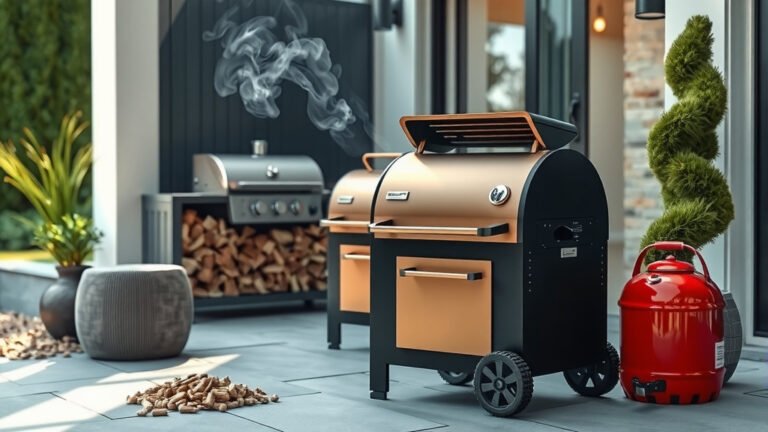
A pellet grill is an outdoor cooking appliance that uses food-grade wood pellets as its fuel source, blending the convenience of gas grills with the authentic flavor of wood smoke.
These versatile units feature an electronic control system that automatically feeds pellets into a burn pot and regulates airflow, allowing for precise temperature control for smoking, grilling, roasting, and even baking.
- Pellet grills give you authentic wood-fired flavor with much less effort than traditional smokers.
- They use an automatic system to feed pellets, ensuring consistent, set-and-forget cooking temperatures.
- You can easily smoke, bake, roast, braise, and sometimes sear, making them incredibly versatile cooking machines.
- Expect delicious, smoky results with push-button convenience, though they do require an electrical outlet.
What’s A Pellet Grill?
Ever wonder how some folks get that amazing smoky flavor on their food without standing over a fire all day? Chances are, they might be using a pellet grill.
These popular outdoor cookers are a fantastic blend of convenience and traditional barbecue taste, loved by both beginners and seasoned pitmasters.
How Does a Pellet Grill Work?
At its heart, a pellet grill functions like a convection oven but with real wood smoke. You load small, compressed wood pellets into a hopper on the side of the grill.
When you set your desired temperature, an electronic controller activates an auger that feeds these pellets into a small burn pot. A hot rod ignites the pellets, creating smoke and heat.
A fan then circulates this smoky heat throughout the cooking chamber, cooking your food evenly. This smart system lets you maintain precise temperatures, just like your indoor oven (Traeger Grills).
The Key Components You’ll Find
Let’s break down the essential parts of these clever cooking devices. Understanding them helps you appreciate their ease of use.
- Hopper: This is where you store your wood pellets. It’s typically on the side and holds enough pellets for hours of cooking.
- Auger: A motorized screw that transports pellets from the hopper to the burn pot. It’s the brain behind the automatic feeding system.
- Fire Pot: The small chamber where the pellets are ignited and burn. It generates the heat and smoke for your food.
- Igniter Rod: An electric heating element that gets red hot to start the pellets burning.
- Fan: Circulates air within the cooking chamber for even heat distribution, much like a convection oven. It also helps stoke the fire.
- Digital Controller: Your command center. You set the temperature here, and the controller manages the auger and fan to keep it steady.
Why Do People Love Pellet Grills So Much?
The appeal of pellet grills is strong, and it’s easy to see why they’ve become a backyard staple for many. They bring a lot of good things to your outdoor cooking.
Unbeatable Convenience and Control
Imagine setting your grill to 225°F for a brisket and walking away, knowing it will hold that temperature for hours. Pellet grills offer this set-and-forget simplicity.
You avoid the constant tending and temperature adjustments that traditional charcoal or stick burners require. Many experts say that this consistent heat makes them ideal for long cooks (AmazingRibs.com).
That Authentic Wood-Fired Flavor
This isn’t just a grill; it’s also a smoker. Because you’re burning real wood, your food gets an incredible, natural smoky flavor. You can choose different wood pellet flavors to match your meal.
You simply can’t get this depth of flavor from a gas grill alone. It’s a game-changer for taste.
Incredibly Versatile for All Your Cooking Needs
Pellet grills are true multi-taskers. You can literally smoke ribs, bake a pizza, roast a chicken, braise a pot roast, and even grill burgers.
Some advanced models even reach higher temperatures for a decent sear. This versatility means you might use your pellet grill more often than you think.
Are There Any Downsides to Consider?
While pellet grills offer many benefits, it’s good to be aware of a few things before you commit to one for your backyard.
They Need Electricity to Run
Unlike a gas or charcoal grill, a pellet grill requires an electrical outlet. This powers the digital controller, auger, and fan.
This means less portability and a need for a power source, which can be a consideration if you plan to take it camping or tailgating without a generator.
Often a Higher Initial Cost
Generally, pellet grills can have a higher upfront cost compared to basic charcoal or gas grills. However, many people find the convenience and results worth the investment.
When you weigh the features and the automatic controls, the price often makes sense for the technology you get.
Some Maintenance is Required
To keep your pellet grill running smoothly and safely, regular cleaning is necessary. Ash buildup in the fire pot needs to be removed, and the grates need to be cleaned.
We found that neglecting maintenance can affect performance and longevity, so a little care goes a long way (Pit Boss Grills).
What Can You Actually Cook on a Pellet Grill?
The culinary possibilities on a pellet grill are surprisingly vast. Think beyond just barbecue.
You can smoke incredibly tender brisket and pulled pork, roast whole chickens or turkeys, bake bread or desserts, and even grill vegetables. The precise temperature control truly opens up many options.
Choosing the Right Wood Pellets
Not all wood pellets are created equal. You want to use food-grade hardwood pellets, specifically designed for grills.
Avoid heating fuel pellets, which can contain binders or softwoods not suitable for cooking. Different woods offer unique flavor profiles, like hickory for strong smoke, apple for mild fruitiness, or oak for a robust classic taste.
Pellet Grill vs. Other Grills: A Quick Look
How does a pellet grill stack up against its more traditional cousins? Here’s a simple comparison.
| Feature | Pellet Grill | Gas Grill | Charcoal Grill |
|---|---|---|---|
| Flavor Profile | Authentic Wood Smoke | Clean, Direct Heat | Charred, Smoky |
| Temperature Control | Excellent, Automatic | Good, Manual Dials | Challenging, Manual |
| Ease of Use | Very Easy (Set & Forget) | Easy (Push-Button) | Moderate (Requires Tending) |
| Fuel Cost | Moderate (Bag of Pellets) | Moderate (Propane Tank) | Low (Bag of Briquettes) |
| Versatility | High (Smoke, Grill, Bake) | Medium (Grill, Roast) | Medium (Grill, Smoke with effort) |
Is a Pellet Grill Right for Your Backyard?
Deciding on a new grill can be a fun process. To help you figure out if a pellet grill fits your lifestyle, consider these points.
Your Pellet Grill Pre-Purchase Checklist
- Do you want authentic wood smoke flavor without the constant hassle?
- Are you looking for precise temperature control for consistent results?
- Do you value the ability to smoke, bake, roast, and grill on one unit?
- Is access to an electrical outlet readily available in your cooking area?
- Are you comfortable with a bit of periodic cleaning and maintenance?
- Is the initial investment in a quality appliance within your budget?
If you answered yes to most of these, a pellet grill might just be your next favorite backyard companion. They offer a great balance of delicious results and user-friendly operation.
Conclusion
A pellet grill truly offers the best of both worlds: the rich, smoky flavor you get from wood cooking, combined with the convenience and precision of modern technology. You can set your desired temperature, walk away, and return to perfectly cooked, delicious food.
While they require electricity and a bit of upkeep, their versatility and ease of use make them a fantastic choice for anyone looking to elevate their outdoor cooking game. It’s an investment in flavor and convenience that many grillers find deeply satisfying.
What kind of pellets should I use in my pellet grill?
You should only use food-grade hardwood pellets specifically made for pellet grills. Never use heating pellets, as they can contain additives or softwoods that are unsafe for cooking and can damage your grill. Reputable brands offer various wood types like hickory, apple, cherry, and oak for different flavor profiles.
Can a pellet grill get hot enough to sear a steak?
Traditional pellet grills excel at low-and-slow smoking and general grilling. While most can reach temperatures around 450-500°F, which is sufficient for grilling, achieving a true, high-temperature steak sear can be challenging. Some newer models, however, come with specific “sear zones” or direct flame access features that allow for much higher temperatures to achieve a crispy sear.
How much electricity does a pellet grill use?
Pellet grills use relatively little electricity once they’re up and running. The igniter rod draws the most power during startup (around 200-300 watts for a few minutes). After that, the controller, auger, and fan typically use only 30-60 watts per hour, similar to a light bulb. They are quite energy-efficient for sustained cooking.
Are pellet grills difficult to clean and maintain?
Pellet grills require regular, but straightforward, maintenance to perform their best. The most frequent task is emptying the ash from the fire pot and vacuuming out the cooking chamber after every few uses. You’ll also need to clean the cooking grates and grease tray regularly. It’s generally not a difficult process, and keeping it clean ensures consistent operation and better food flavor.
Can I leave my pellet grill outside in all weather conditions?
While pellet grills are built for outdoor use, it’s generally recommended to protect them from harsh weather, especially rain and snow. Moisture can cause wood pellets in the hopper to swell and jam the auger, and it can also lead to rust or damage to electronic components. Using a high-quality, weatherproof cover is strongly advised when the grill is not in use to extend its lifespan and keep it in good condition.