
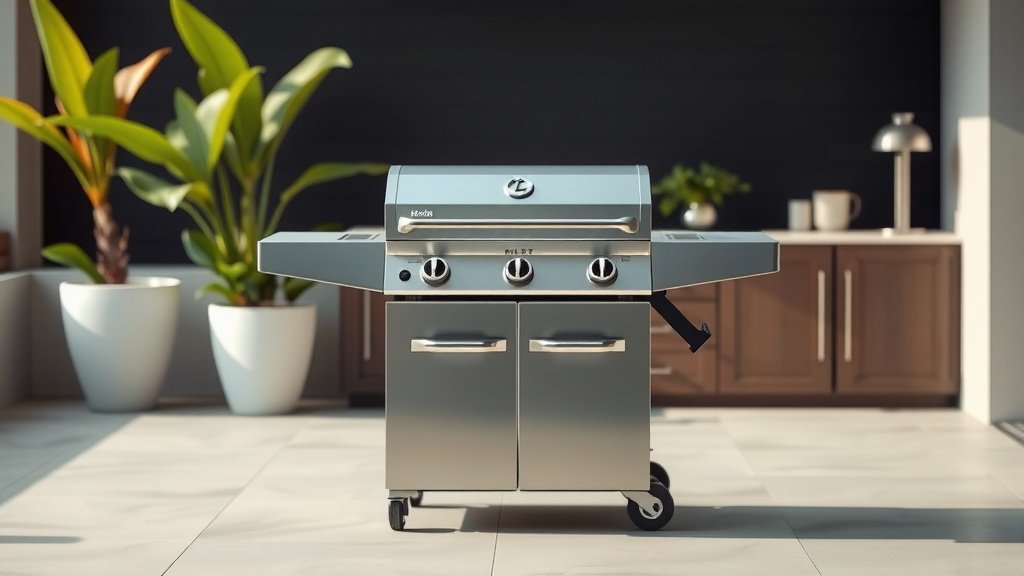
When choosing a gas grill, focus on BTU output, cooking area, construction materials like stainless steel, and key features such as side burners or rotisserie options.
Always consider the grill’s durability and the warranty it offers to ensure your investment lasts through many grilling seasons.
Here’s a quick glance at what truly matters when you’re shopping for a new grill:
- BTU is important, but look more for even heat distribution across the grates.
- Match the cooking area size to your typical guest list and family needs.
- Prioritize sturdy materials like stainless steel or cast aluminum for a longer life.
- Consider extra features like side burners or warming racks if they fit your grilling style.
- A good warranty and reliable customer support can save you headaches later on.
What To Look For In A Gas Grill?
A good gas grill offers a blend of sufficient heat, adequate cooking space, durable materials, and helpful features tailored to your grilling style. It’s about finding the right balance for your outdoor cooking adventures.
Understanding BTU: Is More Always Better?
You might think a higher British Thermal Unit (BTU) rating means a better grill, right? Not necessarily. BTU measures the maximum heat output, but it doesn’t tell you how well that heat is distributed.
Think of it like a sports car with a huge engine but bad tires. It has power, but it can’t put it down effectively. What you want is even heat across the cooking surface. Many experts say a grill with fewer BTUs but excellent design can outperform a high-BTU unit with poor construction (Consumer Reports).
The Right Cooking Area For Your Crew
How many burgers can you cook at once? That’s what the cooking area tells you. For a small family, a main cooking area of 400-500 square inches might be just right. If you love to host large gatherings, you might need 600 square inches or more.
Don’t forget the warming rack! It’s great for keeping cooked food warm or toasting buns. It adds to the total area but isn’t for primary cooking.
Materials Matter: Durability and Longevity
The materials a grill is made from directly impact its lifespan and performance. You’ll find a range of options, each with pros and cons. We found that high-quality construction materials stand up to the elements and frequent use much better.
Grill Body and Hood Materials
Stainless steel is a popular choice for its looks and resistance to rust. Look for 304-grade stainless steel; it’s more resistant to corrosion than 430-grade. Cast aluminum is another excellent option; it won’t rust and holds heat well.
What About Grill Grates?
The grates are where your food touches, so they’re important! You’ll often see:
- Cast Iron: Excellent heat retention for beautiful sear marks. Requires seasoning to prevent rust.
- Porcelain-Coated Cast Iron: Offers the benefits of cast iron with added rust protection and easier cleaning. Can chip if not careful.
- Stainless Steel: Durable, easy to clean, and rust-resistant. May not give as strong a sear as cast iron.
We found that porcelain-coated cast iron often offers a great balance of searing power and easy maintenance for many home grillers.
Essential Features You’ll Actually Use
Grills today come with a host of features. Which ones are truly helpful for you?
- Side Burner: Perfect for preparing sauces, boiling corn, or keeping side dishes warm without running back indoors.
- Rotisserie Kit: Love roasted chicken or large roasts? A rotisserie can give you perfectly cooked, juicy results.
- Sear Burner: Designed to hit extremely high temperatures for a perfect crust on your steaks.
- Internal Lights: Handy for grilling after dark, helping you see your food clearly.
- Fuel Gauge: For propane grills, this tells you how much gas is left, so you don’t run out mid-cookout.
Consider your personal cooking style. Are these features things you’ll actually use regularly, or just nice-to-haves that add to the cost?
Fuel Type: Propane or Natural Gas?
This is a big decision for many. Do you prefer the convenience of a propane tank or a permanent natural gas line?
| Feature | Propane Gas Grill | Natural Gas Grill |
|---|---|---|
| Mobility | Portable, can move freely | Fixed to gas line, less mobile |
| Fuel Supply | Tanks need refilling/exchanging | Unlimited supply from home line |
| Cost | Higher per BTU, tank refills | Lower per BTU, installation cost |
| Installation | Hook up tank, ready to use | Requires professional gas line installation |
We found that for many, the convenience of natural gas outweighs the initial installation cost if a gas line is already accessible (Energy.gov). If you plan to move your grill around, propane is your friend.
Build Quality and Brand Reputation
A good grill is more than just shiny metal. Look at the details: the thickness of the steel, the quality of the welds, and how sturdy the lid feels. A well-built grill will feel solid, not flimsy. Strong brand reputation often means better quality control and access to replacement parts later on.
Warranty and Customer Support: Your Peace of Mind
A grill is an investment. A solid warranty tells you the manufacturer stands behind their product. Look for coverage on different parts, especially burners and cooking grates, and for how long. Many experts suggest a warranty of at least 5-10 years on burners. Good customer support can be invaluable if you ever need help or replacement parts (Consumer Reports).
Setting Your Budget: An Investment, Not Just a Purchase
Gas grills range widely in price, from a few hundred dollars to several thousand. Generally, a higher price often correlates with better materials, more features, and longer durability. Think of your grill as a kitchen appliance for your backyard. How much would you invest in a good oven or stovetop? A well-chosen grill can be a long-term investment that brings joy for years.
What About Smart Grill Features?
Some newer grills come with Bluetooth or Wi-Fi connectivity, allowing you to monitor temperatures from your phone. Are these “smart” features necessary? Not for everyone. If you love technology and want to track your cooks remotely, they can be fun and useful. If you prefer a simpler approach, these might be extra costs you don’t need.
Your Gas Grill Checklist:
- Adequate BTU output with even heat distribution.
- Cooking area suited for your family size and entertaining habits.
- Durable materials like 304 stainless steel or cast aluminum.
- Grates that offer good searing and are easy to clean.
- Useful features like side burners, rotisserie, or lights.
- Chosen fuel type: Propane for portability, Natural Gas for convenience.
- Strong build quality and a reputable brand.
- A comprehensive warranty and reliable customer service.
- Price point that reflects a quality investment.
Conclusion
Choosing the right gas grill isn’t about finding the most expensive or feature-packed model. It’s about finding the one that best fits your grilling habits, your space, and your budget. Take your time, consider the points we’ve covered, and don’t be afraid to ask questions. You’ll soon be enjoying many delicious meals outdoors on your perfect new grill!
FAQs
How important is BTU rating really for a gas grill?
While BTU rating indicates the maximum heat output, its importance is often overstated. What matters more is how efficiently and evenly the heat is distributed across the cooking surface. A grill with a lower BTU but superior design and insulation can often heat up faster and maintain more consistent temperatures than a high-BTU unit with poor construction.
Should I choose stainless steel or cast iron grates?
Both have benefits. Cast iron grates excel at retaining heat, giving you excellent sear marks, but require more maintenance to prevent rust. Stainless steel grates are durable, easy to clean, and rust-resistant, though they might not achieve the same intense sear as cast iron. Porcelain-coated cast iron offers a good middle ground.
Is it worth paying more for a grill with a longer warranty?
Absolutely. A longer warranty, especially on critical components like burners and grates, signifies the manufacturer’s confidence in their product’s durability. It protects your investment and can save you money on repairs or replacements down the line. We found that opting for a grill with a more comprehensive warranty often provides better long-term value.
What’s the ideal number of burners for a home gas grill?
The ideal number of burners usually depends on the size of your cooking area and how you grill. For most families, a 3-burner grill offers enough versatility for direct and indirect cooking. If you frequently cook for larger groups or use multiple cooking zones often, a 4-burner or even 5-burner model might be more suitable.
How do I know if a gas grill is easy to clean?
Look for features like removable grease trays, grates that are easy to lift, and materials that resist food sticking. Porcelain-coated grates are generally easier to clean than bare cast iron. Also, consider the accessibility of internal components for regular maintenance. An easy-to-clean grill encourages you to use it more often!
