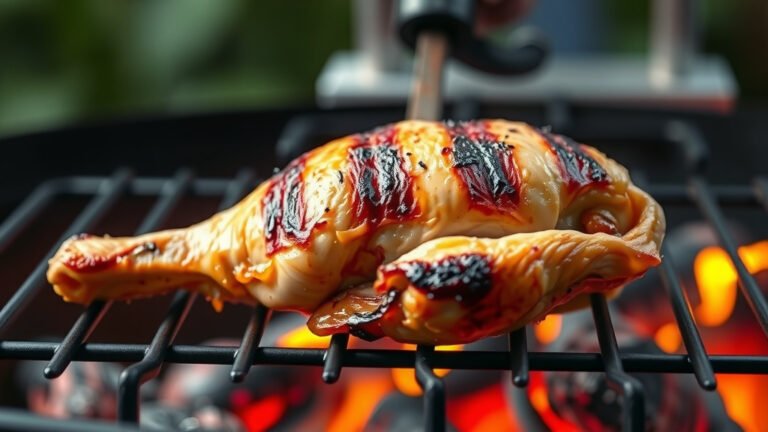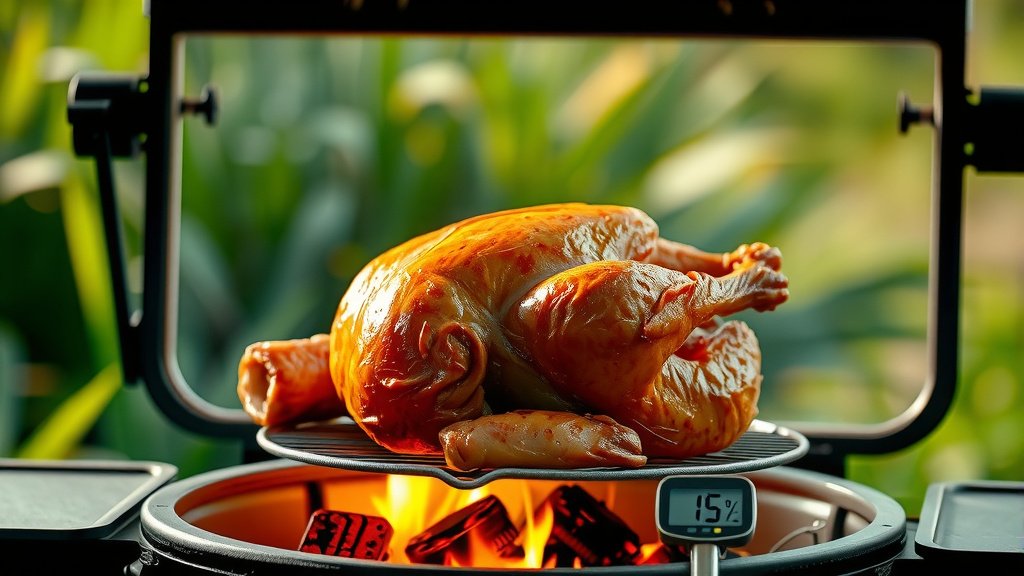
For a beautifully cooked turkey on a pellet grill, aim for a steady temperature between 225°F and 325°F, depending on your preferred cooking time and method.
The ideal internal temperature for a fully cooked turkey, regardless of the cooking temp on your pellet grill, is 165°F in the thickest part of the thigh.
- Cook turkey on a pellet grill between 225°F to 325°F for delicious results.
- Always target an internal temperature of 165°F for doneness.
- Lower temps mean more smoke flavor; higher temps mean faster cooking and crispier skin.
- Brining and spatchcocking can greatly improve your turkey’s moisture and promote even cooking.
- Resting the turkey after cooking is non-negotiable for juicy meat and better flavor distribution.
What Temp To Cook Turkey On Pellet Grill?
You should generally cook turkey on a pellet grill between 225°F and 325°F for a truly memorable meal.
This temperature range offers you flexibility, allowing you to balance smoke flavor, skin crispness, and how quickly you need dinner ready.
The Sweet Spot: 275°F for Most Turkeys
Many backyard chefs find that 275°F is the Goldilocks zone for pellet grill turkey.
It provides a good balance, giving you nice smoke flavor while still cooking the turkey in a reasonable amount of time. You often get decent skin texture here too.
Low and Slow: Maximizing Smoke Flavor at 225°F
Are you looking for that deep, smoky goodness? Then 225°F is your friend.
Cooking at a lower temperature allows the turkey to absorb more of that wonderful wood smoke flavor from your pellets. Just know it will take longer to cook.
Patience for Flavor
Think of it like a marathon, not a sprint. This method needs more time on the grill, but the results can be incredibly flavorful.
Some even start low, then raise the temperature later for crispier skin. It’s all about what you prefer!
Hot and Fast: Getting Crispy Skin at 325°F
If crispy skin is your top priority and you’re short on time, bump that pellet grill up to 325°F.
Higher heat helps render the fat under the skin more quickly, giving you that delightful crunch we all crave. You will get less smoke flavor this way.
Why Internal Temperature is King
No matter what temperature you set your pellet grill to, the absolute most important number is the turkey’s internal temperature.
The United States Department of Agriculture (USDA) recommends a safe internal temperature of 165°F in the thickest part of the thigh, without touching bone.
Tools for Accurate Temperature Reading
Don’t just guess! A reliable meat thermometer is your best friend when grilling a turkey.
We’ve found that a good digital probe thermometer, one that stays in the bird during cooking, helps monitor progress without opening the lid too often.
Probe Placement Matters
Always insert the thermometer into the thickest part of the thigh, making sure it’s not resting against bone.
Bones heat up faster than meat, and that could give you a false reading, leading to undercooked turkey (FoodSafety.gov).
Preparing Your Turkey for the Grill
A little preparation goes a long way to ensure your turkey turns out juicy and delicious, no matter the cooking temp you choose.
Don’t skip these steps; they seriously make a difference in the final taste and texture.
To Brine or Not to Brine?
Many experts say that brining your turkey can dramatically improve moisture and flavor.
A good brine, whether wet or dry, helps the turkey retain moisture during the long cooking process, preventing it from drying out (Cleveland Clinic).
Here’s a quick look at why people choose each method:
| Method | Description | Benefit | Consideration |
|---|---|---|---|
| Wet Brine | Submerging turkey in salt water with herbs. | Adds moisture throughout, boosts flavor. | Requires large container, refrigeration space. |
| Dry Brine | Rubbing turkey with salt and seasonings. | Crispier skin, tender meat. | Less mess, takes up less space. |
Spatchcocking: A Game-Changer for Even Cooking
Have you ever tried spatchcocking a turkey? It’s simply removing the backbone and flattening the bird.
Research often shows this method helps the turkey cook much more evenly and significantly reduces cooking time (National Institutes of Health).
Benefits of Flattening Your Bird
- Faster Cooking: More surface area exposed to heat.
- Even Cooking: Breast and thigh finish closer to the same time.
- Crispier Skin: All the skin is exposed to the heat.
Trussing Your Turkey
If you’re not spatchcocking, trussing can still help. It involves tying the legs and wings closer to the body.
This helps the turkey hold its shape and promotes more even cooking by protecting thinner parts from overcooking.
Choosing the Right Pellets for Turkey
The type of wood pellets you use will absolutely affect the flavor profile of your smoked turkey.
Think about what kind of smoky notes you want to add to your holiday bird.
Popular Pellet Flavor Pairings
For poultry, we found that certain wood types consistently deliver excellent results:
- Apple: A mild, sweet, and fruity smoke, great for lighter flavor.
- Cherry: Also sweet and fruity, but a bit stronger, gives a beautiful reddish hue to the skin.
- Hickory: A stronger, classic BBQ smoke flavor, use sparingly if you prefer mild.
- Pecan: Milder than hickory, with a nutty, subtle sweetness.
- Oak: A medium, versatile smoke that pairs well with most meats.
Monitoring Your Cook: What to Watch For
Once your turkey is on the pellet grill, it’s not quite set-it-and-forget-it, but it’s pretty close.
Keep an eye on a few things to ensure success, especially if you’re experimenting with temps.
Dealing with Flare-Ups
While less common on pellet grills, flare-ups can happen if drippings hit the heat source directly.
If you see excessive smoke or flames, quickly check your drip pan and adjust your turkey or grill as needed.
Here’s a quick checklist to keep your cook on track:
- Verify Grill Temp: Is your pellet grill holding its set temperature?
- Check Pellet Hopper: Do you have enough pellets for the entire cook?
- Monitor Internal Temp: Is your probe thermometer reading accurately?
- Watch the Skin: Is it browning nicely, or too fast?
- No Peeking: Resist the urge to open the lid too often; every peek extends cooking time.
The Essential Resting Period
You’ve waited patiently, and the internal temperature has hit 165°F. Your turkey is done!
But wait, don’t carve it yet! This step is arguably as important as the cooking itself.
How Long Should You Rest It?
Many chefs recommend letting your turkey rest for at least 20-30 minutes, or even up to an hour for larger birds.
Tent it loosely with foil during this time. This allows the juices, which have gathered at the center, to redistribute throughout the meat.
Cutting into it too soon will let all those delicious juices run out, leaving you with a drier turkey.
Conclusion
Cooking a turkey on a pellet grill is a truly rewarding experience, offering incredible flavor and tenderness. The key is finding that perfect balance between grill temperature and the all-important internal doneness.
Whether you choose a low-and-slow 225°F for maximum smoke or a faster 325°F for crispy skin, always prioritize reaching 165°F inside the bird. With a good thermometer, proper prep like brining or spatchcocking, and that essential resting period, you’re well on your way to a perfectly cooked, show-stopping turkey every time. Enjoy the process and the delicious results!
How long does it take to smoke a turkey at 275°F on a pellet grill?
The cooking time for a turkey at 275°F on a pellet grill can vary widely based on its size and whether it’s spatchcocked. A general guideline is about 30-40 minutes per pound for an unstuffed turkey, but always cook to an internal temperature of 165°F, not by time alone.
Do I need to flip the turkey on a pellet grill?
No, you generally do not need to flip a turkey on a pellet grill. Pellet grills cook very evenly thanks to convection heat, so flipping is usually unnecessary and can release precious heat and smoke from the grill.
Should I brine my turkey before putting it on the pellet grill?
Yes, brining your turkey before pellet grilling is highly recommended. It significantly helps the turkey retain moisture and adds flavor, which is particularly beneficial during the longer cooking times often associated with smoking.
What kind of wood pellets are best for turkey?
For turkey, fruit woods like apple and cherry pellets are excellent choices, offering a mild, sweet smoke flavor. Pecan and oak also work well, providing a slightly stronger but still complementary smoke profile. Avoid overly strong woods like mesquite for poultry.
Can I put a frozen turkey directly on a pellet grill?
No, you should never put a frozen turkey directly onto a pellet grill. You must fully thaw your turkey in the refrigerator before cooking to ensure it cooks evenly and safely. Attempting to cook from frozen will result in uneven cooking and potential food safety issues.