
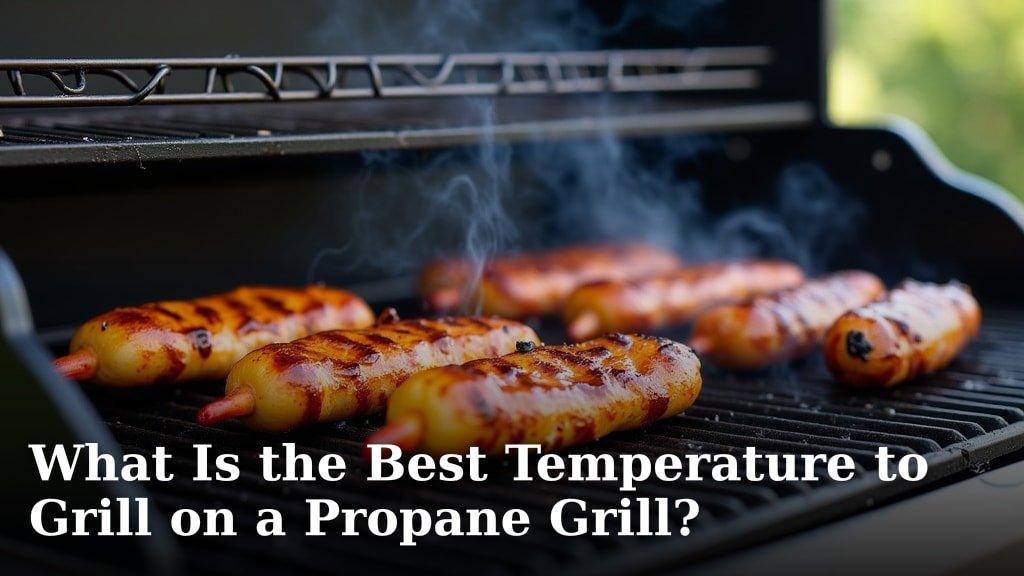
The best temperature to grill on a propane grill depends on what you’re cooking, but generally, most foods do best between Our guide to what temperature to grill chicken at can help you find the perfect setting.350°F and 450°F. For searing steaks or burgers, you’ll want a hotter grill, around 450°F to 550°F. For delicate items like fish or vegetables, a slightly lower temperature of 300°F to 350°F is often ideal.
Understanding your grill’s temperature zones is key to great grilling. A high heat zone is perfect for quick searing, while a medium heat zone cooks more evenly. You can achieve different heat levels by adjusting your grill’s burners or by moving food closer to or farther from the flame. Getting this right ensures your food is cooked perfectly, not burnt or underdone.
- Most foods grill well between 350°F and 450°F.
- Use high heat (450°F-550°F) for searing meats.
- Lower heat (300°F-350°F) is better for fish and veggies.
- Mastering grill temps prevents burnt or undercooked food.
Ready to get your grill game on point? Let’s walk through exactly how to nail those perfect grilling temperatures for any dish.
Mastering Your Propane Grill’s Temperature for Perfect Results
Figuring out the ideal temperature for your propane grill might seem tricky at first. But once you get the hang of it, your grilling game will change forever. We’re talking juicy burgers, perfectly cooked chicken, and veggies with that delightful char. Let’s break down how to get your grill dialed in.
Understanding Grill Heat Zones: Your Secret Weapon
Think of your grill like a stovetop, but much bigger and hotter. Most propane grills have multiple burners. This means you can create different heat zones. You can have a super hot area for searing and a cooler spot for gentler cooking. This is super handy for cooking different foods at once.
High Heat: The Searing Powerhouse
A high heat setting is your best friend for meats that need a good crust. We’re talking steaks, burgers, pork chops, and even thick cuts of chicken. The idea here is to cook the outside quickly. This creates a delicious sear while keeping the inside tender and juicy. Many grill masters aim for 450°F to 550°F for this task.
When you crank up the heat, you get that beautiful Maillard reaction. This is the browning process that gives grilled food its amazing flavor and aroma. Just be careful! High heat can also lead to flare-ups. Keep a spray bottle of water handy, or move food briefly if flames get too big.
Medium-High Heat: The All-Around Workhorse
This is often the sweet spot for a lot of your grilling needs. Most foods do quite well in the 350°F to 450°F range. It’s hot enough to cook through without burning the outside too quickly. Think chicken pieces, sausages, kebabs, and even some thicker fish fillets.
This temperature zone gives you a bit more control. It allows food to cook evenly without you constantly hovering. You’ll find that many recipes suggest this temperature range. It’s a safe bet for most of your grilling adventures.
Medium Heat: Gentle Cooking for Delicate Foods
Sometimes, you need to go a little cooler. For more delicate items like fish, shrimp, and vegetables, a medium heat is often best. We’re usually looking at temperatures between 300°F and 350°F here.
Why lower the heat? Well, fish can flake apart easily. Veggies can turn to mush if they get too hot too fast. A gentler heat allows them to cook through without losing their shape or texture. You can still get a nice char, but it’s less aggressive.
Low Heat: The Slow and Low Approach
While less common for everyday grilling, a low heat setting (around 250°F to 300°F) has its uses. This is more for slow-cooking or smoking. You might use this for larger cuts of meat that need a long time to become tender, like ribs or a pork shoulder. This is often called indirect grilling.
Indirect grilling means the food isn’t directly over the heat source. You’d typically turn off one burner and cook on the side where there’s no flame. This creates a convection oven effect. It’s great for breaking down tough connective tissues in meat over several hours.
How to Know Your Grill’s Temperature (Without Fancy Gadgets)
Most propane grills come with a built-in thermometer on the lid. However, these aren’t always super accurate. They measure the temperature at the top of the grill, not necessarily where your food is. Don’t worry, there are ways to get a good idea of your grill’s heat.
The Hand Test: A Quick and Dirty Method
This is an old-school trick that grillers have used for years. It helps you gauge heat levels by how long you can hold your hand about 5 inches above the grill grates. Remember to be careful and always keep your hand at a safe distance.
- High Heat (500-550°F): You can only hold your hand there for 1-2 seconds.
- Medium-High Heat (400-450°F): You can hold your hand there for 3-4 seconds.
- Medium Heat (300-350°F): You can hold your hand there for 5-6 seconds.
- Low Heat (250-300°F): You can hold your hand there for 7-8 seconds.
While not exact science, this hand test is surprisingly effective. It gives you a practical sense of the heat. Just be sure to move your hand quickly! We found this method is a great starting point for beginners.
Using an Infrared Thermometer
For more precision, an infrared thermometer is a fantastic tool. You can point it at the grill grates before you start cooking. It gives you an instant, accurate reading of the surface temperature. Many chefs and serious home cooks swear by these. They are relatively inexpensive and really help nail those temperatures.
Investing in a Good Grate Thermometer
Another option is a thermometer that clips directly onto your grill grates. These are designed to give you a more accurate reading of the cooking surface temperature. They often have larger dials and are easier to read than lid thermometers.
Temperature Guide for Common Grilling Foods
Knowing the right temperature for what you’re cooking is key to delicious results. Here’s a quick rundown for some popular items:
| Food Item | Recommended Temperature | Notes |
|---|---|---|
| Steak (Thick Cuts) | 450°F – 550°F (High Heat) | For a great sear. Aim for 2-4 minutes per side. |
| Burgers | 400°F – 450°F (Medium-High Heat) | Cook to your desired doneness. Check internal temps. |
| Chicken (Pieces) | 375°F – 425°F (Medium-High Heat) | Ensure it’s cooked through (165°F internal temp). |
| Sausages | 350°F – 400°F (Medium-High Heat) | Cook until nicely browned and heated through. |
| Fish Fillets | 300°F – 350°F (Medium Heat) | Cook gently to avoid drying out or falling apart. |
| Vegetables (Asparagus, Zucchini, Peppers) | 350°F – 400°F (Medium-High Heat) | Grill until tender-crisp with nice grill marks. |
Remember, these are general guidelines. Thicker cuts of meat will take longer to cook. Very thin items will cook much faster. Always use a meat thermometer for accuracy, especially for poultry and pork. Many health organizations recommend specific internal temperatures for safety (CDC).
Achieving Temperature Control: Burner Basics and Beyond
Your propane grill’s burners are your main tools for temperature control. Understanding how they work is half the battle.
Direct vs. Indirect Heat: Knowing Where to Cook
Direct heat means your food is placed directly over the flame or heat source. This is for quick cooking and searing. Think burgers, steaks, and vegetables.
Indirect heat means your food is placed away from the direct flame. You might turn off one or more burners. This is ideal for slow cooking, ribs, or larger roasts. It mimics an oven environment. Many grill experts say this is the key to tender, evenly cooked large cuts of meat.
Managing Your Burners for Different Zones
If you have a two-burner grill, you can create two zones easily. Turn one burner to high and the other to low. On a three-burner grill, you can have high, medium, and off (for indirect heat). More burners give you more flexibility for creating custom heat zones.
Play around with your burners. Try turning them up and down. See how long it takes your grill to heat up and cool down. This familiarity will build your confidence. We found that consistent practice makes a huge difference.
Troubleshooting Common Grilling Temperature Issues
Even with the best intentions, things can go wrong. Here are some common temperature-related problems and how to fix them.
Problem: My Grill Isn’t Getting Hot Enough
This can be frustrating! First, check your propane tank. Is it nearly empty? A low tank can cause reduced gas flow and lower heat. Also, make sure the lid was on while you were preheating. This helps the grill reach its maximum temperature.
Another common culprit is a clogged gas line or burner ports. If this happens frequently, you might need to clean your grill thoroughly. Sometimes, a faulty regulator can also be the cause. If your grill consistently struggles to heat up, it might be time for a tune-up.
Problem: My Grill is Too Hot and Burning Everything
This is a classic rookie mistake! It usually means your heat is too high, or your food is too close to the heat source for too long. Try turning down your burners. If you have direct heat under everything, try moving some food to an indirect heat zone.
Don’t be afraid to lift the lid and adjust. A quick check every few minutes is better than discovering burnt food later. Keep that spray bottle of water handy for minor flare-ups. For serious flare-ups, move the food off the direct heat until it subsides.
Your Grilling Temperature Checklist for Success
To wrap things up, here are a few key things to remember for grilling temperature success:
- Always preheat your grill thoroughly.
- Know your food’s ideal temperature range.
- Use an accurate thermometer for the best results.
- Learn to create direct and indirect heat zones.
- Adjust your burners as needed during cooking.
- Don’t be afraid to experiment and learn your grill.
Conclusion
You’ve now got the tools to master your propane grill’s temperature like a pro. Remember, the best heat for your food often falls between 350°F and 450°F, but searing steaks calls for hotter, while fish prefers cooler. Don’t forget to use temperature zones and simple checks like the hand test to guide you. Your next cookout is your chance to put this knowledge into action. So, go ahead, fire up that grill and enjoy perfectly cooked food every time!
Frequently Asked Questions
How do I know if my propane grill is hot enough before I start cooking?
A great way to check is by using the hand test. Hold your hand about 5 inches above the grates and see how long you can keep it there. This quick method helps you gauge if your grill is in the low, medium, medium-high, or high heat range.
Can I use the temperature gauge on my grill lid?
The lid thermometer gives you a general idea, but it’s not always the most accurate. It measures the temperature at the top of the grill, not necessarily at grate level where your food cooks. For more precise readings, consider an infrared thermometer or a grate thermometer.
What’s the difference between direct and indirect heat, and why does it matter for temperature?
Direct heat cooks food right over the flame, perfect for searing and quick cooking. Indirect heat moves food away from the flame, like in an oven, ideal for slower cooking larger items. Using both allows you to control the cooking process and temperature precisely.
My burgers are burning on the outside but raw inside. What am I doing wrong with the temperature?
This often means your grill is too hot, or you’re using too much direct heat for too long. Try turning down your burners or moving the burgers to a cooler, indirect zone after getting a good sear on both sides. Always use a meat thermometer for internal doneness.
Is it better to preheat my grill on high or medium?
It’s generally best to preheat your grill on high for at least 10-15 minutes. This ensures the grates get very hot, which helps prevent food from sticking and promotes a good sear. You can then adjust the burners to your desired cooking temperature.
