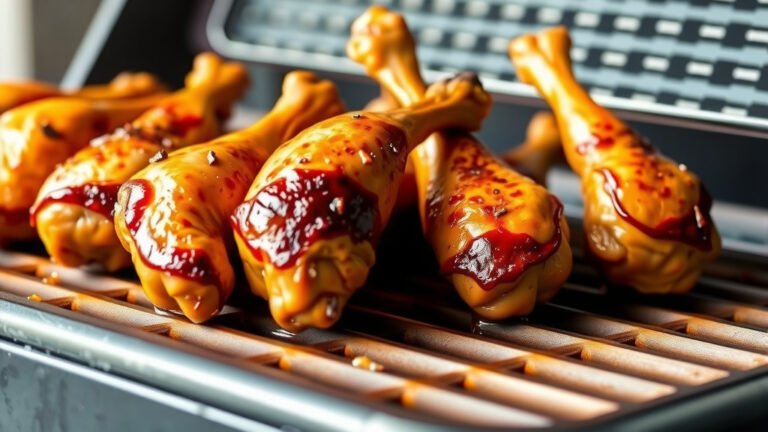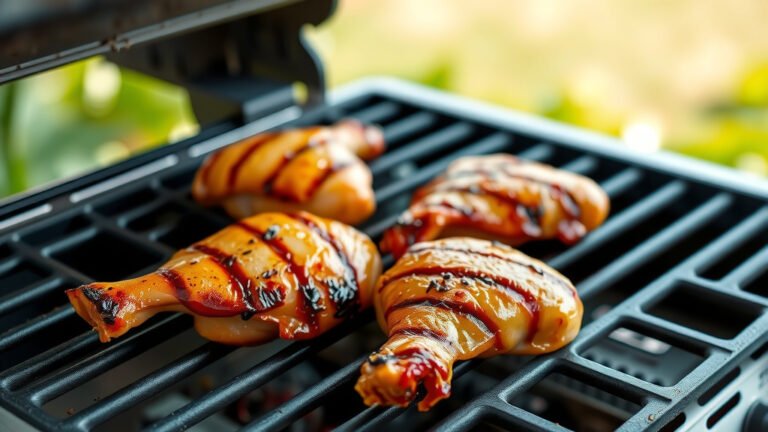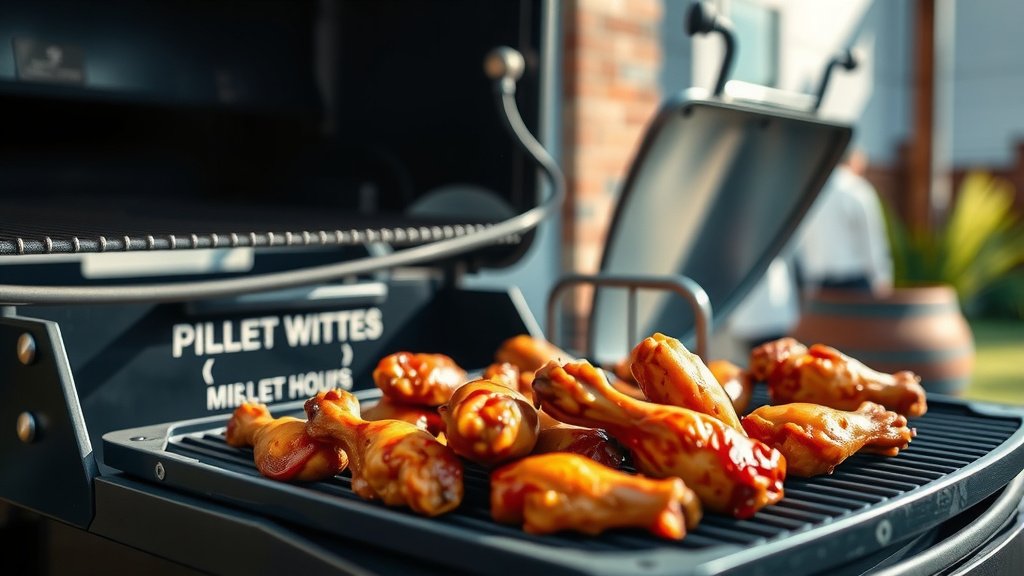
To smoke chicken wings on a pellet grill, aim for a low temperature like 225°F (107°C) for 1-2 hours to infuse smoky flavor, then crank up the heat to 375-400°F (190-204°C) for 15-30 minutes to achieve crispy skin.
You’ll know your smoked chicken wings are perfectly done when the internal temperature reaches 175°F (79°C) for tender meat, often checking with a reliable meat thermometer.
Here’s a quick summary to get you started with smoking chicken wings on your pellet grill:
- Always begin with clean and very dry wings for optimal results.
- Use a lower temperature initially (around 225°F) to truly infuse deep smoke flavor.
- Finish the wings with a blast of high heat (375-400°F) to get that coveted crispy skin.
- Consistently monitor internal temperature; 175°F is ideal for perfectly cooked wings.
- Select wood pellets that pair well with chicken, such as apple, cherry, or pecan for mild sweetness.
How To Smoke Chicken Wings On A Pellet Grill?
You can smoke delicious chicken wings on a pellet grill by starting low and slow for smoke infusion, then finishing hot for crispy skin.
This two-stage cooking method ensures both a juicy, tender interior and that delightful, sought-after crunch.
Why Your Pellet Grill Is Perfect for Wings
Pellet grills offer an incredible advantage for smoking wings: consistent temperature control.
Unlike traditional offset smokers, your pellet grill maintains a steady heat, letting you focus on the wings, not the fire (USDA).
This means less fuss and more predictable, delicious outcomes every time you smoke.
Choosing the Right Wings
When selecting your chicken wings, look for whole wings or those already cut into flats and drumettes.
Larger wings might need a bit more cooking time, but they offer more meat per piece.
Fresh wings are always a great choice, though frozen can work well if thawed properly.
Essential Wing Preparation Steps
Proper preparation is the secret ingredient for truly exceptional smoked chicken wings. Don’t skip these simple, but critical steps for success.
Pat Them Dry, Dry, Dry!
After rinsing your wings, the most important step is to pat them absolutely dry with paper towels.
Excess moisture prevents the skin from crisping up later, leaving you with a less-than-ideal texture.
Some experts even suggest letting them air dry in the refrigerator for an hour or two on a wire rack for maximum dryness (Cook’s Illustrated).
Seasoning Your Wings to Perfection
A good dry rub is your best friend when smoking chicken wings. What flavors do you love?
You can use a simple blend of salt, pepper, garlic powder, and paprika, or explore many pre-made poultry rubs.
Apply the rub generously, making sure to coat every surface of each wing for flavor infusion.
Picking Your Wood Pellets for Flavor
The type of wood pellets you choose significantly impacts the final flavor profile of your smoked chicken wings.
Think about what flavors you want to enhance in your dish. Do you prefer mild or strong?
Best Pellet Flavors for Chicken
For chicken, we found that milder fruitwoods like apple and cherry pellets work wonderfully.
They impart a delicate, sweet smoke flavor that complements chicken without overpowering it.
Hickory and pecan also a fine choice, giving a slightly stronger, more classic BBQ taste.
Setting Up Your Pellet Grill for Success
Getting your pellet grill ready is straightforward, but a few details will ensure your wings smoke perfectly.
Proper setup guarantees even cooking and optimal smoke production.
Preheating and Smoke Settings
Start by filling your hopper with your chosen wood pellets.
Preheat your pellet grill to 225°F (107°C) and allow it to reach that temperature steadily, which might take 15-20 minutes.
Many grills have a “Smoke” setting; this setting can add extra smoke before reaching your desired temperature.
The Low and Slow Smoke Phase
This is where your wings absorb all that wonderful, rich smoky flavor.
Resist the urge to peek too often; let the smoke do its work.
Initial Smoke Time and Temperature
Place your seasoned wings directly on the grill grates, ensuring there’s some space between each wing for even air and smoke circulation.
Maintain the 225°F (107°C) temperature for about 1 to 1.5 hours.
This low temperature is crucial for the chicken to truly soak in the smoky goodness.
Achieving That Irresistible Crispy Skin
The biggest challenge with smoked chicken wings is often getting crispy skin. No one likes rubbery chicken skin, right?
We’ve got a trick that almost always works to give you that perfect crunch.
The High Heat Finish
After the initial smoking phase, increase your pellet grill’s temperature to 375-400°F (190-204°C).
Move the wings to a hotter zone if your grill has one, or simply cook them at the higher temperature for 15-30 minutes.
Keep a close eye on them; the higher heat will render the fat and crisp up the skin beautifully.
Here’s a quick overview of the temperature changes you’ll be making:
| Phase | Temperature (F) | Temperature (C) | Approximate Time | Goal |
|---|---|---|---|---|
| Smoking | 225°F | 107°C | 60-90 minutes | Infuse Smoke Flavor |
| Crisping | 375-400°F | 190-204°C | 15-30 minutes | Achieve Crispy Skin |
When to Add Your Favorite Sauce
If you love sauced wings, timing is everything to prevent burning and ensure a nice glaze.
Most experts suggest adding sauce towards the very end of the cooking process.
The Glazing Method
Once your wings have reached their internal temperature of 175°F (79°C) and the skin is crispy, you can toss them in your chosen sauce.
Return them to the grill for another 5-10 minutes, allowing the sauce to caramelize and set slightly.
This creates a sticky, flavorful coating that truly elevates the wing experience.
Common Challenges and Quick Solutions
Even seasoned grillers face minor hurdles. Here’s how to navigate some common wing dilemmas.
Addressing Rubbery Skin
If your wings come out with rubbery skin, it’s almost always due to not enough direct heat at the end.
Next time, ensure your grill reaches at least 375°F (190°C) for the finishing stage, or try a light dusting of baking powder mixed with your dry rub.
Baking powder raises the skin’s pH, which promotes browning and crisping (America’s Test Kitchen).
Preventing Dry Wings
Dry wings are usually a sign of overcooking. Did you check the internal temperature?
A reliable meat thermometer is your best friend here, pulling the wings once they hit 175°F (79°C) for ideal tenderness.
Consider a quick brine if you consistently struggle with dryness, as it helps retain moisture.
Your Pre-Smoke Checklist for Wings
Before you even light your grill, run through this quick checklist to ensure a smooth smoking process.
Being prepared means you can relax and enjoy the cooking.
- Are your chicken wings thawed and thoroughly patted dry?
- Have you applied your chosen dry rub evenly to all surfaces?
- Is your pellet hopper full of your preferred wood pellets?
- Do you have a reliable meat thermometer ready to use?
- Is your chosen BBQ sauce (if using) prepared and ready for the final step?
Conclusion
Smoking chicken wings on a pellet grill might seem like a gourmet endeavor, but it’s truly accessible for everyone.
By following a simple two-stage process—low and slow for smoke, then high heat for crisp—you can achieve restaurant-quality results right in your backyard.
Remember to dry your wings well, season them generously, and always check that internal temperature for perfectly cooked, juicy, crispy wings every time. Enjoy your delicious creations!
Can I use frozen wings for smoking?
Yes, you can smoke frozen chicken wings, but they must be completely thawed first. Thawing ensures even cooking and allows the dry rub to adhere properly. Always thaw them safely in the refrigerator overnight before preparing them for the smoker.
What internal temperature is safe for smoked chicken wings?
While poultry is generally safe at 165°F (74°C), many pitmasters prefer to cook chicken wings to 175°F (79°C) or even 180°F (82°C). This higher temperature helps break down the connective tissues in the wings, resulting in a more tender and juicy texture around the bone (USDA).
How do I make my smoked wings spicier?
To make your smoked wings spicier, incorporate cayenne pepper or chili powder into your dry rub. You can also toss them in a hot sauce or a spicy glaze during the final crisping phase. Consider adding a dash of ghost pepper or habanero powder for extreme heat if you dare!
Do I need to flip the wings while smoking?
While pellet grills offer fairly even heat, gently flipping your wings once or twice during the smoking phase can promote more uniform cooking and smoke absorption. This is especially true during the higher-heat crisping stage to ensure both sides achieve that desirable crunch.
How long do smoked chicken wings last in the refrigerator?
Properly stored smoked chicken wings will last for 3-4 days in the refrigerator. Make sure to place them in an airtight container within two hours of cooking to maintain freshness and safety (FoodSafety.gov).