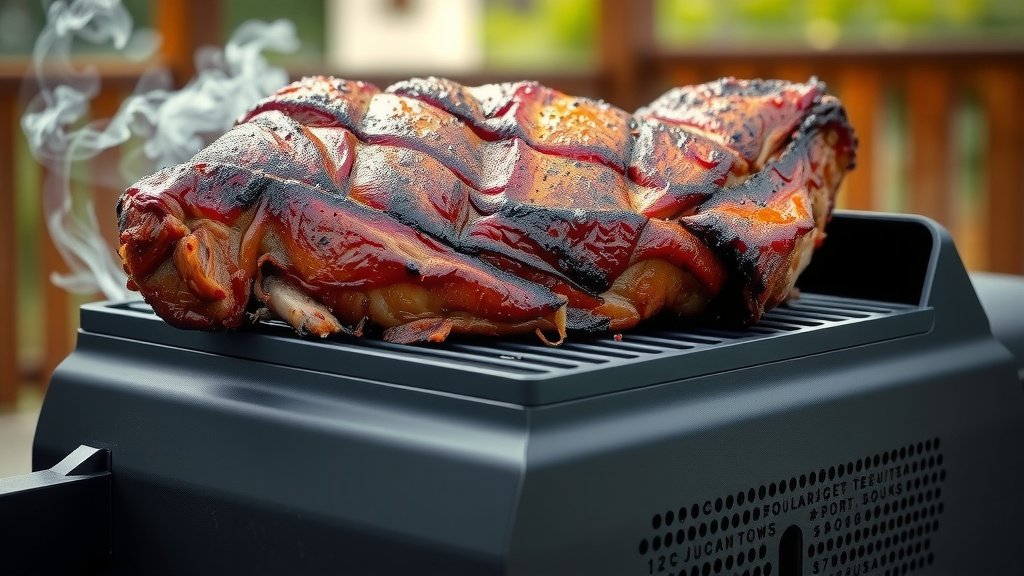
To smoke a brisket on a pellet grill, aim for a consistent temperature of 225-275°F, using wood pellets like oak or hickory, and cook until the internal temperature reaches 200-205°F and the meat is probe-tender. You will typically allow for a long resting period before slicing.
Start with a well-trimmed brisket, apply your favorite rub, and maintain stable heat throughout the cook, ensuring you monitor internal temperature carefully with a good probe thermometer.
- Prepare your brisket by trimming excess fat and applying a generous rub.
- Set your pellet grill to a steady 225-275°F, focusing on consistent heat.
- Smoke the brisket unwrapped until it develops a nice bark and hits the “stall” (around 150-160°F internal).
- Wrap the brisket in butcher paper or foil to push through the stall and keep it moist.
- Cook until it reaches 200-205°F internal temperature and feels tender when probed.
- Rest the brisket for several hours to redistribute juices, then slice against the grain.
How To Smoke A Brisket On A Pellet Grill?
Smoking a brisket on a pellet grill means you are aiming for a moist, tender result with a beautiful smoke ring. You will need to prepare your meat, manage your grill’s temperature, and be patient for many hours. This method combines the ease of a conventional oven with the flavor of traditional smoking.
Choosing Your Brisket
Selecting the right brisket is your first step to success. Look for a whole packer brisket, which includes both the flat and the point cuts. We found that a well-marbled brisket often yields a more succulent final product.
Selecting Quality Pellets
Your wood pellets bring all the smoky goodness to your brisket. Many experts say that oak, hickory, or a competition blend work exceptionally well for beef (Texas A&M AgriLife Extension). You want high-quality, food-grade pellets for the best flavor.
Prepping Your Brisket
Proper preparation makes a world of difference in the final taste and texture. This involves trimming the fat and seasoning the meat generously. Don’t rush this stage; it truly sets the foundation.
Trimming Techniques
Trimming excess hard fat and silver skin is essential for even cooking and smoke penetration. You want to leave about a quarter-inch fat cap on the top of the brisket. This fat melts slowly, keeping your meat moist.
Rubbing It Down
A good rub is your brisket’s best friend. Many people prefer a simple salt and pepper blend, often called a “dalmatian rub.” You can also experiment with other spices to find your perfect flavor profile.
Setting Up Your Pellet Grill
Getting your grill ready means ensuring stable temperatures and a clean cooking environment. A consistent heat source is incredibly important for long cooks. You want your grill to be ready before the brisket goes on.
Optimal Temperature Zones
For brisket, we found that a consistent temperature of 225-275°F works well. Some pitmasters prefer 250°F exactly for a balance of speed and smoke. Maintaining this steady temperature helps the meat cook evenly and absorb more smoke flavor.
Humidity and Water Pans
Placing a water pan in your pellet grill can add humidity to the cooking environment. Many experts say this helps keep the brisket moist throughout the long cook. It’s a simple trick to prevent your brisket from drying out during extended smoking.
The Smoking Journey Begins
Once your grill is stable and your brisket is ready, it’s time to let the magic happen. This process takes many hours, so patience is a virtue here. You’ll be monitoring both the grill temperature and the meat’s internal temperature.
Navigating the Stall
Around 150-160°F internal temperature, your brisket will likely hit a “stall” where its temperature plateaus. This can be frustrating, but it’s completely normal. The meat is cooling itself through evaporative cooling, and you just need to wait it out.
- Don’t panic if the temperature stops rising for a few hours.
- Resist the urge to turn up the heat too high.
- Consider wrapping the brisket to push past the stall more quickly.
- Maintain consistent grill temperature during this phase.
To Wrap or Not to Wrap?
Wrapping your brisket, often in butcher paper or foil, helps it power through the stall and retain moisture. Butcher paper allows some breathability, preserving more bark, while foil creates a steamy environment. We found that wrapping is often the preferred method for beginners (AmazingRibs.com).
The Final Stages
You’re nearing the finish line, but these final steps are just as important as the first. The goal is a brisket that is tender, juicy, and falls apart easily. Don’t pull it off too early or skip the all-important rest.
Checking for Doneness
Your brisket is done not just by temperature, but by feel. While 200-205°F is a good target, the real test is when a probe slides into the meat with little resistance, like it’s going into warm butter. This indicates the collagen has broken down.
| Stage | Approximate Internal Temp | What to Look For |
|---|---|---|
| Initial Smoke (Unwrapped) | 150-160°F | Good bark development, hitting the “stall” |
| Wrapped Cook | 160-200°F | Pushing through the stall, meat tenderizing |
| Final Doneness | 200-205°F | Probe slides in with minimal resistance |
The Critical Rest
After reaching its target temperature, let the brisket rest for at least 2-4 hours, or even longer. Wrap it tightly and place it in a cooler to hold the heat. This resting period allows the juices to redistribute, leading to a more tender and flavorful experience.
Slicing for Tenderness
Slicing against the grain is non-negotiable for tender brisket. The flat and point often have grains running in different directions, so separate them before slicing. This breaks up the muscle fibers, making each bite incredibly tender. Here’s a quick checklist:
- Identify the grain of the flat and the point.
- Separate the flat from the point once cooled slightly.
- Slice the flat against the grain into pencil-thick slices.
- Slice the point, which is often shredded or chopped, after separating.
- Use a sharp slicing knife for clean cuts.
Troubleshooting Common Brisket Issues
Even experienced pitmasters sometimes encounter challenges. Don’t worry; many common issues have straightforward solutions. You can still save your brisket or learn for your next smoking adventure.
Dry Brisket?
If your brisket turns out dry, it often means it was overcooked or didn’t rest enough. You might try injecting it with beef broth before smoking next time. Also, ensure you use a water pan to add moisture to the grill.
Tough Brisket?
Toughness usually points to undercooking or improper slicing. If the internal temperature didn’t reach 200-205°F and feel tender, it needed more time. Always slice against the grain to ensure each piece is as tender as possible.
Conclusion
Smoking a brisket on a pellet grill is a rewarding journey, offering delicious results with practice and patience. By choosing a good brisket, managing your grill’s temperature, and understanding the cooking stages, you can create a truly memorable meal. Remember that temperature control and a proper rest are your best friends for success. Don’t be afraid to experiment with rubs and pellets to discover your signature brisket.
How long does it take to smoke a 10 lb brisket on a pellet grill?
Smoking a 10 lb brisket on a pellet grill typically takes around 10-12 hours at 225-275°F, though cooking times can vary greatly. You should always cook to probe tenderness and internal temperature, not just by time.
Do you wrap brisket on a pellet grill?
Yes, many people wrap brisket on a pellet grill, usually after it hits the “stall” (around 150-160°F internal temperature). Wrapping helps the brisket cook through the stall more quickly and retains moisture, preventing it from drying out.
What is the best internal temperature for a smoked brisket?
The best internal temperature for a smoked brisket is generally between 200-205°F. However, the true indicator of doneness is when a probe slides into the thickest part of the meat with very little resistance, indicating optimal tenderness.
What kind of pellets are best for smoking brisket?
For smoking brisket, oak, hickory, or a competition blend (often a mix of various hardwoods) are highly recommended. These woods provide a robust smoke flavor that complements beef well without being overpowering.
Should I trim the fat off a brisket before smoking?
Yes, you should trim the fat off a brisket before smoking. While some fat adds flavor and moisture, you typically want to leave about a quarter-inch fat cap. This helps with even cooking and allows for better smoke penetration into the meat.