
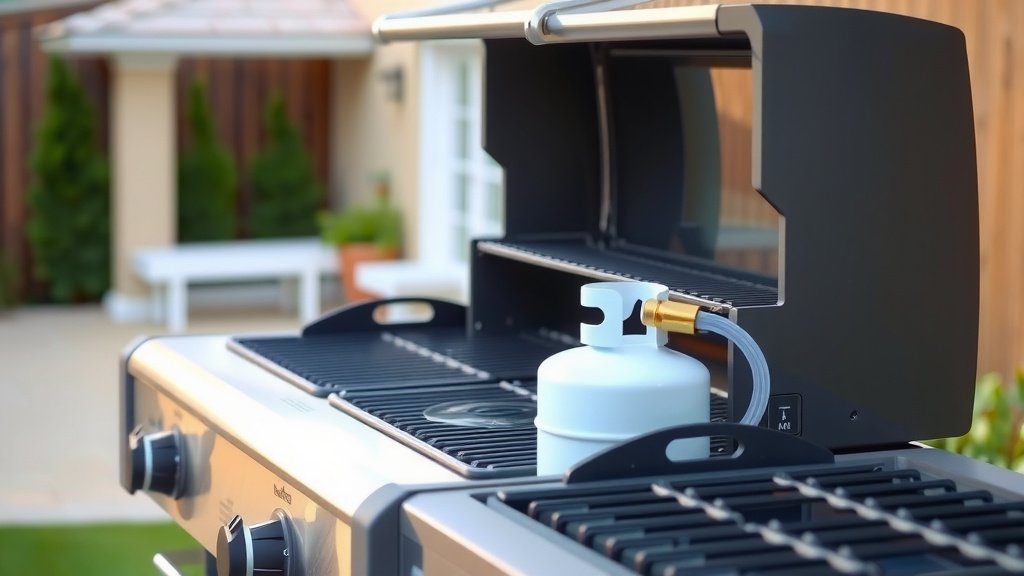
To remove a propane tank from a gas grill, first turn off the gas valve on top of the tank by rotating it clockwise until it’s snug.
Then, locate the large regulator nut connecting the gas line to the tank, and turn it clockwise (this is a reverse thread) until it detaches completely, allowing you to carefully lift the tank away.
- First, always prioritize safety by turning off the tank’s gas valve.
- You’ll need an adjustable wrench, as the regulator nut can be tight.
- Remember that propane connections use a left-hand (reverse) thread, so turn clockwise to loosen.
- Gently unhook the tank from any securing trays or straps before lifting it out.
- Store the removed tank upright in a well-ventilated area, away from direct sunlight.
How To Remove A Propane Tank From A Gas Grill?
Removing a propane tank from your gas grill might seem a bit daunting, but it’s a straightforward process when you know the steps. You are simply disconnecting the fuel source from your cooking machine.
Why Removing Your Propane Tank Matters
Why even bother taking it off? Well, you might need a refill, want to swap an old tank for a new one, or simply store your grill away for the season. Proper removal ensures both your safety and the longevity of your equipment.
Safety First: Your Number One Priority
Before you touch anything, let’s talk safety. Propane is highly flammable, so treating it with respect is key. Think of it like handling a tiny, contained volcano – you want to be careful.
We found that most grill-related incidents often stem from overlooked safety steps (National Fire Protection Association). Always make sure your grill is completely cooled down before you start.
Quick Safety Checklist Before You Start
- Is your grill completely cool?
- Are there any open flames nearby?
- Do you have good ventilation?
- Is your grill’s main burner control in the “off” position?
- Are you wearing gloves for a better grip?
Gather Your Gear: What You’ll Need
You won’t need a whole toolbox, but a couple of items will make your life easier. An adjustable wrench is often helpful, especially if the regulator nut is a bit stubborn. Sturdy work gloves can also provide a better grip and protect your hands.
Step-by-Step Guide: Detaching the Tank Safely
Alright, let’s get into the actual process. It’s a series of simple actions, but doing them in the correct order is what makes it safe and easy for you.
Step 1: Shut Off the Gas Valve
This is the most critical first step. Locate the valve on the top of the propane tank. Turn this valve clockwise until it feels snug and you can’t turn it anymore. This action completely stops the flow of gas from the tank.
Step 2: Disconnect the Regulator Nut
Next, find the large nut that connects the grill’s gas line regulator to the tank valve. This is where it gets a little tricky for some: propane tank connections use a “left-hand thread.” That means you turn the nut clockwise to loosen it, which feels backward if you’re used to regular nuts and bolts.
Many experts emphasize that propane connections use a reverse thread, meaning you turn it clockwise to loosen (Propane Education & Research Council). Use your adjustable wrench if it’s too tight to turn by hand. Once it’s loose, you can finish unscrewing it.
Step 3: Unhook the Tank From Its Support
Most grills have a support system for the propane tank, like a tray at the bottom or a strap that holds it in place. Carefully unlatch any straps or lift the tank off its designated tray. This frees the tank for removal.
Step 4: Carefully Remove and Store the Tank
With the nut disconnected and the tank unhooked, you can now carefully lift the propane tank away from the grill. Always keep the tank upright when moving it. Store it in a well-ventilated area, outdoors, and away from direct sunlight or heat sources.
What To Do Next: Your Empty Tank Options
Once you’ve removed the empty tank, you have choices. Do you refill it, or do you exchange it for a full one? Both options have their pros and cons, depending on what works best for your grilling habits.
Refill vs. Exchange: Which Is Better?
Deciding between refilling your current tank or exchanging it for a pre-filled one often comes down to convenience and cost. Here’s a quick look at the typical differences you might encounter.
| Feature | Propane Tank Refill | Propane Tank Exchange |
|---|---|---|
| Convenience | Requires finding a refill station and waiting. | Quick swap at many retail locations. |
| Cost | Often cheaper per gallon; you only pay for gas used. | Might pay for convenience; fixed price for tank. |
| Tank Ownership | You keep your tank; ideal if your tank is new. | You swap your tank for a different one. |
| Inspection | Tanks are often inspected during refill. | Exchange tanks are usually inspected. |
Troubleshooting Common Removal Issues
Sometimes, things don’t go perfectly smoothly. What if that regulator nut is stuck? A little rust or grime can make it difficult. A quick spray of penetrating oil (like WD-40, but be careful not to get it on rubber seals) and waiting a few minutes can help loosen it up. Always use the right size wrench to avoid stripping the nut.
If you notice a slight hiss of gas when loosening the nut, don’t panic. If you turned the tank valve off completely in Step 1, it’s likely just residual pressure in the line. The hiss should stop quickly. If it doesn’t, ensure the tank valve is indeed fully closed.
When Is It Time for a New Tank?
Propane tanks have an expiration date, usually stamped on the collar. They are typically good for 10-12 years from the manufacturing date. If your tank is past this date, or if it shows signs of rust, dents, or other damage, it’s time to replace it. A damaged tank can be unsafe to use or refill.
Conclusion
Removing a propane tank from your gas grill truly is a simple task once you understand the few key steps. By prioritizing safety, remembering that clockwise-to-loosen rule for the regulator, and handling the tank with care, you’ll be able to swap tanks with confidence. Keep grilling, and stay safe out there!
How often should I check my propane tank for leaks?
It’s a good practice to check for leaks every time you connect a new tank or after any maintenance. You can easily do this by applying a soapy water solution to the connections. If you see bubbles, you have a leak.
Can I store a full propane tank indoors?
No, full or empty propane tanks should never be stored indoors, in a garage, or in an enclosed area. They must always be stored outdoors in a well-ventilated space, away from direct sunlight and any ignition sources.
What if my regulator nut is cross-threaded and stuck?
If the regulator nut feels cross-threaded and won’t budge, do not force it aggressively. You risk damaging the valve or the regulator itself. It’s often best to seek professional help from a grill technician or a propane supplier in such cases.
Is it normal for a propane tank to feel cold after use?
Yes, it’s completely normal for a propane tank to feel cold, or even have frost on its exterior, especially during extended use or in colder weather. This is due to the gas inside changing from liquid to vapor, which is an endothermic (cooling) process.
Can I lay a propane tank on its side for transport?
When transporting a propane tank, it’s always safest to keep it upright and secured to prevent it from rolling around. While short distances might allow for it to be on its side, upright transport minimizes pressure on the valve and reduces risk.
