
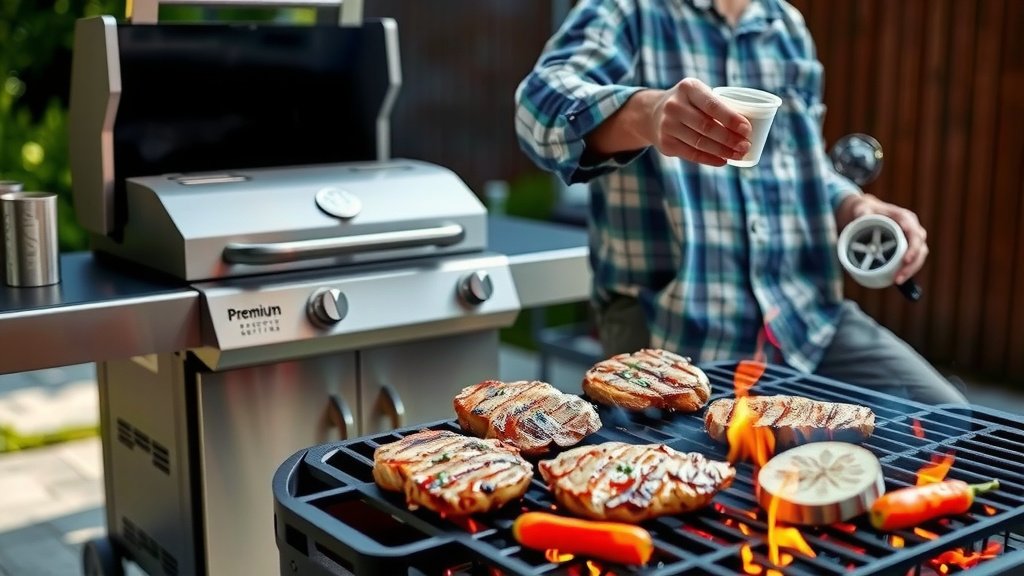
To make your gas grill taste like charcoal, focus on adding smoke flavor using wood chips or chunks and achieving high, direct heat for searing, much like a charcoal fire.
You can mimic charcoal’s smoky depth and searing power by incorporating a smoker box, lava rocks, or proper two-zone grilling techniques for a richer flavor profile.
- Get a smoky flavor on your gas grill using **wood chips** in a smoker box.
- Mimic intense, direct heat with **lava rocks or briquettes** for better searing.
- Learn to create **two-zone cooking** for versatile heat management.
- Use **marinades and rubs** to add depth, complementing any smoky notes.
- Proper **grill maintenance** and smart lid use also play a role in flavor.
How To Make Gas Grill Taste Like Charcoal?
Making a gas grill taste like charcoal involves adding wood smoke and creating zones of intense heat, which brings a deeper flavor to your food.
Why Aim for Charcoal Flavor?
Charcoal grilling offers a unique smoky taste and a crispy exterior that many people love. This flavor comes from the burning charcoal and the drippings hitting the coals.
Many home cooks miss that authentic taste when they switch to the convenience of gas. You are not alone in wanting that robust, outdoor flavor!
The Flavor Profile Difference
Charcoal grills produce a distinct smoky taste and a fantastic crust on your food. This is due to radiant heat and the smoke from burning wood or charcoal itself. Gas grills, by contrast, offer clean heat but lack that smoky element.
Smoking Chips: Your Best Friend
Adding wood chips is probably the most direct way to get that smoky, charcoal-like taste on your gas grill. You are essentially creating a small smoke source inside your grill.
Choosing the Right Wood Chips
Different wood types give different smoke flavors. For example, hickory offers a strong, bacon-like taste, while apple wood provides a milder, sweeter smoke. Mesquite is very intense and best for red meats.
We found that **oak and cherry wood** are very versatile and generally please most palates (National BBQ Association).
Preparing Your Wood Chips
Some people soak wood chips in water for 30 minutes before use, believing it creates more smoke. Others say dry chips produce cleaner smoke faster. Try both methods to see what you prefer.
Many experts suggest that **unsoaked chips ignite quicker** and produce smoke immediately, which is often what you need for shorter cooks.
Using a Smoker Box or Foil Pouch
To use wood chips, place them in a metal smoker box or wrap them tightly in heavy-duty aluminum foil. Poke several holes in the foil pouch to let the smoke escape.
Put this box or pouch directly on the grill grates over a lit burner. Once it starts smoking, you can place your food on the cooler side of the grill for indirect cooking.
Lava Rocks or Ceramic Briquettes
Original gas grills often used lava rocks, and many still do today. These porous rocks sit under the grates, absorbing heat and creating hot spots.
When drippings hit the hot rocks, they vaporize, returning flavor and moisture to your food. This mimics the vaporizing effect of charcoal.
How They Mimic Charcoal Heat
Lava rocks and ceramic briquettes help distribute heat more evenly and create more radiant heat. They also catch meat drippings, causing them to smoke and add flavor back to your food.
Placement and Maintenance Tips
Replace your grill grates with a layer of lava rocks or ceramic briquettes. Make sure they are spread out evenly. Over time, these can get very dirty and reduce flavor, so keep them clean. We found that cleaning or replacing them yearly helps **maintain good flavor**.
Creating a Two-Zone Heat Setup
This technique is essential for successful grilling, no matter the fuel source. It allows you to sear food over high heat and then finish cooking it slowly.
Why Zone Cooking Matters
With a gas grill, you can turn off one or more burners to create a cool zone. Light the remaining burners to high heat. This gives you a direct-heat zone for searing and an indirect-heat zone for gentle cooking.
This method mimics how you would move food on a charcoal grill to prevent burning while ensuring it cooks through.
Marinades, Rubs, and Sauces
While not directly replicating charcoal, these can greatly enhance your food’s flavor. They build a foundation for any smoky notes you introduce.
Enhancing Smokiness with Spices
Consider using **smoked paprika** or **liquid smoke** sparingly in your marinades and rubs. These ingredients can add a subtle background smoke flavor that complements your grilling efforts.
Be careful with liquid smoke, as a little goes a long way. Too much can make your food taste artificial.
Proper Venting and Lid Management
Managing airflow and keeping the lid closed helps trap smoke and heat inside your grill. This is crucial for infusing your food with flavor.
Don’t Peek Too Often!
Every time you lift the lid, heat and precious smoke escape. Try to keep the lid closed as much as possible, especially when using wood chips.
This allows the smoke to circulate and penetrate the food, giving you that desired charcoal taste. Many culinary schools teach patience during grilling.
Preheating is Key
Just like baking, proper preheating is vital for grilling success. A properly hot grill sears food quickly, locking in juices and flavor.
Building the Right Surface Temperature
Allow your gas grill to preheat with the lid closed for at least 10-15 minutes. You want the grates to be hot enough to sizzle when you place food on them.
A well-preheated grill helps create a **beautiful crust**, similar to what you’d get from a charcoal fire.
Cleaning Your Grill Grates
Clean grates are important for both food safety and flavor. Old food bits can impart off-flavors to your fresh ingredients.
Removing Old Residue
Always scrape your grill grates clean after each use, or at least before the next cook. This prevents old, burnt residue from sticking to new food and spoiling its taste.
A clean cooking surface ensures that the flavors you are trying to create, like smoke, are the only ones your food absorbs.
Table: Gas Grill vs. Charcoal Flavor Enhancers
| Aspect | Charcoal Grill Benefit | Gas Grill Enhancer |
|---|---|---|
| Flavor Source | Burning charcoal, wood | Wood chips/chunks |
| Heat Type | Radiant, intense | Lava rocks, briquettes |
| Searing | Naturally high heat | High preheat, two zones |
| Smoke Infusion | Constant, natural | Smoker box, foil pouch |
| Moisture Return | Drippings vaporize | Drippings on hot rocks |
Checklist: Getting That Charcoal Taste
- Get a smoker box or make a foil pouch.
- Choose flavorful wood chips like hickory or apple.
- Consider adding lava rocks or ceramic briquettes.
- Set up two-zone heating for searing and slow cooking.
- Use rubs or marinades with smoky spices.
- Keep the lid closed to trap smoke and heat.
Conclusion
While a gas grill can’t be an exact clone of a charcoal grill, you can certainly get very close to that desired smoky, rich flavor. By using wood chips, managing your heat zones, and incorporating other simple tricks, you will significantly **improve your grilling results**.
Experiment with different wood types and techniques. Soon, your gas grill meals will boast that delicious, hard-to-beat charcoal-kissed taste. Happy grilling!
Can I use charcoal briquettes directly in my gas grill?
No, you should not use charcoal briquettes directly inside your gas grill. Gas grills are not designed to handle burning charcoal, which can damage the grill components and create a fire hazard.
How long does it take for wood chips to start smoking in a gas grill?
Typically, wood chips in a smoker box or foil pouch will start producing smoke within 10-15 minutes on a medium-high burner. Make sure the heat directly underneath the box is on.
What’s the difference between wood chips and wood chunks for smoking?
Wood chips are smaller and burn faster, producing smoke for a shorter period, ideal for quicker cooks. Wood chunks are larger and burn much slower, creating smoke for several hours, which is better for long smoking sessions.
Do I need a special smoker box, or can I just use foil?
A dedicated smoker box is convenient and durable, but a heavy-duty aluminum foil pouch works perfectly well. Just be sure to poke plenty of holes for the smoke to escape effectively.
Will adding a smoke tube or pellet tube help achieve a charcoal taste?
Yes, a smoke tube or pellet tube filled with wood pellets can provide a consistent, low-and-slow smoke for several hours. This is a great way to add **significant smoky flavor** to foods cooked on a gas grill.
