
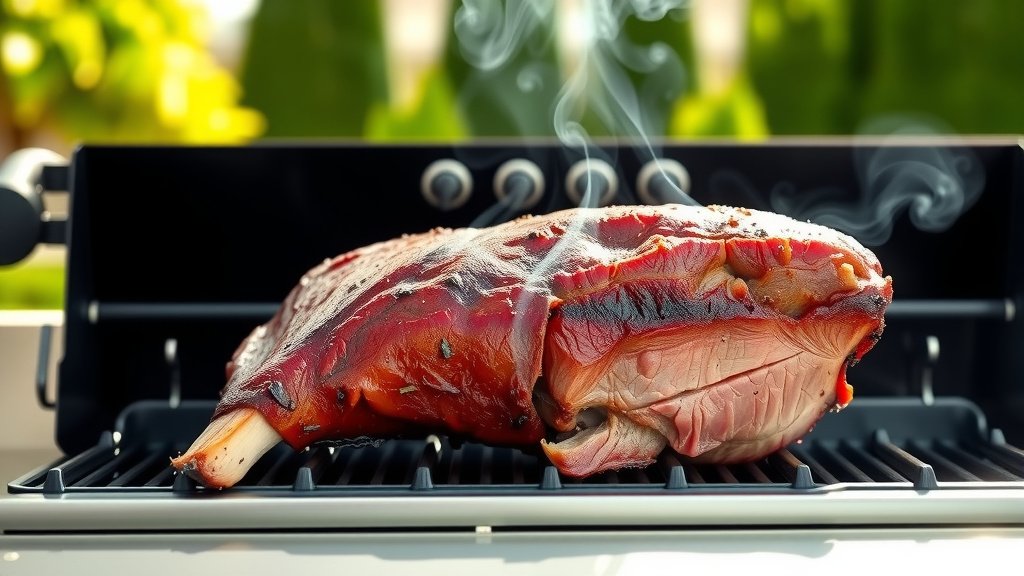
To make brisket on a gas grill, you need to set your grill for indirect heat, keeping the temperature between 250-275°F for a slow cook. A smoker box filled with wood chips will give your brisket the desired smoky flavor you expect.
The secret to tender gas grill brisket is patience, careful temperature control, and a good resting period after cooking.
For those short on time, here’s the quick scoop on making brisket on your gas grill:
- Choose a quality brisket flat or point.
- Trim excess fat, leaving about a quarter-inch layer.
- Apply a flavorful dry rub generously.
- Set your gas grill for indirect heat, aiming for 250-275°F.
- Use a smoker box with wood chips for a smoky aroma.
- Cook low and slow until the internal temperature reaches 200-205°F.
- Rest the brisket properly before slicing against the grain.
How To Make Brisket On Gas Grill?
Making brisket on a gas grill involves mimicking a smoker by using indirect heat and wood chips. It’s totally possible to achieve a delicious, tender result right in your backyard.
You can create a barbecue masterpiece even without a dedicated smoker. Let’s look at how you can do it well.
Choosing Your Brisket Cut
Start with the right piece of meat. You’ll usually see two main cuts: the flat and the point. The flat is leaner, while the point has more fat and marbling.
We often find that a whole packer brisket, which includes both, offers the best flavor and juiciness. If you’re just starting, a smaller flat cut can be less intimidating (USDA).
Trimming for Success
Proper trimming is key for even cooking and a good bark. You want to remove hard, thick fat that won’t render down.
Aim to leave about a quarter-inch of soft fat on the surface. This fat helps to keep the meat moist and adds flavor during the long cooking process.
Essential Trimming Tips
- Remove any silver skin from the lean muscle.
- Shape the brisket to be somewhat even in thickness.
- Trim off small, dangling pieces that might burn easily.
Crafting Your Brisket Rub
A good rub adds tons of flavor. Most brisket rubs feature a simple blend of salt, black pepper, and garlic powder.
Many experts say to keep it basic, letting the beef flavor shine. You can also add a touch of paprika or a little sugar for extra zest.
Apply your rub generously to all surfaces of the brisket. Some people like to apply it the night before, while others prefer just an hour or two before grilling.
Setting Up Your Gas Grill for Brisket
This is where the magic happens for gas grill brisket. You need to create a zone of indirect heat.
Turn on one or two burners on one side of your grill to low-medium. Leave the burners directly under where the brisket will sit completely off.
Achieving the Right Temperature
Your target grill temperature should be between 250-275°F. This low and slow approach is what breaks down tough collagen in the meat, making it tender.
Use your grill’s built-in thermometer, but also place a separate, reliable thermometer near the grate where the brisket will cook. This gives you a more accurate reading.
Adding That Smoky Flavor
Without a smoker, you need to bring the smoke to the gas grill. A smoker box or a foil packet filled with wood chips is your friend here.
Soak wood chips (like hickory, oak, or mesquite) for about 30 minutes before putting them in the box. Place the smoker box directly over a lit burner to get it smoking.
The Brisket Cooking Process
Once your grill is at temperature and smoking, place the brisket fat-side up on the unlit side of the grill. Close the lid to hold in the heat and smoke.
Resist the urge to constantly open the lid; every time you do, you lose heat and smoke, extending the cooking time.
Monitoring Temperature and Time
Cooking brisket is a marathon, not a sprint. A typical full packer brisket can take anywhere from 8 to 14 hours, sometimes more.
The internal temperature is your best guide. Aim for a range of 200-205°F for optimal tenderness (National Cattlemen’s Beef Association).
| Brisket Stage | Target Internal Temperature | Notes |
|---|---|---|
| Initial Cook | 150-170°F | Develops bark, absorbs smoke |
| The Stall | 150-170°F | Moisture evaporation cools meat; may last hours |
| Wrapping (Optional) | 165-175°F | Helps push through the stall, keeps moisture |
| Final Cook | 200-205°F | Probe should slide in easily, like butter |
Pushing Through the Stall (And When to Wrap)
You’ll likely hit a “stall” where the brisket’s internal temperature stops rising for hours. This is normal.
Many grillers choose to wrap their brisket in butcher paper or foil at this point (around 165-175°F). This helps push it through the stall and keeps it from drying out.
The All-Important Rest
After cooking, remove the brisket from the grill and let it rest. This step is non-negotiable for juicy, tender meat.
Wrap it tightly in foil or butcher paper and place it in a cooler or oven (turned off) for at least 1-2 hours. Some experts suggest up to 4 hours for bigger cuts.
Slicing Your Brisket
Always slice brisket against the grain. This shortens the muscle fibers, making each bite incredibly tender.
Locate the grain before you start. The flat and point often have different grain directions, so you might need to separate them to slice correctly.
Brisket Checklist for Gas Grill Success
Before you fire up the grill, double-check these points:
- Brisket trimmed correctly with uniform thickness.
- Flavorful rub applied and given time to set.
- Gas grill set for indirect heat, stable at 250-275°F.
- Smoker box with pre-soaked wood chips ready.
- Reliable meat thermometer for internal temperature.
- Foil or butcher paper on hand for wrapping.
- Large cooler ready for the resting phase.
- Sharp knife for slicing against the grain.
Conclusion
Making brisket on a gas grill might seem like a challenge, but with the right approach, you can create a truly memorable meal. Patience, temperature control, and smoke are your allies.
Enjoy the process, learn from each cook, and soon you’ll be a gas grill brisket master. There’s a great satisfaction in serving up perfectly tender, smoky brisket to family and friends.
Frequently Asked Questions About Gas Grill Brisket
How do I keep my gas grill at a consistent low temperature for brisket?
To keep a consistent low temperature, use indirect heat by only lighting one or two burners on one side. Adjust the flame settings carefully on the lit burners. Close the lid to trap heat, and use a reliable thermometer at grate level to monitor the temperature accurately.
What kind of wood chips are best for gas grill brisket?
Hickory and oak are popular choices for brisket, providing a strong, classic smoky flavor. Mesquite offers an even bolder taste. For a milder smoke, consider apple or cherry wood. You can also mix different wood types to create a unique flavor profile.
How do I know when my gas grill brisket is done?
Your brisket is done when it reaches an internal temperature of 200-205°F and feels “probe tender.” This means a thermometer probe should slide into the thickest part of the meat with very little resistance, much like pushing it into warm butter. Temperature alone isn’t enough; the texture is key.
Can I use aluminum foil instead of butcher paper to wrap brisket?
Yes, you can use heavy-duty aluminum foil to wrap your brisket. Foil traps moisture more effectively, which can help speed up the cook and keep the meat very moist. Butcher paper, on the other hand, allows for some airflow, which helps maintain a crispier bark while still retaining moisture.
How much brisket should I buy per person?
A good rule of thumb is to plan for about 1/2 pound of cooked brisket per person. Since brisket loses a fair amount of weight during cooking (due to fat rendering and moisture loss), this usually means buying around 3/4 to 1 pound of raw brisket per person.
