
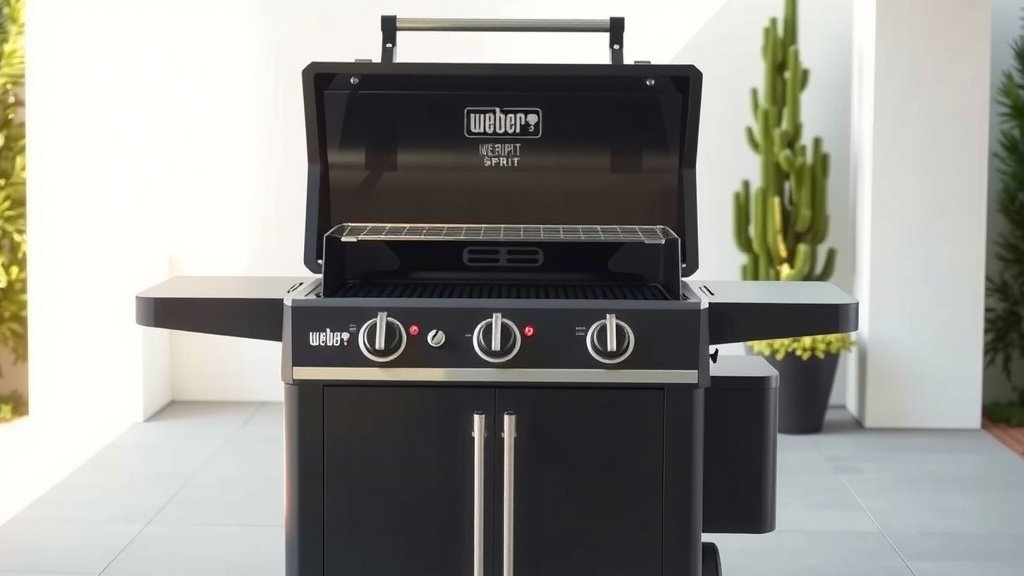
Lighting your Weber Spirit gas grill involves opening the lid, turning on the gas tank, and then rotating a burner knob to START/HI while pressing the igniter button.
Always ensure the grill lid is open before attempting to light a Weber Spirit gas grill to prevent any gas buildup and ensure safety.
- First, verify your propane tank has gas and is properly connected to your grill.
- Always keep the grill lid fully open before attempting any ignition, for your safety.
- To light, turn one burner knob to the START/HI position and immediately press the igniter button.
- If the grill doesn’t light on the first try, wait five minutes with the lid open before trying again or using manual ignition.
- Regularly check connections for leaks, especially when changing propane tanks, to avoid gas issues.
How To Light A Weber Spirit Gas Grill?
Lighting your Weber Spirit gas grill is a straightforward process when you follow a few key steps. You’ll be grilling your favorite foods in no time.
Why Proper Lighting Matters for Your Grill
Getting your grill lit correctly isn’t just about starting the fire; it’s about safety and consistent performance. Incorrect lighting can lead to gas accumulation, which creates a safety risk. Many experts recommend understanding your grill’s ignition system (Weber Grills Official).
Safety First: Your Pre-Lighting Checklist
Before you even think about turning a knob, take a moment for safety. This small checklist helps ensure a smooth, safe start every time you grill. We often find that a quick review saves headaches.
- Check your propane tank for sufficient fuel. Is it running low?
- Ensure all burner control knobs are in the “OFF” position before connecting the tank.
- Confirm the grill lid is fully open. This is a critical safety step.
- Inspect the gas hose for any visible cracks or damage.
- Make sure the grill is on a stable, level surface away from flammable materials.
Connecting Your Propane Tank
Connecting your propane tank correctly is the very first physical step to grilling. It ensures a safe and steady fuel supply. Have you checked your tank’s connection lately?
First, ensure the tank valve is off. Then, attach the regulator to the tank valve and hand-tighten it firmly. You don’t need tools for this part. After connecting, slowly open the tank valve all the way. Many guidelines point to opening the valve slowly to prevent the bypass safety device from activating (NFPA standards).
The Standard Ignition Method
Your Weber Spirit grill is designed for easy ignition. This method uses the built-in igniter button. It’s usually a reliable process for getting those flames going.
Step 1: Open the Grill Lid
This cannot be stressed enough: always open the grill lid completely before trying to light any burner. Gas can collect inside a closed grill, leading to a dangerous flare-up when ignited. We find this is the most overlooked safety step.
Step 2: Turn on the Gas Supply
With the lid open, slowly open your propane tank’s main valve. Turn it counter-clockwise until it stops. This provides gas to the grill’s manifold. Listen for any hissing sounds, which might indicate a leak.
Step 3: Ignite a Main Burner
Turn one burner knob, usually the far-left one, to the START/HI position. This allows gas to flow to that burner. Immediately after, press and hold the igniter button for a few seconds. You should hear a clicking sound and see flames. If it lights, turn on other burners as needed.
What if It Doesn’t Light?
Don’t panic if your grill doesn’t light right away. First, turn off all burner knobs and the gas tank valve. Wait five minutes with the lid open for any accumulated gas to clear. Then, try the standard ignition process again. Sometimes, the initial gas flow needs a moment to stabilize (Weber Support).
Manual Lighting Your Weber Spirit
Sometimes, the igniter system might not work, or perhaps you’re just used to a more traditional approach. Manual lighting is a great backup. It’s good to know how to do it.
When to Use Manual Ignition
You’ll use manual ignition if your grill’s electronic igniter fails to spark. It’s also handy if the igniter battery is dead, or if you prefer a direct method. Always have a long match or a grill lighter ready.
How to Manually Light Your Grill
This process is very similar to the standard method, but with an important addition. Keep your lid open. Turn on your propane tank. Then, turn one burner knob to START/HI. Immediately insert a lit long match or lighter through the cooking grates, near the burner tube. The burner should ignite quickly. If not, turn everything off, wait, and try again.
Here’s a quick comparison of the two main lighting methods:
| Feature | Standard Ignition | Manual Ignition |
|---|---|---|
| Method | Built-in igniter button | Long match or grill lighter |
| Ease of Use | Very easy, push a button | Requires external tool |
| Reliability | Usually reliable, but can fail | Highly reliable as a backup |
| Safety | Requires vigilance with gas | Requires caution with open flame |
Troubleshooting Common Lighting Issues
Even seasoned grill masters face issues occasionally. Understanding common problems can help you fix them quickly. Are you facing a specific problem now?
Gas Flow Problems
If you’re getting no gas or weak flames, your regulator might be in “bypass mode.” This happens when the tank valve is opened too quickly. Turn off everything (tank and burners), disconnect the regulator, wait a minute, and then reattach. Slowly open the tank valve. Another issue could be a tank that is truly empty. We found that performing a leak test with soapy water on new tank connections is a smart practice (CSA guidelines).
Igniter Not Sparking
If you press the igniter but see no spark, check the battery. Most Weber Spirit models use a single AA battery. It’s usually located behind the igniter button. Replace it if needed. Also, make sure the igniter wire is securely connected. Sometimes, corrosion on the igniter electrode can prevent a spark. Gently clean it with a small brush.
Maintaining Your Grill for Easy Starts
Regular maintenance is like a tune-up for your grill. It keeps everything running smoothly and prevents common lighting issues. A clean grill is a happy grill.
Clean your burner tubes periodically to remove food debris or spider webs. These can block gas flow and prevent ignition. We found that cleaning burner ports with a wire brush can significantly improve performance. Also, keep the cooking grates and flavorizer bars clean. This prevents grease flare-ups during ignition and cooking (Weber Maintenance Tips).
Conclusion
Lighting your Weber Spirit gas grill is generally a simple and quick process, especially when you prioritize safety and follow these steps. Remember to always open the lid, ensure your gas connections are sound, and use the igniter or a manual lighter carefully. With a bit of practice and routine maintenance, you’ll be enjoying perfectly grilled meals with confidence every time. Happy grilling!
FAQs About Lighting Your Weber Spirit Gas Grill
What if I smell gas but the grill won’t light?
If you smell gas but the grill isn’t lighting, immediately turn off all burner knobs and the propane tank valve. Keep the lid open. Step away from the grill for at least five minutes to allow the gas to dissipate. Do not try to light it again until the smell is gone and you’ve checked for leaks. This situation demands caution.
How often should I check my igniter battery?
Many experts recommend checking your igniter battery at the start of each grilling season, or if your igniter stops sparking. Keep a spare AA battery handy, as this is a common reason for ignition failure. It’s a simple replacement that can save your cookout.
Can cold weather affect how my Weber Spirit grill lights?
Yes, cold weather can impact gas grills. Propane contracts in colder temperatures, which can reduce pressure in the tank. This might make the grill harder to light or result in lower flame output. Some grillers keep their propane tanks slightly warmer (not indoors!) before use in very cold conditions to help. Research often connects lower ambient temperatures with reduced propane tank pressure (Gas & Appliance Magazine).
Is it safe to leave my propane tank connected to the grill when not in use?
Many people leave their propane tanks connected, but for optimal safety, especially during long periods of non-use, it’s a good practice to turn off the tank valve. If you’re storing the grill outside, ensure the tank is firmly attached and upright. Some manufacturers recommend disconnecting the tank for extended storage (LP Gas Association).
What is a “leak test” and how do I do it?
A leak test is crucial for safety, especially with new tanks or connections. Mix equal parts dish soap and water. With the gas tank valve open (but grill burners off), brush the soapy solution over all gas connections and the hose. If you see bubbles forming, that indicates a gas leak. Immediately turn off the tank and tighten or replace the faulty connection. This simple test is a lifesaver.
