
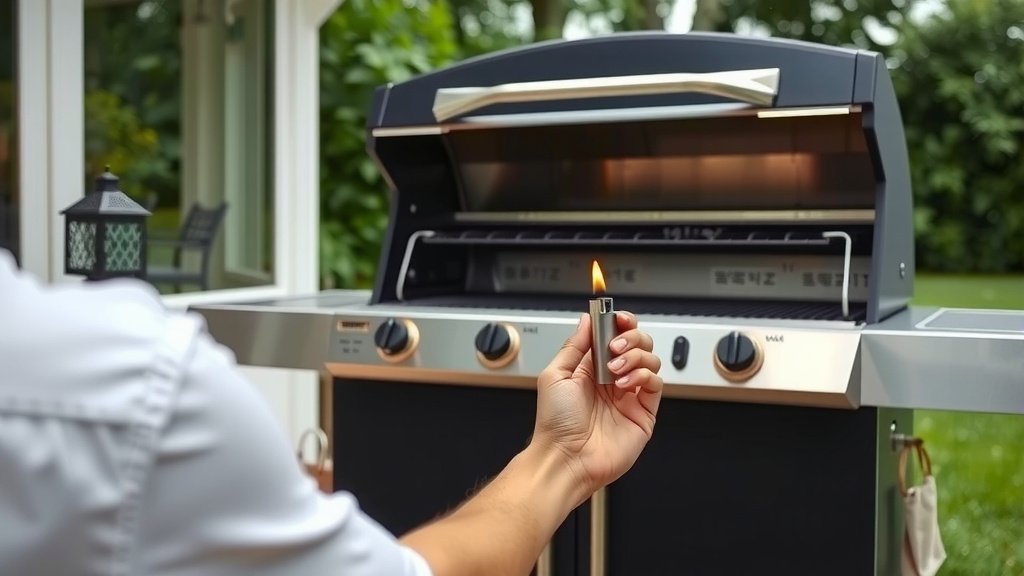
To light a gas grill with a lighter, first confirm your propane tank is fully open and gas can flow freely. Then, with the grill lid open, bring a long grill lighter or match near the burner and slowly turn the gas knob to the “High” position.
This method allows you to safely ignite the gas directly when your grill’s built-in igniter is not working, providing a reliable way to get your cooking started.
Here’s a quick overview of lighting your gas grill manually:
- Always keep the grill lid open during lighting.
- Ensure the propane tank valve is fully open.
- Use a long lighter or match for safety.
- Light one burner at a time, turning the gas on slowly.
- If it doesn’t light in a few seconds, turn off the gas and wait.
How To Light A Gas Grill With A Lighter?
Lighting your gas grill with a lighter involves careful steps to ensure safety and success. You’ll need to **prepare your grill** and use the right tools for ignition.
Safety First: Your Essential Preparations
Before you even think about lighting your grill, **safety must be your top priority**. We found that many grilling mishaps happen when basic safety checks are skipped. Take a moment to scan your setup.
Checking for Gas Leaks
Is there a strange smell of gas? A small leak can be dangerous. We found that a simple **soap and water solution** can help you spot leaks. Just brush it on connections and look for bubbles.
If you see bubbles, turn off the gas immediately and fix the connection before proceeding. Some experts say even a small leak needs immediate attention (NFPA).
Ensuring Good Ventilation
Always keep your grill lid open when lighting. Why is this important? It prevents gas from building up inside the grill. A gas build-up could cause a **sudden flare-up** when ignited, which is something you certainly want to avoid.
Gather Your Tools: What You Will Need
You probably have most of these items already. Having them ready makes the process smoother. What do you need?
- A long reach grill lighter or long wooden matches.
- Heat-resistant gloves (optional, but a good idea).
- A working propane tank, or natural gas connection.
The Right Lighter Makes a Difference
Why a long lighter? Your hands need to stay a safe distance from the burner. A standard cigarette lighter is too short. **A grill-specific lighter** with an extended nozzle works best.
Step-by-Step Guide: Lighting Your Grill Manually
Ready to light up? Follow these steps carefully. Each action plays a part in a **safe and effective ignition** process.
Opening the Grill Lid
This cannot be overstated: **always open the grill lid** completely. This allows any accumulated gas to escape. It’s a non-negotiable step for your safety.
Opening the Gas Supply
Turn the valve on your propane tank fully counter-clockwise. This ensures a **steady flow of gas** to your burners. For natural gas grills, ensure your gas line valve is open.
Positioning Your Lighter
Place your long lighter or match very close to one of the burners. Aim for the holes where the gas comes out. This **direct contact point** helps with quick ignition.
Turning On the Burner
With the lighter ready, slowly turn the knob for that same burner to the “High” position. You should hear a hiss of gas. The flame should ignite almost immediately. **Don’t rush this step**.
What if it Doesn’t Light?
If the burner doesn’t light within 3-5 seconds, turn the gas knob off. Wait a few minutes. This lets any unburnt gas dissipate. Then, **repeat the process carefully**. Do not keep the gas flowing for too long without ignition.
Lighting Additional Burners
Once your first burner is lit, you can use its flame to light adjacent burners. Simply turn on the next burner’s knob. The flame from the first burner should **spread easily**. This is safer than using the lighter for every burner.
Common Issues and How to Troubleshoot
Sometimes, things don’t go as planned. Don’t worry, many issues have simple solutions. We found that most problems are linked to **gas flow or dirty components**.
No Gas Flow
Did you check the tank? Is it empty? Is the valve fully open? Sometimes, the **regulator can “trip”**, restricting flow. Try disconnecting and reconnecting the regulator to reset it (Propane Education & Research Council).
Clogged Burner Ports
Over time, food debris or rust can block the tiny holes on your burners. This prevents gas from reaching the lighter. We found that cleaning the burner ports with a **wire brush or paperclip** can help significantly.
You can also use a small drill bit (check your grill manual for size) to gently clear the holes. Always do this when the grill is cold and gas is off.
Weak Spark from Igniter (Why You’re Using a Lighter)
If your igniter is faulty, that’s why you’re using a lighter! This often happens due to **corrosion or a loose wire**. You can sometimes clean the igniter pin or check its connection. But for today, your lighter is the hero.
Maintaining Your Grill for Smooth Operation
A little care goes a long way. Regular maintenance can prevent the need for manual lighting. A clean grill is a **happy and reliable grill**.
Routine Cleaning Checklist
Keeping your grill tidy isn’t just about looks. It impacts performance and safety. Here’s a quick checklist you might find helpful:
- Clean grates after every use.
- Brush burner tubes regularly.
- Check gas hoses for cracks.
- Empty the grease tray often.
- Inspect igniter electrodes.
| Issue | Potential Cause | Quick Solution |
|---|---|---|
| No Ignition | Empty tank, closed valve | Check tank level, open valve fully |
| Weak Flame | Low gas, clogged ports | Refill tank, clean burners |
| Gas Smell | Leak in hose or connection | Perform soap test, tighten connections |
Conclusion
Lighting a gas grill with a lighter is a perfectly safe and simple task once you know the steps. Always prioritize safety, keep your grill lid open, and use a long-reach lighter. A little preparation and knowing these basic steps mean you can **enjoy your grilling** even if your automatic igniter takes a break. Remember, a well-maintained grill generally works best, but manual lighting is a **reliable backup plan**.
Can I use a regular short lighter to light my grill?
No, using a regular short lighter is not recommended. It places your hand too close to the gas outlet, increasing the risk of burns or sudden flare-ups. Always opt for a long grill lighter or extended match for your safety.
How long should I wait if the grill doesn’t light?
If a burner doesn’t light within 3-5 seconds of turning on the gas, turn the knob to the “Off” position. Wait at least 5 minutes before trying again. This allows any unignited gas to safely dissipate.
What if I smell gas but it won’t light?
If you smell gas but can’t get a burner to light, immediately turn off the gas at the tank. Check all hose connections for tightness and use a soapy water solution to look for bubbles, which indicate a leak. Do not try to light the grill again until any leaks are fixed and the smell of gas is gone.
Should I clean my burners regularly?
Yes, regular cleaning of your burner tubes and ports is important. Food debris, grease, and rust can clog the small holes where gas exits, leading to uneven flames or ignition problems. A simple wire brush can often clear these obstructions.
Is it okay to light all burners at once with a lighter?
It’s generally safer and simpler to light one burner manually first. Once that burner is lit, you can then turn on adjacent burner knobs. The flame from the first burner will typically light the others without needing the lighter again.
