
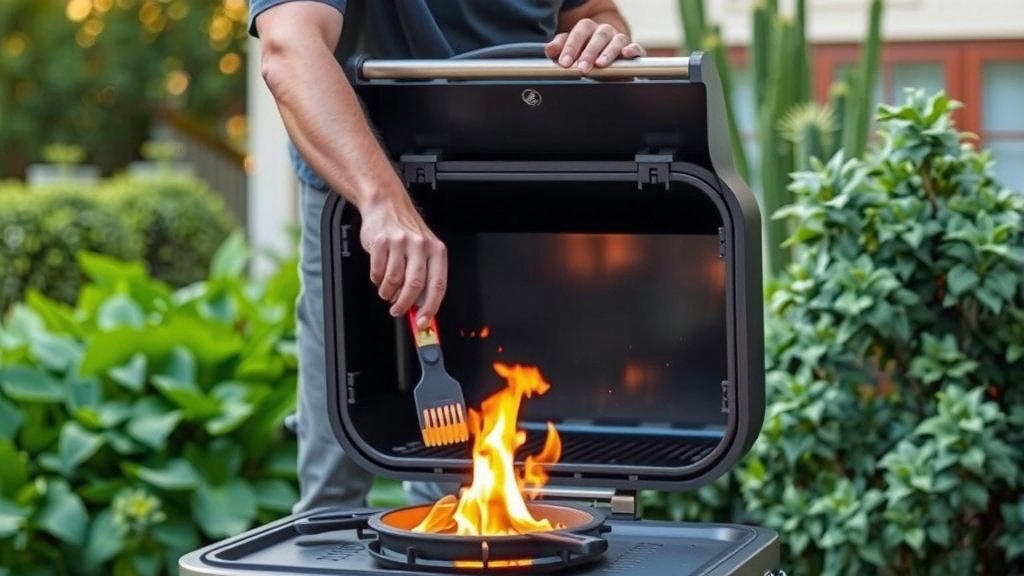
To ignite a gas grill, first ensure the propane tank valve is open. Then, open the grill lid, turn one burner knob to a high setting, and press the igniter button or use a match for manual lighting.
Learning how to ignite a gas grill safely involves a few key steps that ensure your outdoor cooking experience starts smoothly and without hassle.
Here’s the quick scoop on lighting your gas grill:
- Always open your grill lid before starting.
- Make sure your propane tank valve is fully open.
- Turn on one burner to high, then use the electronic igniter.
- If the igniter fails, use a long match or lighter for manual ignition.
- Regular cleaning prevents common ignition problems.
How To Ignite Gas Grill?
To ignite a gas grill, always open the lid first, then turn on the gas at the tank, set one burner to high, and either push the igniter or use a long lighter to get the flame going.
Safety First: Your Grill Lighting Checklist
Before you even think about lighting your grill, take a moment for safety. We found that a few simple checks can prevent most grilling mishaps. Is your grill lid open? This is a must for safely lighting a gas grill, as it prevents gas from building up (National Fire Protection Association).
Checking for Gas Leaks
It’s always smart to check for gas leaks, especially if you’ve recently reconnected your tank. Many experts suggest a quick soap and water test. Simply brush soapy water on the hose and connections. If you see bubbles, you have a leak. Don’t light the grill until the leak is fixed.
Step-by-Step: Electronic Ignition
Most modern gas grills feature an electronic igniter, making the lighting process super easy. Think of it like turning on a gas stove burner in your kitchen, but on a larger scale.
Prepare the Propane Tank
First, ensure your propane tank valve is fully open. Turn it counter-clockwise until it stops. You want a clear path for the gas to flow. Without this, your grill won’t get any fuel, no matter how much you try to ignite it.
Turn On the Burner
With the lid open, turn one main burner control knob to the “High” setting. Some grills have specific “start” burners. We found that starting with just one burner minimizes gas buildup and makes lighting easier.
Activate the Igniter
Now, press and hold the igniter button. You should hear a clicking sound as it sparks. Keep holding it for a few seconds. You should see a flame appear on the burner you turned on. It’s like magic, but it’s just physics!
All Burners Fired Up
Once the first burner is lit, you can turn on the remaining burners to your desired heat setting. Close the lid and let the grill preheat for 10-15 minutes. This gets your grill grates hot and ready for cooking.
Manual Ignition: When the Igniter Fails
What if your electronic igniter isn’t cooperating? Don’t fret! Manual ignition is a reliable backup. It’s like using a match to light a candle when the electric lighter runs out of battery.
Your Tools for Manual Lighting
You’ll need a long match or a long-handled lighter. Safety is paramount here; you want to keep your hands a safe distance from the burner.
The Manual Lighting Process
First, open the grill lid completely. Next, hold your lit match or lighter near one of the burner ports. Then, turn the corresponding burner knob to “High.” The gas should ignite almost immediately. If it doesn’t light within a few seconds, turn off the gas, wait a few minutes, and try again.
Troubleshooting Common Ignition Issues
Sometimes, your grill might act a bit stubborn. It happens! We’ve found that most issues are quick fixes. Many people face similar problems when their grill isn’t lighting up.
| Problem | Possible Cause | Solution |
|---|---|---|
| No gas flow | Tank valve closed, empty tank, pressure regulator issue | Open valve, replace tank, reset regulator |
| Igniter clicks, no flame | Dirty igniter, loose wire, faulty igniter | Clean igniter electrodes, check connections, replace igniter |
| Small flame or uneven heat | Low gas, clogged burner ports, spider webs in venturi tubes | Check tank, clean burners, clear tubes |
| Gas smell, no light | Too much gas, faulty regulator, leak | Turn off gas, wait 5 min, check for leaks, try again |
Check Your Gas Supply
Is your propane tank full? Is the valve fully open? These seem obvious, but we found they are often the forgotten first checks. A low tank will give you weak flames or no flame at all. If it’s a new tank, ensure the hose connection is snug and tight.
The Regulator Reset
Gas grills have a safety device called a regulator. If it senses a sudden large gas flow, it can restrict output. To reset it: turn off all burner knobs, disconnect the propane tank, wait 30 seconds, reconnect the tank, and slowly open the tank valve. Then, try lighting your grill again.
Cleaning is Key
Over time, food debris and grease can clog burner ports or even the igniter electrodes. Many experts recommend regularly cleaning your grill grates and burners. A small wire brush works wonders for clearing those ports. Clean igniter tips mean better sparks.
- Inspect hose for cracks or damage.
- Clean igniter probes with a wire brush.
- Check venturi tubes for insect nests.
- Ensure battery in igniter is fresh.
- Verify gas hose connections are secure.
Maintaining Your Ignition System
A little care goes a long way. Keeping your grill’s ignition system in good shape means fewer headaches later. Think of it like taking care of your car; regular checks prevent major problems.
Keep It Dry and Clean
Moisture and grime are the enemies of electronic igniters. After each use, allow your grill to cool, then wipe down any visible grime around the igniter area. A grill cover helps protect it from the elements.
Battery Checks
Some electronic igniters run on AA or AAA batteries. If your igniter clicks but doesn’t spark, a dead battery is a common culprit. We found that replacing the battery every season, or when troubleshooting, often solves the problem.
Conclusion
Igniting your gas grill doesn’t have to be a mystery. By following these straightforward steps, prioritizing safety, and understanding basic troubleshooting, you’ll be grilling up delicious meals in no time. Remember, a little preparation and care ensure your grill is always ready to fire up when you are. Happy grilling!
What is the most common reason a gas grill won’t light?
The most common reason a gas grill won’t light is often a problem with the gas supply, such as an empty propane tank, a closed tank valve, or a tripped gas regulator safety device. It could also be a dirty or faulty igniter.
How do I reset my gas grill regulator?
To reset your gas grill regulator, first turn off all burner knobs on the grill. Next, close the propane tank valve. Disconnect the regulator hose from the tank. Wait about 30 seconds, then reconnect the regulator to the tank and slowly open the propane tank valve all the way. Now, try lighting your grill as usual.
Can I use lighter fluid on a gas grill?
No, you should never use lighter fluid or any other accelerants on a gas grill. Gas grills use propane or natural gas as their fuel source, which ignite instantly. Lighter fluid is designed for charcoal and can create dangerous flare-ups and explosions on a gas grill.
How often should I clean my gas grill igniter?
Many grill experts suggest inspecting and cleaning your gas grill igniter at least once or twice a grilling season, especially if you notice inconsistent ignition. A small wire brush can remove residue from the igniter electrodes, ensuring a strong spark.
Is it safe to light a gas grill with a match every time?
Yes, it is generally safe to light a gas grill with a long match or a long-handled lighter every time if the electronic igniter is unreliable. Just ensure the lid is open, and you turn on the gas at the burner *after* the flame source is near the burner port to prevent gas buildup.
