
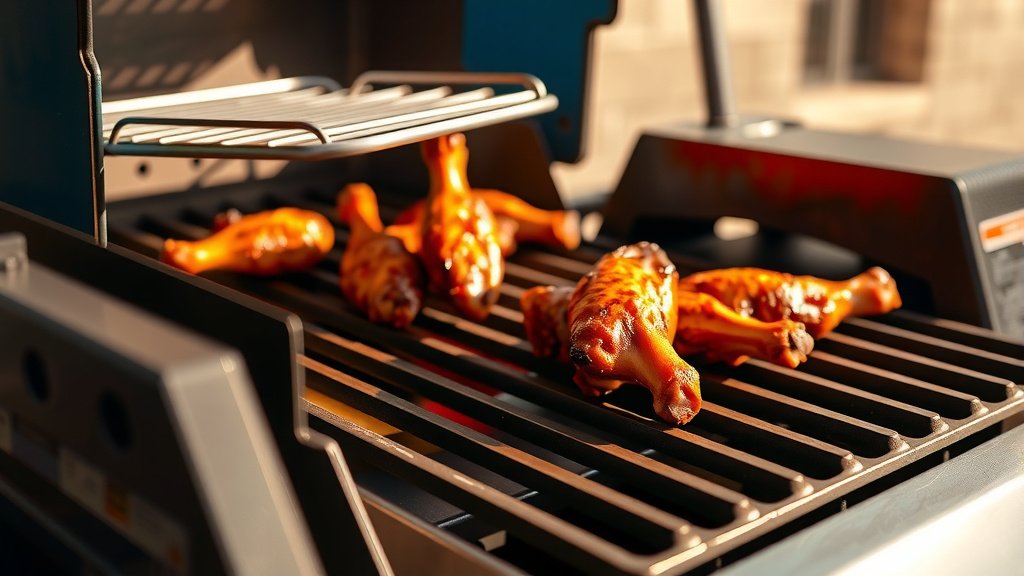
To grill wings on a gas grill, first prepare them with seasoning, then set your grill for two-zone cooking with indirect and direct heat zones. Cook wings over indirect heat for 20-30 minutes, then sear over direct heat.
You can achieve perfectly crispy wings on a gas grill by ensuring they are dry before seasoning and finishing them with a brief, high-heat sear after thorough cooking.
For a quick overview of grilling perfect wings on your gas grill, here are the key steps:
- Dry and Season: Always pat wings very dry and season generously for the best texture.
- Two-Zone Heat: Set up your gas grill with both a hot direct zone and a cooler indirect zone.
- Cook Indirectly First: Start wings over indirect heat to cook them through without burning.
- Sear for Crispy Skin: Finish with a quick sear over direct heat for irresistible crispiness.
- Check Temperature: Use a meat thermometer to confirm wings reach a safe internal temperature.
How To Grill Wings On Gas Grill?
You grill wings on a gas grill by first prepping them well, then using a strategic two-zone heat setup for thorough cooking and a crispy finish. This method ensures both tenderness and that sought-after crunch.
Why Gas Grills are Perfect for Wings
A gas grill offers incredible control, making it an ideal choice for grilling chicken wings. You can easily manage the heat, which is vital for that perfect crispy skin.
The Power of Control
Gas grills let you fine-tune temperatures with precision. This means you can create different heat zones for cooking wings perfectly, from tender inside to crispy outside.
Preparing Your Wings for the Grill
The secret to outstanding grilled wings often starts before they even touch the grates. Proper preparation is your first big step to success.
Patting Them Dry is Crucial
We found that excess moisture is the enemy of crispy skin. Use paper towels to pat your wings thoroughly dry, removing as much surface water as possible. This step truly makes a difference.
Seasoning Your Wing Wonders
After drying, season your wings generously. A simple blend of salt, pepper, garlic powder, and paprika works wonders. You can also experiment with your favorite dry rubs for unique flavors.
Setting Up Your Gas Grill for Success
Mastering your grill setup is key to getting those perfectly cooked, flavorful wings. This isn’t just turning it on; it’s about strategic heat management.
Mastering Two-Zone Grilling
For wings, you’ll want a two-zone setup. This means one side of your grill is hot (direct heat) and the other side is cooler (indirect heat). You can achieve this by lighting burners on one side and leaving others off (Weber Grills).
Achieving the Right Temperature
Aim for a grill temperature of about 375-400°F (190-205°C) in the direct heat zone. The indirect zone will naturally be cooler, usually around 300-325°F (150-160°C). Many experts say this range provides optimal cooking conditions.
The Step-by-Step Grilling Process
Now, let’s get those wings cooking! This process balances gentle cooking with a finishing sear to achieve the ideal texture.
Start with Indirect Heat
Place your seasoned, dry wings on the indirect heat side of the grill. Close the lid and let them cook for about 20-25 minutes. This gentle heat slowly renders the fat and cooks the meat through.
Crisping Up with Direct Heat
After their time on indirect heat, move the wings to the direct heat side. Turn them frequently, every 2-3 minutes, to prevent burning and get an even crisp. This stage usually takes 5-10 minutes, depending on your grill’s heat.
Monitoring Internal Temperature
Always use an instant-read meat thermometer to check for doneness. Wings are safe to eat at 165°F (74°C), but many grill masters prefer to cook them to 175-180°F (79-82°C) for maximum tenderness and fat rendering (USDA).
When to Add Your Favorite Sauce
Saucing your wings correctly can elevate them from great to unforgettable. Timing is everything to avoid a sticky, burned mess.
Avoiding Burned Sauce
Apply your sauce during the last 5-10 minutes of direct grilling. This allows the sauce to caramelize slightly without burning. If you add it too early, the sugars in the sauce will blacken before the wings are fully cooked.
Troubleshooting Common Wing Grilling Issues
Grilling isn’t always perfect, but knowing how to handle common problems will keep your wing experience smooth and tasty. We found that anticipation helps a lot.
Dealing with Flare-Ups
Fat dripping can cause flare-ups, especially over direct heat. Keep a spray bottle of water handy to quickly douse small flames. You can also temporarily move wings to the indirect zone until the flame subsides.
Ensuring Even Cook
Not all wings are the same size, and grill hot spots exist. Rotate your wings frequently and move them around the grill to ensure every piece cooks evenly. This simple act can prevent undercooked or overcooked spots.
To help you stay on track, here’s a quick checklist for perfect gas-grilled wings:
- Prepare Wings: Pat dry and season well.
- Preheat Grill: Get to 375-400°F with two zones.
- Indirect Cook: 20-25 minutes, lid closed.
- Direct Sear: 5-10 minutes, flipping often.
- Sauce Smartly: Last 5-10 minutes of direct heat.
- Check Temp: Aim for 175-180°F internal.
Here’s a quick guide for wing preparation and cooking stages:
| Stage | Description | Grill Setting | Approx. Time |
|---|---|---|---|
| Preparation | Pat dry, season with rub | N/A | 5-10 min |
| Initial Cook | Cook wings through | Indirect Heat (300-325°F) | 20-25 min |
| Crisping/Sear | Crisp skin, render fat | Direct Heat (375-400°F) | 5-10 min |
| Saucing (Optional) | Coat with sauce, caramelize | Direct Heat | Last 5 min of sear |
| Resting | Allow juices to redistribute | Off-grill | 5 min |
Conclusion
Grilling wings on a gas grill is a straightforward process when you know the steps. By properly preparing your wings, setting up two-zone heat, and monitoring temperatures, you can consistently achieve incredibly crispy and flavorful results. It’s a truly rewarding experience for any home cook, transforming simple chicken wings into a crowd-pleasing dish. So, fire up your grill and enjoy the delicious outcomes!
Can I grill frozen wings directly on a gas grill?
It’s not recommended to grill frozen wings directly. They won’t cook evenly, and the texture will suffer. Always thaw wings completely in the refrigerator before grilling for the best and safest results.
How do I prevent wings from sticking to the grill grates?
Ensure your grill grates are clean and well-oiled before adding the wings. You can use a paper towel dipped in high-smoke-point oil (like canola or grapeseed) and rub it over the hot grates. This creates a non-stick surface.
What internal temperature is best for grilled chicken wings?
While chicken is generally safe at 165°F (74°C), many experts recommend cooking wings to 175-180°F (79-82°C). This higher temperature allows more fat to render, resulting in a more tender wing with crispier skin.
Should I use a marinade or a dry rub for gas-grilled wings?
Both marinades and dry rubs work well! Dry rubs often lead to crispier skin because they don’t add extra moisture. Marinades can add deep flavor and keep meat moist. You can even combine them by using a dry rub, then a sauce towards the end.
How long should I rest grilled wings after cooking?
Resting grilled wings for about 5 minutes after taking them off the grill is a good idea. This allows the juices to redistribute throughout the meat, resulting in more tender and flavorful wings.
