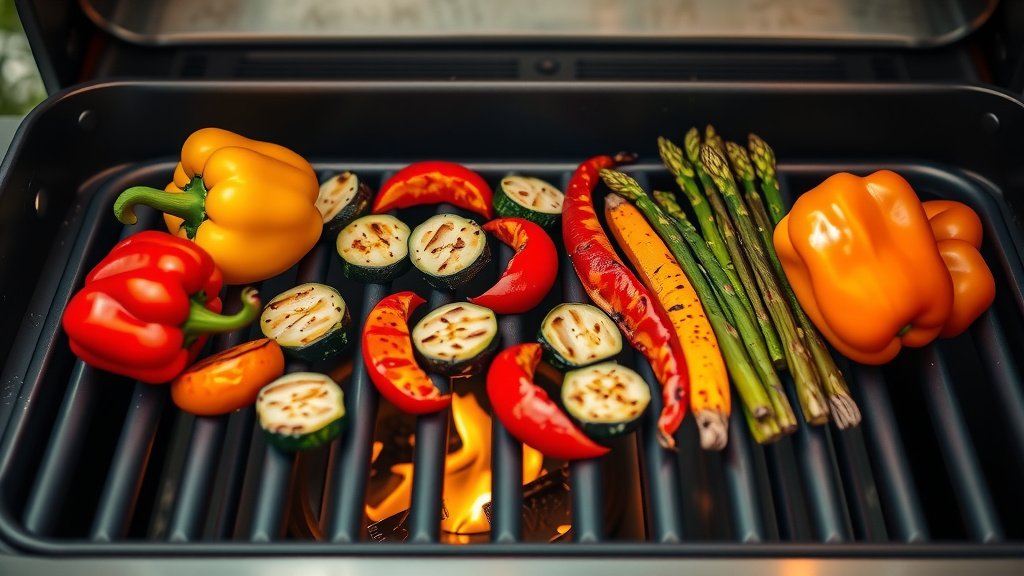
To grill vegetables on a gas grill, preheat your grill to a medium-high temperature, then toss your prepared vegetables with olive oil and seasonings. Arrange them directly over the heat, turning occasionally, until they are tender-crisp with beautiful char marks.
Success in grilling vegetables on a gas grill comes from proper preparation, knowing your grill’s hot spots, and understanding the ideal doneness for different types of produce.
- Get your gas grill ready by preheating it to a medium-high heat setting.
- Chop vegetables into similar-sized pieces for even cooking, then coat them lightly with oil and your favorite spices.
- Place the veggies directly on the grill grates or use a grill basket to prevent smaller pieces from falling through.
- Flip them every few minutes until they are tender and show nice grill marks, usually taking 5-15 minutes depending on the vegetable.
- Always keep an eye on your vegetables to avoid burning and ensure a delicious, smoky flavor.
How To Grill Vegetables On Gas Grill?
Grilling vegetables on a gas grill transforms simple produce into something special with smoky flavors and tender textures. It’s an easy process that adds a delightful char to your favorite greens and more.
Why Grill Vegetables? The Taste Factor
Grilling brings out a natural sweetness in vegetables you just can’t get from other cooking methods. The high heat caramelizes their sugars, creating a depth of flavor that’s both complex and incredibly satisfying. Many home cooks find this method enhances almost any vegetable.
Choosing Your Produce Wisely
When selecting vegetables for the grill, look for ones that are firm and fresh. Bell peppers, zucchini, asparagus, onions, and corn on the cob are classic choices that hold up well to direct heat. We found that heartier vegetables often yield the best results (Cleveland Clinic).
Preparing Your Vegetables for the Grill
Preparation is key to a successful grilling experience. Think of it like setting the stage for a delicious show. Taking a few minutes beforehand will make all the difference in the final taste and texture.
Washing and Chopping
Always wash your vegetables thoroughly before you start. Cut them into pieces of similar size and thickness. This ensures they cook evenly. For example, thicker slices of zucchini won’t overcook while thinner slices burn.
Oil and Seasoning: Your Flavor Foundation
A light coating of oil is essential. Olive oil, avocado oil, or grapeseed oil work wonderfully, helping to prevent sticking and promote good charring. Add salt, black pepper, garlic powder, or your favorite herb blend. A little acidity from lemon juice or vinegar can also brighten the flavors.
Getting Your Gas Grill Ready
Preheating your grill correctly is like preheating an oven; it sets the stage for optimal cooking. Don’t skip this important step. A well-heated grill creates those beautiful sear marks.
Preheating to the Right Temperature
Turn on all your burners to high and let the grill preheat for 10-15 minutes. You’re aiming for a medium-high heat, around 375-450°F. Many experts say a hot grill sears food quickly, locking in moisture (NIH).
Cleaning and Oiling the Grates
Once hot, use a wire brush to clean any old food residue from the grates. Then, lightly oil the clean grates. This helps prevent your vegetables from sticking. You can use tongs with a paper towel dipped in oil to do this safely.
Grilling Techniques for Perfect Vegetables
The actual grilling process is fairly straightforward, but a few simple techniques can elevate your results. It’s all about managing the heat and knowing when to flip.
Direct vs. Indirect Heat
Most vegetables will cook best over direct heat, meaning right above the flame. This gives them that desirable smoky char. However, for very dense vegetables like potatoes or sweet potatoes, you might start them over direct heat and finish with indirect heat (burners off under the food, on around it) to ensure they cook through without burning.
Placement and Turning
Place vegetables directly on the hot grates. Don’t overcrowd the grill; leave a little space between each piece for even cooking. Turn them every few minutes using tongs, aiming for even charring on all sides. You’re looking for tender-crispness, not mushiness.
Using a Grill Basket
For smaller chopped vegetables or those prone to falling through the grates, a grill basket is your best friend.
- Prevents small pieces from being lost to the flames.
- Allows for easier tossing and turning of multiple pieces at once.
- Ensures even cooking and consistent char marks without hassle.
- Available in various materials like stainless steel or cast iron.
Grilling Times for Popular Vegetables
Different vegetables have different cooking times. This table offers a general guide. Remember, these are estimates; your grill and desired doneness will affect the exact time.
| Vegetable | Preparation | Grill Time (Medium-High Heat) | Notes |
|---|---|---|---|
| Asparagus | Trim woody ends, oil lightly | 5-8 minutes | Tender-crisp, bright green |
| Bell Peppers | Core, cut into 1/2-inch strips | 8-12 minutes | Softened, slightly charred skin |
| Zucchini/Squash | Slice 1/2-inch thick rounds/planks | 6-10 minutes | Tender, golden grill marks |
| Onions | Slice 1/2-inch thick rounds | 10-15 minutes | Sweetened, translucent |
| Corn on the Cob | Shuck or leave in husk, oil/butter | 15-20 minutes | Kernels tender, slightly browned |
| Mushrooms | Whole or halved, oil lightly | 8-12 minutes | Softened, juicy |
| Eggplant | Slice 1/2-inch thick rounds/planks, salt (optional) | 10-15 minutes | Very tender, dark char marks |
Common Mistakes to Avoid When Grilling Vegetables
Even seasoned grillers can make simple mistakes. Here’s a quick checklist to help you avoid common pitfalls and achieve perfectly grilled vegetables every time.
-
Not preheating the grill: Cold grates lead to sticking and dull-looking vegetables.
-
Overcrowding the grill: Too many veggies at once lowers the grate temperature, steaming instead of searing.
-
Forgetting to oil the vegetables: Lack of oil causes sticking and bland flavor.
-
Cutting pieces unevenly: Some parts burn while others remain raw.
-
Overcooking: Vegetables should be tender-crisp, not mushy and lifeless.
-
Using too low heat: Low heat results in soft, uncharred vegetables without that smoky flavor.
Conclusion
Grilling vegetables on a gas grill is a rewarding way to bring out their best flavors. By following these straightforward steps—proper preparation, correct grill setup, and mindful cooking—you’ll create delicious, charred vegetables that complement any meal. Don’t be afraid to experiment with different seasonings and veggies; the possibilities are truly endless.
How do I stop vegetables from sticking to the grill?
To prevent vegetables from sticking, always preheat your grill thoroughly and clean the grates. Most importantly, lightly toss your vegetables with oil before placing them on the hot grates. This creates a barrier and helps release them easily.
Can I grill frozen vegetables on a gas grill?
While you can, it’s generally best to use fresh vegetables for grilling. Frozen vegetables tend to release a lot of water as they thaw and cook, which can make them steamed rather than grilled, preventing those desirable char marks and crisp texture.
What are the best seasonings for grilled vegetables?
Simple seasonings often work best. Salt, black pepper, garlic powder, and onion powder are great basics. Fresh herbs like rosemary, thyme, or oregano add wonderful aromas. A dash of paprika or chili powder can add a little kick.
How do I know when grilled vegetables are done?
Grilled vegetables are done when they are tender-crisp and show visible char marks. They should be soft enough to bite through easily but still have a slight firmness. Avoid overcooking to prevent them from becoming mushy.
Is it better to cut vegetables big or small for grilling?
It’s best to cut vegetables into moderately sized pieces, typically 1/2-inch thick slices or larger chunks. Very small pieces can fall through the grates, and very thin pieces can burn quickly. Aim for consistent sizing to ensure even cooking.