
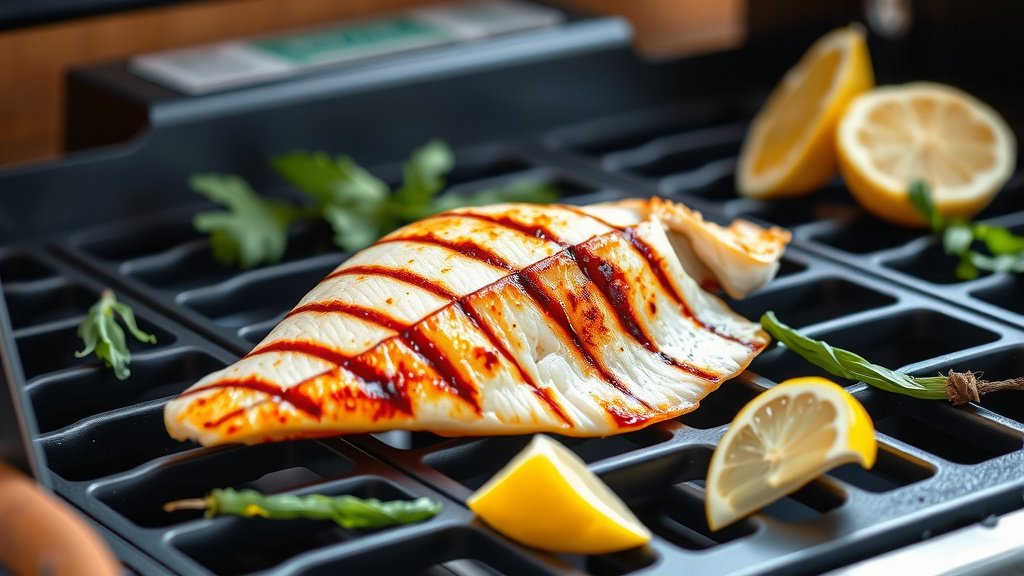
To grill tilapia on a gas grill, preheat your grill to medium-high (about 400-450°F) and lightly oil the grates to prevent sticking. Place the seasoned tilapia fillets directly over the heat and cook for 2-4 minutes per side, or until the fish flakes easily with a fork.
Ensuring your tilapia is dry and brushed with a bit of oil before it hits the hot grill grates will help create a beautiful sear and prevent the delicate fish from falling apart.
Here’s the quick scoop on grilling tilapia on your gas grill:
- Preheat your grill to medium-high, around 400-450°F, for best results.
- Always clean and oil your grill grates well before placing the fish down.
- Pat tilapia fillets completely dry and brush them with olive oil to prevent sticking.
- Grill directly over heat for 2-4 minutes per side until it flakes easily with a fork.
- A fish spatula is your best friend for flipping delicate tilapia without breaking it.
How To Grill Tilapia On A Gas Grill?
You can grill tilapia on a gas grill by preparing your fillets with oil and seasoning, preheating your grill to medium-high, and cooking directly over the heat until it’s perfectly flaky.
Getting Your Grill Ready For Tilapia
Setting up your gas grill correctly makes all the difference for perfect tilapia. Think of it as preparing a clean canvas for your culinary artwork.
Start by making sure your grill grates are clean. Leftover food can cause your fish to stick, and nobody wants that. Use a grill brush to clear away any debris.
Next, you’ll want to preheat your grill. Turn all burners to high, close the lid, and let it heat up for about 10-15 minutes. This gets the grates screaming hot.
Understanding Grill Temperatures
For tilapia, we found that a medium-high heat is ideal, around 400-450°F. This temperature range helps create a nice sear without overcooking the inside.
Once preheated, you can adjust some burners to medium or low if you want a two-zone cooking area. This gives you more control, especially for thicker fillets.
Oiling Those Grates Right
Once your grill is hot, it’s time to oil the grates. Dip a paper towel in a high smoke point oil, like canola or grapeseed. Then, carefully wipe the hot grates using tongs.
Many experts say that oiling the hot grates just before adding the fish forms a non-stick barrier. This small step can save you from a sticky mess.
Preparing Your Tilapia Fillets
Your fish preparation plays a huge role in how well your tilapia grills. A little care here pays off big time on the plate.
Choosing the Best Tilapia Fillets
Look for fresh tilapia fillets that appear firm and moist. If buying frozen, thaw them completely in the refrigerator before you start grilling.
We found that fillets around 1/2 to 1 inch thick work best for grilling. Thicker cuts might need a bit more indirect heat to cook through evenly.
The Importance of Drying Your Fish
This step is non-negotiable! Use paper towels to pat your tilapia fillets completely dry on both sides. Moisture is the enemy of a good sear.
Why dry? Research often connects moisture on the fish surface to steaming instead of searing (Cook’s Illustrated). A dry surface means a beautiful crust forms faster.
Seasoning Your Tilapia Perfectly
Keep your seasoning simple to let the fish flavor shine. A brush of olive oil, a sprinkle of salt, and some fresh black pepper are often all you need.
You can also add a squeeze of lemon juice, garlic powder, or paprika for extra taste. Don’t forget to season both sides evenly.
Before seasoning, always brush your dry fillets with a thin layer of olive oil. This helps prevent sticking and assists with browning.
Mastering the Grill: Cooking Tilapia
Now for the main event! Getting your tilapia onto the grill and cooking it just right takes a little timing and a bit of confidence.
Placing Tilapia on the Grill
Carefully lay your seasoned, oiled tilapia fillets directly over the hot, oiled grates. Give them some space; don’t overcrowd the grill.
Overcrowding can drop the grill temperature, leading to steaming instead of grilling. Give each fillet its own prime spot on the grate.
When to Flip Your Tilapia Fillet
Resist the urge to flip too early! Let the tilapia cook undisturbed for 2-4 minutes on the first side. You’ll see the edges start to turn opaque and the fish release easily from the grate.
When ready, the fillet will release with minimal effort. If it sticks, give it another 30 seconds to a minute; it’s likely not ready to turn yet. A thin, wide fish spatula is your secret weapon here.
Gently slide your spatula under the fillet and flip it over. Cook for another 2-4 minutes on the second side.
Knowing When Your Tilapia Is Done
Tilapia cooks quickly, so keep a close eye on it. The best way to check for doneness is the flake test.
Insert a fork into the thickest part of the fillet. If the fish flakes easily and looks opaque throughout, it’s ready. The internal temperature should reach 145°F (USDA).
Why High Heat Prevents Sticking
You know how a hot pan keeps an egg from sticking? The grill works the same way. High heat quickly sears the fish, creating a crust that naturally releases from the grate.
If your grill isn’t hot enough, the fish can bond with the grates before a crust forms. This often leads to broken, stuck-on fish.
Avoiding Common Tilapia Grilling Mistakes
Even seasoned grillers can make simple mistakes with delicate fish. Let’s make sure you avoid them!
Using a Grill Basket vs. Direct Grating
Some people opt for a grill basket, especially for very thin fillets. It keeps the fish contained and makes flipping easier.
Others prefer direct grating for those beautiful grill marks. Here’s a quick comparison:
| Method | Pros | Cons |
|---|---|---|
| Direct on Grates | Better sear, classic grill marks | Higher risk of sticking, harder to flip |
| Grill Basket | Easier flipping, less sticking risk | Fewer grill marks, less direct sear |
For tilapia, we recommend direct grilling with proper preparation for the best texture and flavor. The basket is a good backup for beginner grillers.
Adding Flavor with Marinades and Rubs
While simple seasoning is great, marinades and rubs can add incredible depth of flavor. Just remember, fish doesn’t need long to marinate.
Lemon and Herb Combinations
A mix of lemon juice, fresh dill or parsley, olive oil, salt, and pepper is a classic choice. Marinate for only 20-30 minutes.
This blend offers a bright, fresh taste that pairs wonderfully with the mild flavor of tilapia.
Spicy Kicks for Your Fish
For a bit of heat, try a rub with chili powder, cumin, smoked paprika, garlic powder, salt, and a touch of brown sugar. Rub it on just before grilling.
This creates a delicious, savory crust with a pleasant warmth. Many people enjoy the contrast of the mild fish with bold, spicy notes.
The Essential Tool: A Fish Spatula
If you grill fish regularly, invest in a good fish spatula. It’s thin, flexible, and wide, perfect for sliding under delicate fillets.
Many experts agree that this tool is a game-changer for fish. It helps prevent breakage and keeps your grilled tilapia in one beautiful piece.
Your Quick Grilling Success Checklist
- Clean and oil your grill grates thoroughly.
- Preheat grill to a consistent medium-high heat.
- Pat tilapia fillets completely dry with paper towels.
- Brush fillets with oil and season well before grilling.
- Use a fish spatula for gentle, confident flipping.
- Cook until fish flakes easily, check for doneness.
Serving Up Your Grilled Tilapia
Once your tilapia is cooked, carefully remove it from the grill. Let it rest for a minute or two; this allows the juices to redistribute.
Serve immediately with your favorite sides. Grilled vegetables, a fresh salad, or some rice make great companions for tilapia.
A final squeeze of fresh lemon juice just before serving brightens the flavor even more. Enjoy your delicious, perfectly grilled fish!
Conclusion
Grilling tilapia on a gas grill is simpler than you might think, and the results are incredibly rewarding. With a few key steps – proper grill prep, dry and oiled fish, and confident flipping – you can achieve perfectly cooked, flaky fillets every time.
Remember these practical solutions: hot, clean grates, well-prepared fish, and the right tools. We hope this guide helps you grill up some amazing tilapia. Happy grilling!
How do I prevent tilapia from sticking to the grill?
To prevent tilapia from sticking, ensure your grill grates are clean and preheated to medium-high heat (400-450°F). Lightly oil the hot grates just before placing the fish. Also, pat the tilapia fillets completely dry and brush them with a thin layer of olive oil before seasoning.
What temperature should I grill tilapia at?
For grilling tilapia on a gas grill, aim for a consistent medium-high heat, typically between 400-450°F. This temperature range helps achieve a good sear quickly while cooking the delicate fish through without drying it out.
How long does it take to grill tilapia on a gas grill?
Grilling tilapia usually takes about 2-4 minutes per side, depending on the thickness of your fillets and your grill’s heat. You’ll know it’s done when the fish flakes easily with a fork and is opaque throughout, reaching an internal temperature of 145°F.
Should I use direct or indirect heat for grilling tilapia?
It’s generally best to grill tilapia using direct heat. Its thin fillets cook quickly, benefiting from the direct flame to create a nice sear and cook through efficiently. For very thick fillets, you might finish with a brief period over indirect heat if needed.
What are some good seasonings for grilled tilapia?
Simple seasonings work wonderfully for tilapia. A classic choice is olive oil, salt, pepper, and a squeeze of fresh lemon juice. Other great options include garlic powder, paprika, dried dill, or a light sprinkle of chili powder for a bit of a kick.
