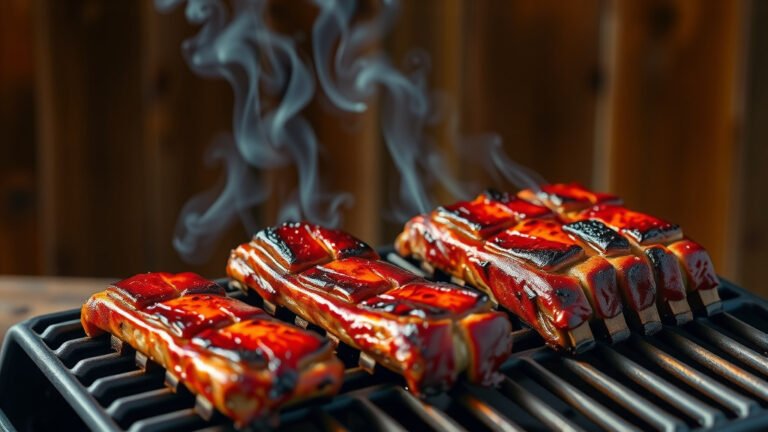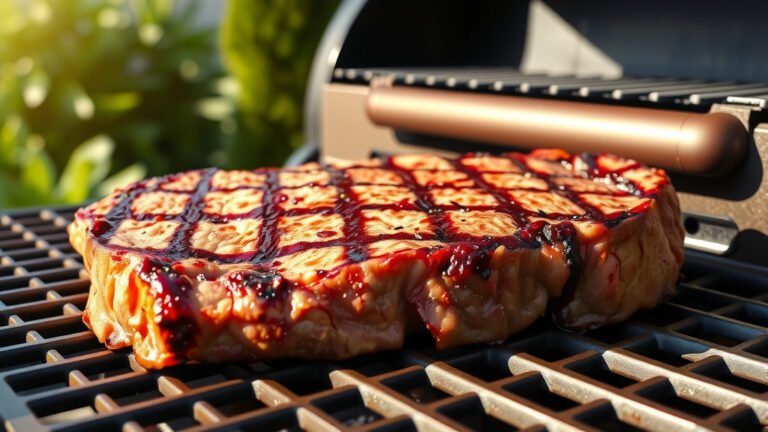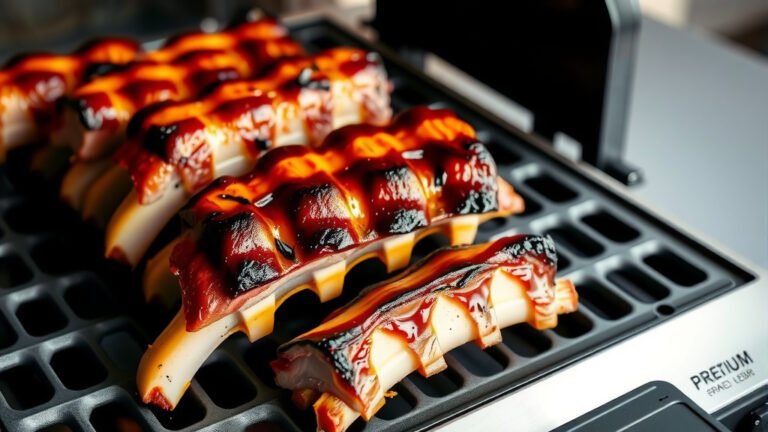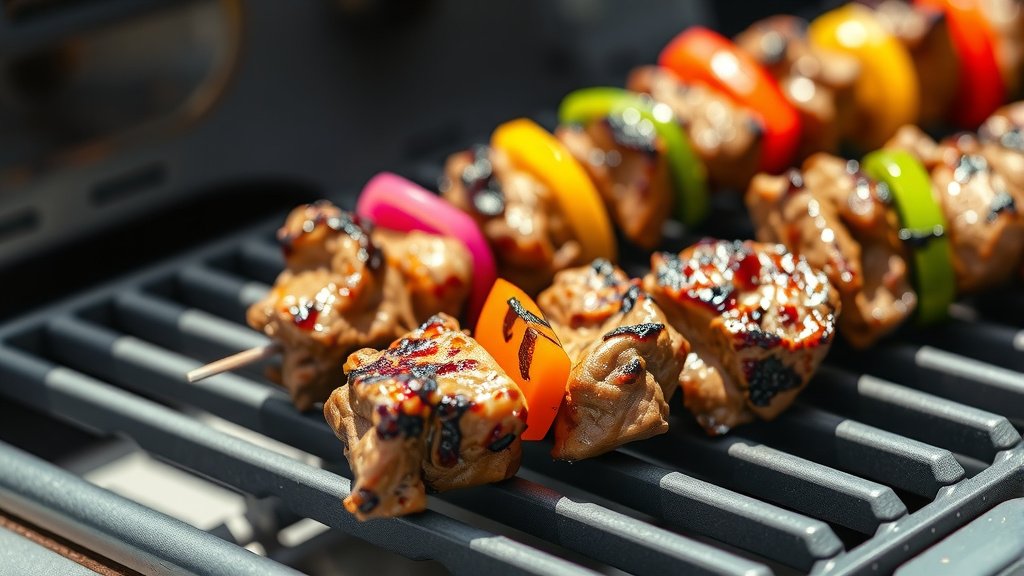
To grill steak kabobs on a gas grill, start with a preheated grill to medium-high heat (about 400°F). Place the skewers over direct heat for about 8-10 minutes, turning every 2-3 minutes until all sides are seared and the internal temperature reaches your desired doneness.
Always ensure your steak kabobs are cooked to a safe internal temperature of at least 145°F for medium-rare, using a reliable meat thermometer for best results.
- Get your gas grill ready by preheating to medium-high.
- Pick good steak cuts like sirloin or ribeye and cut them into even chunks.
- Marinate your steak for at least 30 minutes for the best taste.
- Load skewers with alternating steak and veggies, leaving a little space.
- Grill your kabobs over direct heat, turning them often for even cooking.
- Always check the steak’s internal temperature for perfect doneness and safety.
- Let your grilled kabobs rest a few minutes before serving.
How To Grill Steak Kabobs On Gas Grill?
Grilling steak kabobs on a gas grill is a fantastic way to enjoy a delicious meal. It’s all about mastering a few key steps for tender meat and perfectly cooked vegetables.
We’ll guide you through each part, from prepping your ingredients to that final delicious bite. You’ll soon be grilling like a pro, creating memorable outdoor meals.
Choosing the Right Steak for Kabobs
The type of steak you pick makes a big difference in your kabobs. You want meat that will stay tender and flavorful on the grill. Many experts say good quality steak is the foundation.
Research often shows that certain cuts handle high heat better. We want a steak that won’t dry out quickly but also isn’t too tough. Think about marbling for juiciness.
Top Steak Cuts for Grilling
For steak kabobs, aim for cuts like sirloin, ribeye, or even filet mignon. Sirloin is a popular choice because it’s flavorful and not too expensive. Ribeye offers a rich, buttery taste thanks to its marbling.
Filet mignon is incredibly tender, though it can be a bit pricier. Whichever you choose, look for fresh, bright red meat with a little fat throughout. This fat renders down, adding great flavor.
Preparing Your Kabob Ingredients
Once you have your steak, it’s time to get everything ready. Proper prep ensures even cooking and fantastic flavor. Think of it like setting the stage for a great performance.
Evenly sized pieces are vital for consistent results. We want all the ingredients to cook through at roughly the same rate. This means some careful knife work on your part.
Cutting Steak Cubes
Cut your chosen steak into pieces about one to one-and-a-half inches square. Uniform size is key here. If some pieces are smaller, they’ll cook faster and dry out.
Larger pieces might remain undercooked while smaller ones burn. Take your time with this step; it really pays off in the end. This attention to detail makes a big difference.
Selecting Your Vegetables
Colorful vegetables make kabobs visually appealing and tasty. Bell peppers (any color), red onion, zucchini, cherry tomatoes, and mushrooms are all great options. Cut them into sizes similar to your steak.
This ensures they cook evenly alongside the meat. Some guidelines point to harder vegetables needing slightly smaller cuts to soften properly (USDA grilling guidelines).
Crafting a Flavorful Marinade
A good marinade tenderizes the meat and adds amazing flavor. You don’t need anything fancy. A simple marinade works wonders, adding a zesty punch to your kabobs.
Many experts say marinating for at least 30 minutes is a good start. For deeper flavor, you can marinate the steak for a few hours in the fridge, but avoid going over 24 hours.
Here’s a simple marinade idea:
- Olive oil
- Soy sauce
- Worcestershire sauce
- Minced garlic
- A touch of brown sugar
- Salt and black pepper
Mix these ingredients well and coat your steak pieces. Let them soak up all that goodness. This step dramatically boosts the overall taste profile of your grilled kabobs.
Mastering the Skewering Process
Skewering might seem simple, but there’s an art to it. Proper skewering prevents ingredients from spinning and helps with even cooking. You want a good balance of meat and vegetables.
If you’re using wooden skewers, remember to soak them in water for at least 30 minutes before use. This prevents them from burning on the grill. Metal skewers are also a good option.
Here’s a quick checklist for perfect kabob assembly:
- Soak wooden skewers to prevent burning.
- Alternate steak with vegetables for varied bites.
- Leave a tiny gap between items for even heat.
- Don’t overcrowd the skewers; allow air circulation.
- Use two skewers per kabob if meat spins easily.
- Ensure all pieces are secure and won’t fall off.
Setting Up Your Gas Grill
Your gas grill is your best friend for kabobs. Getting it ready correctly is just as important as the prep. A well-prepared grill means a successful cooking experience.
We need to achieve the right heat for searing and cooking. This ensures a nice crust on your steak without burning the veggies. It’s all about control and understanding your grill.
Preheating for Success
Preheat your gas grill to medium-high heat, around 400°F (200°C). Close the lid and let it heat up for about 10-15 minutes. This creates a hot, even surface for cooking.
A hot grill sears the meat quickly, locking in juices. It also helps prevent food from sticking. Don’t rush this step; patience here brings tasty rewards.
Preventing Stickage
Before placing your kabobs, clean your grill grates thoroughly. Then, lightly oil the grates with a paper towel dipped in high-smoke-point oil. Many guidelines suggest this helps prevent sticking (Weber Grilling Guide).
This simple act forms a barrier between the food and the hot metal. It makes turning easier and keeps your kabobs intact. Nobody wants torn kabobs!
The Art of Grilling Kabobs
Now for the main event: grilling! This is where you bring all your prep together. It’s an exciting moment, watching your kabobs transform into a mouth-watering meal.
Understanding how your grill works and managing the heat is crucial. You want that perfect balance of char and tenderness. Let’s get those beautiful grill marks!
Understanding Grill Zones
For kabobs, you’ll mainly use direct heat. This means cooking directly over the flame. Some experts suggest having an indirect heat zone too, just in case (Food Network grilling tips).
An indirect zone is great if your kabobs are cooking too fast on the outside but need more time inside. Simply move them to the cooler side to finish cooking gently.
Grilling Times and Doneness
Place your steak kabobs over the direct heat. Cook for about 8-10 minutes total, turning every 2-3 minutes. This ensures even cooking and those lovely grill marks on all sides.
The exact time depends on your grill’s heat and your desired doneness. Always use a meat thermometer for accuracy. It’s the best way to get it just right and keep everyone safe.
| Doneness Level | Internal Temperature | Characteristics |
|---|---|---|
| Rare | 125-130°F (52-54°C) | Cool red center |
| Medium-Rare | 130-135°F (54-57°C) | Warm red center |
| Medium | 135-140°F (57-60°C) | Warm pink center |
| Medium-Well | 140-145°F (60-63°C) | Slightly pink center |
| Well-Done | 150-155°F (66-68°C) | Little to no pink |
Turning for Even Cooking
Don’t just leave your kabobs in one spot. Turn them regularly, every couple of minutes, to ensure all sides get exposed to the direct heat. This creates an even sear and cooks the steak through.
Use tongs to gently rotate each skewer. You’re aiming for a beautiful char on the steak and tender, slightly caramelized vegetables. Keep an eye on them; they cook quickly!
Ensuring Safe Temperatures
Food safety is always important when grilling. The USDA recommends a minimum internal temperature of 145°F (63°C) for whole cuts of beef, followed by a three-minute rest. This ensures your steak is safe to eat.
Remember to insert your meat thermometer into the thickest part of a steak piece, avoiding the skewer. This gives you the most accurate reading. Don’t guess; be sure!
Post-Grill Perfection
You’ve grilled your kabobs to perfection, but you’re not quite done yet. There’s one final step that truly brings out the best in your steak. This is a common practice for any grilled meat.
This simple act helps keep all those wonderful juices locked inside the meat. It’s like letting a good story settle before you tell it. The wait is worth it.
Why Resting Matters
Once your kabobs are off the grill, transfer them to a clean plate or cutting board. Cover them loosely with foil and let them rest for 5-10 minutes. Resting allows the juices to redistribute throughout the meat.
If you cut into the steak too soon, all those delicious juices will run out. Resting means a more tender, flavorful bite every time. Trust us, this small break makes a big impact.
Creative Serving Ideas
Steak kabobs are wonderful on their own, but a few extras can make them even better. Consider serving them with a light rice pilaf or a fresh green salad. A simple sauce can also elevate the flavors.
A drizzle of chimichurri or a sprinkle of fresh herbs adds brightness. These small touches really make your meal feel special. Enjoy your hard work!
Common Kabob Mistakes to Avoid
Even seasoned grillers can make simple mistakes. Being aware of these common pitfalls helps you avoid them. We want your kabob experience to be smooth and delicious every time.
Forgetting to soak skewers, overcrowding them, or not preheating the grill are common issues. These can lead to burned sticks, uneven cooking, or sticking food. Stay mindful during your prep.
Conclusion
Grilling steak kabobs on a gas grill is a rewarding experience. From selecting the right steak to mastering the turn, each step contributes to a delicious outcome. You now have the practical solutions to create fantastic kabobs.
Remember the importance of uniform cuts, a good marinade, and checking internal temperatures. With these tips, you’re well on your way to becoming a kabob grilling expert. Enjoy your perfectly grilled meal!
Can I grill steak kabobs directly from the freezer?
No, you should never grill steak kabobs directly from the freezer. Always thaw them completely in the refrigerator first. Grilling frozen meat can lead to uneven cooking, with the outside burning while the inside remains raw.
What kind of skewers are best for grilling kabobs?
Metal skewers are often considered best for grilling kabobs as they conduct heat, helping to cook the food from the inside out and are reusable. If using wooden skewers, remember to soak them in water for at least 30 minutes before grilling to prevent them from burning.
How do I prevent vegetables from burning before the steak is done?
To prevent vegetables from burning, cut harder vegetables like onions and bell peppers into slightly smaller pieces than the steak. Also, consider putting softer vegetables like cherry tomatoes on separate skewers or adding them later during the grilling process.
What if my steak kabobs are sticking to the grill grates?
If your steak kabobs are sticking, it’s likely that your grill grates weren’t clean or oiled enough, or the grill wasn’t hot enough. Make sure to clean and oil your grates thoroughly before preheating your grill to the correct medium-high temperature for best results.
Is it better to marinate steak kabobs overnight?
While marinating for a few hours is beneficial, marinating steak kabobs overnight (up to 24 hours) can often lead to more flavor penetration and tenderness. However, avoid marinating for much longer than 24 hours, especially with acidic marinades, as it can start to break down the meat’s texture too much.