
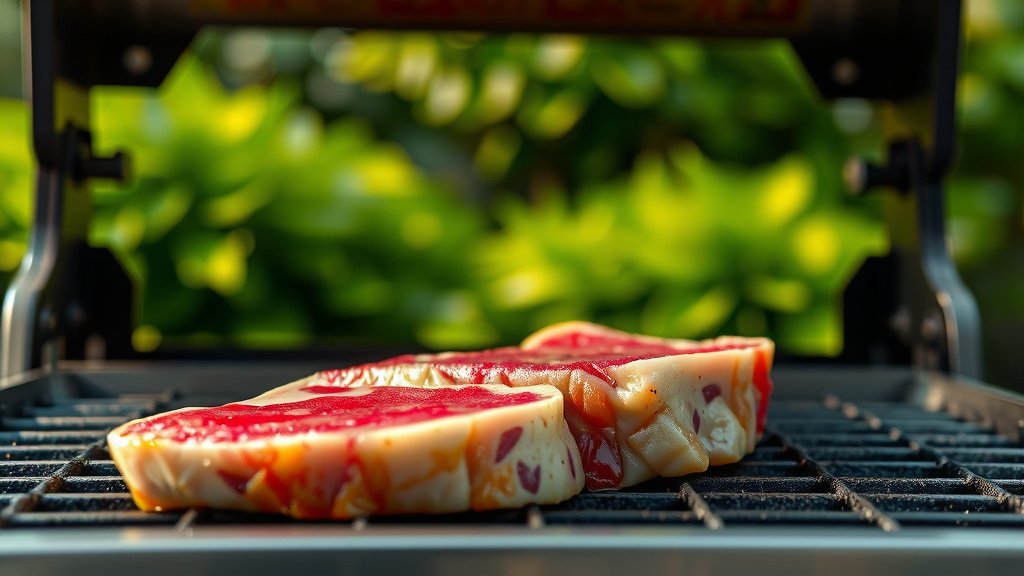
To grill Ahi tuna on a gas grill, preheat your grill to high heat, around 500-600°F. Sear the tuna steaks for 1-2 minutes per side for a perfect rare to medium-rare finish.
You want a quick, intense sear to create a beautiful crust while keeping the inside tender and moist.
- Get your grill super hot before you even think about putting tuna on it.
- Always pat your Ahi tuna steaks very dry for the best sear.
- Season simply with salt, pepper, and a touch of oil.
- Sear quickly for just a few minutes per side to keep it from overcooking.
- Let your grilled Ahi tuna rest briefly before slicing into it.
How To Grill Ahi Tuna On A Gas Grill?
Grilling Ahi tuna on a gas grill means using high heat and fast cooking times. You will achieve a beautiful sear and a tender, flavorful interior with this method.
Understanding Your Ahi Tuna Steak
Before you even think about the grill, you need good tuna. Choosing quality Ahi tuna is the first step to a delicious meal. It makes all the difference in the final taste.
Selecting the Best Tuna
Look for tuna steaks that are bright red or deep purple. They should have a firm texture and no fishy smell. Many experts say to avoid tuna with brown spots or dull coloring (Culinary Experts).
Thickness Matters
Aim for Ahi tuna steaks about one inch thick. Thinner steaks cook too fast and might dry out easily. Thicker cuts can be harder to cook evenly, sometimes burning the outside before the inside is ready.
Essential Prep for Perfect Ahi
Prepping your tuna correctly ensures a great sear and even cooking. It’s a simple process, but each step plays a big role in the outcome.
Patting Dry is Key
Before seasoning, always pat your Ahi tuna steaks completely dry with paper towels. Excess moisture creates steam, preventing that perfect crust we all want from the grill.
Seasoning Simply
Ahi tuna has a wonderful natural flavor. You do not need much to make it shine. We found that a good sprinkle of coarse salt and freshly cracked black pepper works beautifully. You can add a little garlic powder if you like.
A Note on Oil
Lightly brush your tuna steaks with a high-smoke-point oil. Think canola, grapeseed, or avocado oil. This helps prevent sticking and aids in crust development. It also helps with the transfer of heat.
Mastering Your Gas Grill
Your gas grill is a powerful tool for cooking tuna quickly. Knowing how to use it effectively is crucial. It’s like setting the stage for a perfect performance.
Preheating Properly
Preheat your gas grill to its highest setting. You want the grates to be screaming hot, around 500-600°F. Close the lid and let it heat for at least 10-15 minutes.
Understanding Heat Zones
Some grillers like to create two zones: one very hot and one medium. This lets you move the tuna if it sears too quickly. For Ahi, we found that maintaining consistent high heat is generally best due to its fast cook time.
Grilling Ahi Tuna: The Step-by-Step
Now for the main event! Grilling Ahi tuna is quick and straightforward. You just need to be attentive to the timing.
Place it on the Grates
Carefully place your seasoned, oiled Ahi tuna steaks directly onto the hot grill grates. You should hear a satisfying sizzle immediately. This is how you know your grill is ready.
The Flip and the Sear
Sear the tuna for 1 to 2 minutes on the first side. Then, use tongs to flip it. Sear for another 1 to 2 minutes on the second side. This quick cook time leaves the center beautiful and rare, creating a distinctive sear line.
Achieving Perfect Doneness
How long you cook depends on your desired doneness. Most people prefer Ahi tuna rare to medium-rare. We found that a quick cook is key. Use a meat thermometer if you are unsure (Food Safety Guidelines).
| Doneness Level | Internal Temperature | Cooking Notes |
|---|---|---|
| Rare | 115-120°F | Cool, red center |
| Medium-Rare | 120-125°F | Warm, red center |
| Medium | 125-130°F | Pink center |
| Well-Done | Over 140°F | Dry, firm, gray (not recommended for Ahi) |
Rest Before Slicing
Just like with any steak, Ahi tuna needs to rest. Transfer the grilled tuna to a cutting board. Cover it loosely with foil for 5 minutes. This allows the juices to redistribute, making it incredibly tender.
Common Pitfalls to Avoid
Even simple grilling can have its challenges. Here are some common mistakes we’ve observed and how to sidestep them.
- Not preheating your grill enough.
- Forgetting to pat the tuna dry.
- Overcooking the tuna.
- Flipping the tuna too many times.
- Using too much oil, which can cause flare-ups.
- Not cleaning your grill grates before cooking.
Serving Suggestions
Ahi tuna pairs wonderfully with simple, fresh flavors. Think a light soy-ginger sauce, a squeeze of lemon, or a dash of sesame oil. Serve it with a crisp salad or some grilled asparagus for a balanced meal.
Conclusion
Grilling Ahi tuna on a gas grill is a fast and rewarding experience. By focusing on high heat, quick searing, and proper preparation, you will enjoy perfectly cooked tuna every time. Remember, the goal is a beautiful sear and a tender, flavorful interior. Enjoy your expertly grilled Ahi tuna!
Frequently Asked Questions
Can I use frozen Ahi tuna for grilling?
Yes, you can grill frozen Ahi tuna, but it’s essential to thaw it completely first. Place it in the refrigerator overnight. Then, pat it very dry before seasoning and grilling. This prevents a watery texture.
What are some good marinades for Ahi tuna?
While simple seasoning is often best, a quick marinade can add flavor. Try a mix of soy sauce, ginger, garlic, and a touch of sesame oil. Marinate for no more than 15-20 minutes, as tuna is delicate and can “cook” in acidic marinades.
How do I prevent Ahi tuna from sticking to the grill?
Ensure your grill grates are clean and hot. Lightly oil the grates before placing the tuna. Also, brushing a thin layer of high-smoke-point oil directly onto the tuna steaks helps greatly. Don’t move the tuna until a crust forms.
What if my Ahi tuna steaks are thicker or thinner than one inch?
Adjust your cooking time. For thicker steaks, you might need an extra 30-60 seconds per side. For thinner steaks, reduce the time to perhaps 45-60 seconds per side. Always use internal temperature as your guide for doneness.
Is it safe to eat Ahi tuna rare?
Many experts say it is safe to eat high-quality, sushi-grade Ahi tuna rare (Food Safety Guidelines). The quick sear means the outside is cooked, while the inside remains largely uncooked. Always choose reputable sources for your tuna.
