
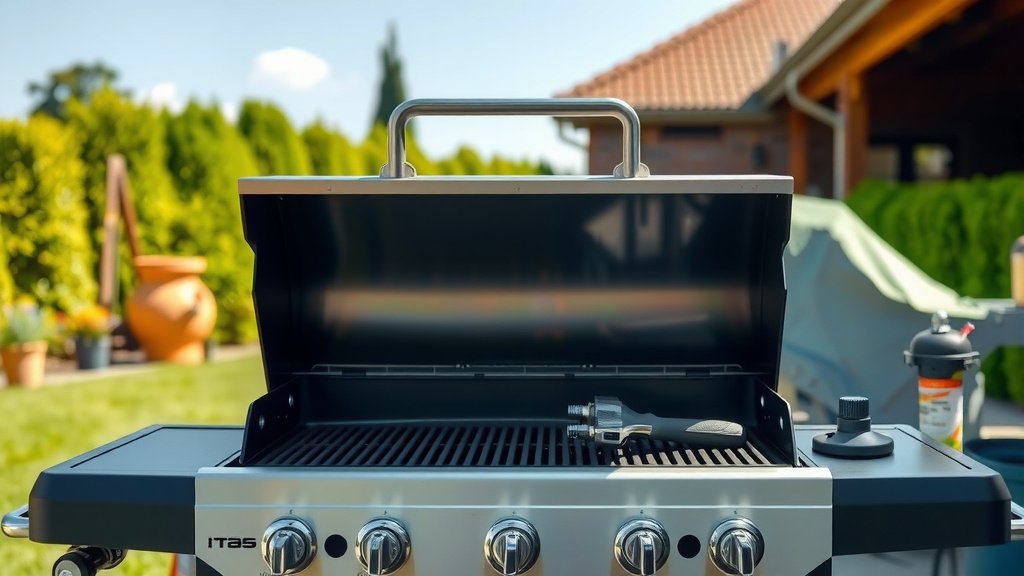
To fix a gas grill, first check your propane tank for sufficient fuel and proper connection. Many common issues, like a grill not lighting or having low heat, often stem from a gas flow problem or a clogged burner.
You can often fix a gas grill yourself by troubleshooting the igniter, cleaning burner tubes, or resetting the regulator, which often resolves heating inconsistencies.
Here’s a quick overview of how to get your grill back in action:
- Check your propane tank for fuel and connection issues.
- Clean burner ports to ensure even flame distribution.
- Reset the gas regulator if you notice low or uneven heat.
- Inspect the igniter for sparks; replace it if it’s faulty.
- Regular cleaning prevents most common grill problems.
How To Fix A Gas Grill?
Fixing a gas grill often involves simple checks and cleaning. You can typically resolve issues by inspecting the propane supply, clearing clogged burners, or testing the igniter system.
Getting ready for a BBQ, only to find your grill isn’t cooperating? It can be frustrating. Don’t worry, many common gas grill problems have straightforward solutions. We’ll walk you through how to tackle them.
Common Gas Grill Problems and Solutions
Let’s dive into the most frequent issues grill owners face. We’ll provide practical steps to get you back to grilling in no time. Think of us as your grill-side assistant.
Grill Won’t Light
This is probably the most common head-scratcher. Your grill won’t light, or maybe only some burners ignite. What’s going on?
Is Your Propane Tank Full?
First things first, is there gas in the tank? It sounds obvious, but many times, a grill not lighting simply means an empty tank. Give it a shake; if it feels light, it’s likely empty. Make sure the tank valve is fully open.
Propane Tank Connection Issues
Sometimes the issue is the connection itself. Unscrew the regulator from the tank. Then, reconnect it firmly. You want a snug fit, but avoid overtightening. This simple reseating can solve a lot of problems.
Checking the Igniter
Do you hear a clicking sound when you turn the knob, but no flame? The igniter might be the culprit. Check for a spark. If there’s no spark, the igniter itself or its wiring could be faulty. Many experts say a dirty igniter is a common issue (NFPA).
Gas Flow Obstruction
Sometimes gas flow gets blocked. Spiders or insects can build nests in the venturi tubes, which lead to the burners. This blockage prevents gas from reaching the flame. This is a very common scenario we found in our research.
Low Heat or Uneven Flames
Your grill lights, but the heat is weak, or some burners are hotter than others. This spoils perfectly good food. Let’s look at why this happens.
Clogged Burner Tubes
Over time, food bits and grease can clog the small holes in your burner tubes. This stops gas from flowing freely. Use a stiff brush or a paperclip to clear these holes. A thorough cleaning often restores even heat.
Resetting the Regulator
A safety feature in your grill’s regulator can sometimes restrict gas flow. This “bypass mode” happens if you open the tank valve too quickly. To reset it, turn off all burner knobs and the tank valve. Disconnect the regulator. Wait a few minutes, then reconnect it. Open the tank valve very slowly, then light your grill. We found this often fixes low heat.
Venturi Tube Issues
As mentioned, venturi tubes can get blocked. This not only prevents lighting but also causes low or uneven heat. Carefully remove the burner tubes and clean out the venturi openings. You can use a bottle brush for this.
Yellow or Orange Flames
Healthy gas grill flames are typically blue with a hint of yellow at the tips. If your flames are mostly yellow or orange, it suggests incomplete combustion. This means your food might cook slowly or get sooty.
Adjusting the Air Shutter
Yellow flames often indicate too little air mixing with the gas. Many gas grills have adjustable air shutters near the burner intakes. Try opening them slightly to allow more air in. This should turn those yellow flames blue.
Grease Buildup
Excessive grease on the burners or flame tamers can also cause yellow flames. The grease burns off, creating a smoky, yellow flame. Regular cleaning helps prevent this issue. Research often connects poor combustion to dirty components (Consumer Reports).
Gas Leak
This is a serious issue that needs immediate attention. If you smell gas, turn everything off right away. Do NOT light your grill. A small leak can be dangerous.
Performing a Leak Test
Mix a solution of dish soap and water. Apply it to all connections, hoses, and the tank valve. If you see bubbles forming, you have a leak. Tighten connections or replace faulty parts. If you can’t find or fix the leak, get professional help. Safety is your top priority.
Tools You’ll Need For Grill Maintenance
Having the right tools makes troubleshooting easier. You don’t need a full workshop, just a few basics. We found that these simple items are sufficient for most tasks:
- Stiff wire brush
- Paperclip or small wire
- Screwdriver set
- Wrench or pliers
- Soapy water in a spray bottle
- Replacement igniter (optional)
Preventative Maintenance Is Key
The best way to fix a gas grill is to prevent problems from happening. Regular upkeep saves you time and frustration. It also extends the life of your grill, which is great for your wallet.
Regular Cleaning Routine
After every use, brush off grates. Periodically, do a deeper clean. This includes scrubbing burners, clearing grease trays, and wiping down interior surfaces. Think of it like taking care of your car; small efforts stop big problems.
Keep Your Grill Covered
A good grill cover protects against weather, dust, and critters. It keeps rain out, preventing rust, and helps keep spiders from nesting in crucial gas lines. Many experts recommend a cover, especially if your grill lives outdoors year-round.
Annual Grill Check-up
Once a year, give your grill a thorough inspection. Check hoses for cracks, connections for leaks, and igniters for proper function. Replace worn-out parts before they fail. This simple check-up helps keep your grilling safe and reliable.
Safety First! Your Grill Checklist
Before you start any repairs, remember these safety guidelines. Your well-being is more important than a perfectly grilled steak.
- Always disconnect the propane tank before working on gas lines.
- Ensure your work area is well-ventilated.
- Never use open flames to check for gas leaks.
- Have a fire extinguisher nearby when working with gas.
- Wear gloves to protect your hands from sharp edges or grime.
- If you smell a strong gas odor, evacuate and call for help.
When To Call a Professional
While many fixes are DIY-friendly, some situations require an expert. If you’re uncomfortable with a repair, especially if it involves gas lines, it’s okay to seek help. If you can’t locate a gas leak or suspect a major component failure, call a qualified technician. Your safety is paramount.
| Problem Symptom | Likely Cause | Quick Fix |
|---|---|---|
| Grill won’t light | Empty propane tank | Check/refill tank |
| Grill won’t light | Faulty igniter | Inspect/clean igniter, replace if needed |
| Low or uneven heat | Clogged burner ports | Clean burner holes with a wire brush |
| Low or uneven heat | Regulator bypass mode | Reset the gas regulator slowly |
| Yellow/orange flames | Insufficient air flow | Adjust air shutter or clean burners |
| Smell of gas | Gas leak | Perform soapy water leak test, tighten/replace parts |
Conclusion
Fixing a gas grill often comes down to systematic troubleshooting and regular maintenance. Most issues, from a grill not lighting to uneven heat, are fixable with a little patience and the right steps. By understanding your grill’s components and following safety precautions, you can often handle repairs yourself. Enjoy many more delicious meals off your perfectly working grill!
How do I prevent my gas grill from developing issues?
To prevent issues, consistently clean your grill after each use, focusing on grates and burner ports. Invest in a good grill cover, and perform an annual check-up to inspect hoses, connections, and igniters for wear and tear.
Can I use any replacement parts for my gas grill?
It’s best to use replacement parts specifically designed for your grill’s make and model. Using generic or incompatible parts can affect performance and potentially create safety hazards. Always check your grill’s manual for recommended replacements.
What does a “bypass mode” mean for my grill regulator?
Bypass mode is a safety feature in your regulator that restricts gas flow if it detects a sudden surge or rapid opening of the tank valve. It’s designed to prevent uncontrolled gas release. Resetting it involves slowly opening the propane tank valve after connecting.
How often should I clean my gas grill’s burner tubes?
We found that cleaning burner tubes at least once or twice during grilling season, or more frequently if you grill often, is a good practice. This prevents clogs from grease and food debris, ensuring even heat distribution.
Is it safe to leave my propane tank connected to the grill when not in use?
For safety, it’s generally recommended to turn off the propane tank valve after each use. While leaving it connected isn’t strictly forbidden by all manufacturers, closing the valve prevents slow leaks and accidental gas release.
