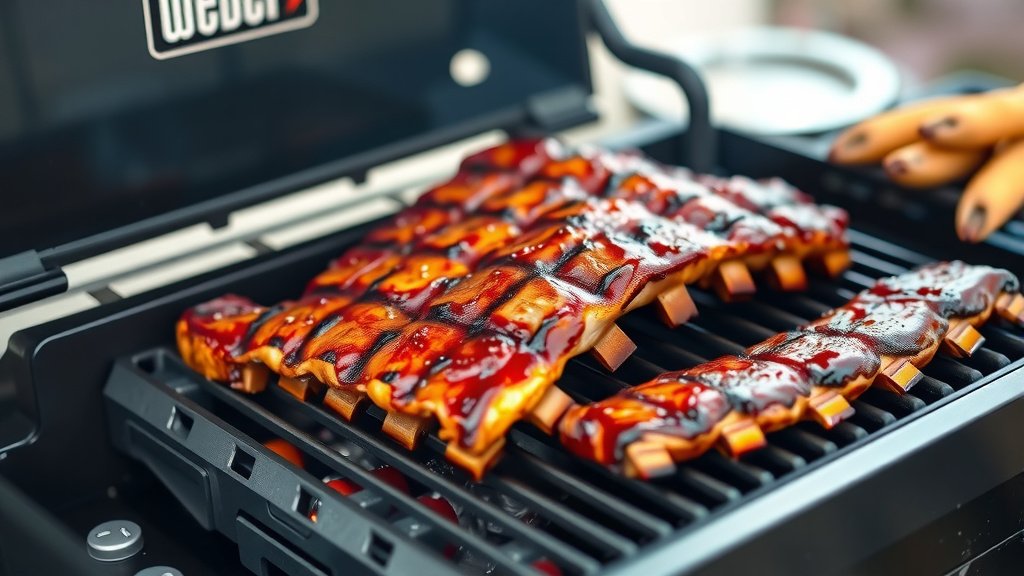
To cook ribs on a Weber gas grill, set up your grill for indirect heat, maintaining a steady temperature of 225-275°F (107-135°C). You will slow cook them away from the direct flame until they are tender and pull cleanly from the bone.
Achieving delicious, tender ribs on your Weber gas grill is entirely possible by using a two-zone cooking method and patience.
Here’s the quick rundown for grilling perfect ribs:
- Choose your favorite ribs, then prepare them by removing the membrane.
- Apply a generous dry rub for deep flavor.
- Set up your Weber gas grill for two-zone cooking, keeping the temperature low.
- Slow cook the ribs over indirect heat until they are fork-tender.
- Finish with a brush of barbecue sauce, if desired, for a sticky, delicious glaze.
How To Cook Ribs On A Weber Gas Grill?
Cooking ribs on your Weber gas grill might seem tricky at first, but it is straightforward. The key is understanding how to control heat for that perfect low and slow cook. We’re here to guide you through each step.
Understanding Rib Types for Your Grill
Before you even fire up your grill, knowing your ribs helps. There are two main types you will find: St. Louis style and baby back ribs. Both cook well on a gas grill.
Baby back ribs are smaller and leaner, typically cooking faster. They come from closer to the loin. St. Louis style ribs are meatier, cut from the spare rib, and have more fat. They offer a richer flavor but take longer.
Selecting the Best Ribs
When picking ribs, look for a good meat-to-bone ratio. You want a decent layer of meat. Many experts say to choose ribs with even thickness across the rack. This helps them cook more uniformly. Avoid racks with patchy meat or exposed bones, as we found these tend to dry out.
Essential Tools You Will Need
You don’t need a lot of fancy gear. A good meat thermometer is a must-have for checking doneness. Other helpful items include tongs, a basting brush, and foil. Sometimes, a drip pan is also a good idea (Weber Grill Guides).
Quick Grill Checklist:
- Your Weber Gas Grill (cleaned)
- Propane tank (full!)
- Meat thermometer
- Tongs
- Basting brush
- Aluminum foil
Prepping Your Ribs for Perfection
Proper preparation is crucial for tender, flavorful ribs. This step ensures your rub adheres well and helps with moisture retention. It is really worth the small effort.
Removing the Membrane
Flip your ribs over to the bone side. You will see a thin, silverskin-like membrane covering the bones. We found that removing this membrane is vital. It can become tough and chewy during cooking. Start by prying up a corner with a butter knife, then grip it with a paper towel and pull it off. It often comes off in one clean piece.
Applying the Dry Rub
Now for the flavor! A good dry rub creates a delicious crust. Be generous with your favorite rub blend. Many people like a mix of brown sugar, paprika, garlic powder, and onion powder. Pat the rub onto all sides of the ribs firmly. Let the ribs sit for at least 30 minutes, or even overnight in the fridge for deeper flavor penetration.
Setting Up Your Weber Gas Grill for Ribs
The secret to tender ribs on a gas grill is indirect heat. You want to mimic a smoker as much as possible. This means creating two distinct temperature zones.
Two-Zone Cooking Setup
Turn on one side of your grill burners to medium-low heat. Leave the other burners off. This creates a hot zone and a cool zone. You will place your ribs on the cooler side. Aim for a grill temperature of 225-275°F (107-135°C). Close the lid and let your grill preheat. Research often connects this two-zone method with more consistent results (Grilling Academy Best Practices).
The Low and Slow Cook Method
Place your prepped ribs, bone-side down, on the indirect heat side of the grill. Close the lid and resist the urge to peek often. Every time you open the lid, heat escapes, and your cooking time increases. Maintain that steady temperature.
Monitoring Temperature
Use your grill’s built-in thermometer, but also place an oven thermometer near the ribs for accuracy. Adjust the active burner’s flame as needed to keep the temperature in the sweet spot. We find that small adjustments keep things stable.
When to Wrap Your Ribs? (Optional)
Some grillers prefer to wrap their ribs in foil after a few hours. This is often called the “Texas Crutch.” It helps tenderize them and keeps them moist. If you choose to wrap, do it after about 2-3 hours of cooking, once a good bark has formed. Add a splash of apple juice or cider vinegar inside the foil. Then, continue cooking until tender.
Applying the Barbecue Sauce
If you like saucy ribs, wait until the last 30-45 minutes of cooking. This prevents the sugars in the sauce from burning. Brush your favorite barbecue sauce evenly over the ribs. Flip once to coat both sides. Let the sauce caramelize slightly, giving it a beautiful sticky glaze.
Checking for Doneness
How do you know when your ribs are ready? We found that there are a few good indicators. The meat should have pulled back from the ends of the bones. When you lift a rack with tongs, it should bend easily, but not completely fall apart. The “bend test” is a great indicator of tenderness.
You can also insert a thermometer between the bones. While not a definitive temperature, 195-203°F (90-95°C) often means they are tender. The ultimate test is how they feel: soft and yielding. It should feel like cutting through soft butter.
Resting Your Ribs
Once your ribs are done, remove them from the grill. Tent them loosely with foil and let them rest for 10-15 minutes. This resting period allows the juices to redistribute throughout the meat. This step is often overlooked but results in much juicier ribs. Think of it like letting a steak rest!
Troubleshooting Common Rib Issues
Even seasoned grillers face challenges. Are your ribs dry? You might be cooking them too hot or not wrapping them. Are they tough? They likely needed more time. Dry ribs also often come from not enough moisture during the cook (e.g., no wrap or spray). Sometimes, too much direct heat can make them tough too.
Flavor Variations to Try
Don’t be afraid to experiment! Try different dry rubs – spicy, sweet, or savory. You can also vary your basting liquid. Some people spray ribs with apple cider vinegar, while others use fruit juice. Even different wood chips in a smoker box can add a subtle flavor dimension.
| Rib Type | Average Cook Time (Indirect Heat) | Best Features |
|---|---|---|
| Baby Back Ribs | 3-4 hours | Leaner, quicker cooking, very tender |
| St. Louis Style Ribs | 4-6 hours | Meatier, richer flavor, more fat |
Conclusion
Cooking ribs on your Weber gas grill is a rewarding experience. It really comes down to mastering indirect heat and being patient. With the right setup and a bit of practice, you will be making fall-off-the-bone ribs that impress everyone. Enjoy the process, and happy grilling!
What temperature should I cook ribs on a gas grill?
You should aim for an indirect cooking temperature between 225-275°F (107-135°C) to slowly tenderize the ribs without burning them. This low and slow method is key to achieving that perfect texture.
Do I need to wrap ribs on a Weber gas grill?
Wrapping ribs in foil is optional, but it can help keep them moist and tenderize them faster. If you choose to wrap, do so after 2-3 hours of smoking, then return them to the grill to finish cooking.
How do I know when my gas grill ribs are done?
Ribs are done when the meat pulls back from the bone ends, and the rack bends easily without breaking when lifted with tongs. The meat should also be very tender when pierced with a fork.
Can I use wood chips on a gas grill for ribs?
Yes, you can use wood chips for added smoky flavor on a gas grill. Place moistened wood chips in a smoker box or a foil packet with holes directly over the heat source on the active burner, then place the ribs on the indirect side.
How long should ribs rest after grilling?
Always let your ribs rest for 10-15 minutes after removing them from the grill. Tent them loosely with foil. This allows the juices to redistribute, ensuring your ribs are as moist and flavorful as possible.