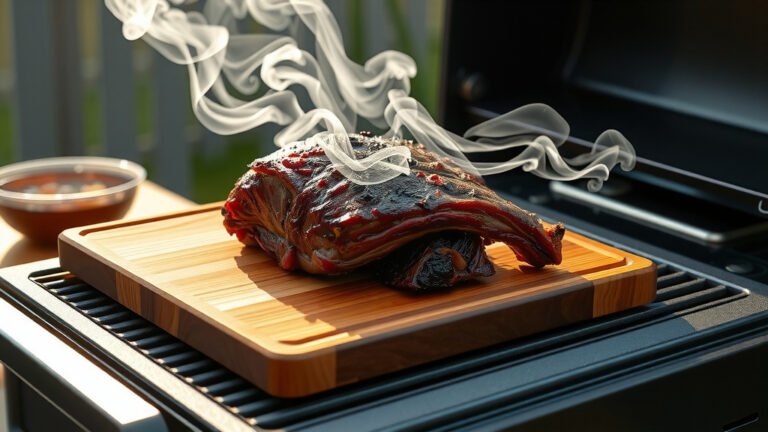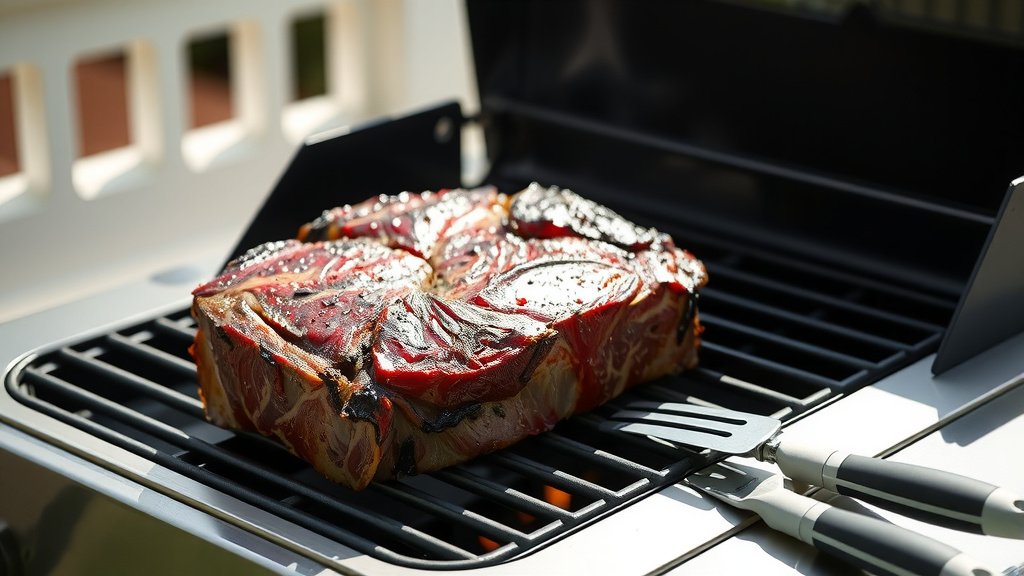
Cooking prime rib on a gas grill involves a two-zone cooking method: sear it over direct high heat first, then move it to indirect low heat to roast gently until it reaches your desired internal temperature.
To achieve a perfect crust and juicy interior, start with a well-seasoned roast at room temperature and monitor its temperature closely with a reliable meat thermometer.
- Get your prime rib roast ready by seasoning it generously and letting it come to room temperature.
- Set up your gas grill for two-zone cooking: one side hot for searing, the other side low for roasting.
- Sear the roast on all sides over high heat to create a flavorful crust.
- Move the prime rib to the indirect, cooler side of the grill and cook it slowly.
- Use a meat thermometer to check the internal temperature often, pulling it off the grill when it’s nearly done.
- Rest the roast before slicing to let the juices redistribute, ensuring a tender and moist result.
How To Cook Prime Rib On Gas Grill?
You can definitely cook a fantastic prime rib on your gas grill. It’s all about controlling the heat and using a two-zone setup to get that perfect crust and juicy center.
Getting Your Grill Ready
First things first, let’s talk about your grill. You’ll want to set it up for a method called two-zone cooking. This means one side will be hot for searing, and the other side will be cooler for roasting. This setup gives you great control. Many experts say a two-zone fire is key for larger cuts of meat (AmazingRibs.com).
Clean Your Grill Grates
Before you even think about meat, make sure your grill grates are clean. Leftover bits can cause flare-ups and stick to your beautiful prime rib. A good scrub with a wire brush is all it takes. This simple step saves you headaches later.
Preheating Your Gas Grill
Turn on two burners on one side to high heat and leave the other burners off. Close the lid and let your grill preheat for about 10-15 minutes. You want the direct heat side to be screaming hot, around 450-500°F (232-260°C). The indirect side will remain cool.
Preparing Your Prime Rib Roast
Your prime rib needs a little TLC before it hits the heat. Proper preparation makes a big difference in the final taste and texture. Don’t skip these steps; they are truly worth your time.
Choose the Right Roast
When you’re at the butcher, look for a prime rib roast that has good marbling throughout. Marbling means tiny flecks of fat, and that fat melts during cooking, adding flavor and moisture. A bone-in roast often cooks more evenly, many chefs believe.
Bring it to Room Temperature
This is a big one! Take your prime rib out of the fridge at least 2-3 hours before grilling. Letting it come closer to room temperature helps it cook more evenly from edge to center. Cold roasts tend to cook unevenly, leaving the middle underdone while the outside gets overcooked.
Seasoning Your Prime Rib
Simplicity is often best for prime rib. A generous amount of kosher salt, freshly ground black pepper, and maybe some garlic powder or dried rosemary works wonders. Rub it all over the roast, pressing it gently to make it stick. You can even do this the night before, which allows the salt to really penetrate the meat (Food Network).
- Choose a well-marbled, bone-in prime rib.
- Allow roast to sit at room temperature for 2-3 hours.
- Season generously with salt, pepper, and herbs.
- Consider adding a binder like olive oil or mustard for rub adhesion.
- Pat the roast dry with paper towels before seasoning for a better crust.
The Two-Phase Grilling Process
Cooking prime rib on a gas grill is a two-step dance: a quick sear for flavor, then a slow roast for tenderness. This method locks in juices and creates a beautiful exterior. Think of it like a professional chef’s technique, but made easy for your backyard.
Searing for the Perfect Crust
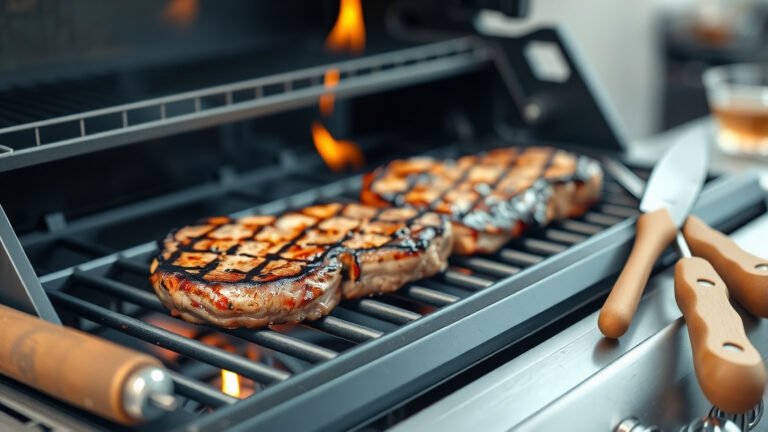
Place your seasoned prime rib directly over the high heat burners. Sear it for about 3-4 minutes per side, turning it with tongs. You’re looking for a beautiful, deep brown crust. This step, known as the Maillard reaction, creates incredible flavor and texture. Don’t rush this part; it’s where the magic starts.
Indirect Roasting to Temperature
Once seared, move the prime rib to the cooler, indirect side of your grill. Turn off the high burners and adjust the remaining burners (if needed) to maintain a steady grill temperature of around 275-300°F (135-149°C). Close the lid and let it roast. This gentle heat is key. You’re roasting, not searing anymore.
Monitoring Temperature and Doneness
This is arguably the most crucial step. A good meat thermometer is your best friend here. Don’t guess; an accurate reading ensures perfect results every time. We found that undercooking or overcooking can ruin a prime rib.
Using a Meat Thermometer
Insert a reliable probe thermometer into the thickest part of the roast, making sure it doesn’t touch any bone. Keep the lid closed as much as possible to maintain consistent temperature. Open the lid only when checking the temperature. We found that instant-read thermometers are best for quick checks (Cook’s Illustrated).
Target Internal Temperatures
Prime rib is best served medium-rare to medium. Remember, the temperature will rise several degrees after you remove it from the grill (carryover cooking). Pull it off the grill when it reaches these temperatures:
| Desired Doneness | Grill Removal Temp | Final Rested Temp |
|---|---|---|
| Rare | 115-120°F (46-49°C) | 125°F (52°C) |
| Medium-Rare | 120-125°F (49-52°C) | 130-135°F (54-57°C) |
| Medium | 130-135°F (54-57°C) | 140-145°F (60-63°C) |
The Importance of Resting
You’ve done the hard work, now for the easiest and most important part: resting. After removing the prime rib from the grill, immediately transfer it to a cutting board. Tent it loosely with foil. This resting period is not optional; it’s essential.
Why Rest Your Meat?
When meat cooks, the muscle fibers contract, pushing juices to the center. Resting allows these fibers to relax and the juices to redistribute throughout the roast. If you slice it too soon, all those delicious juices will run out, leaving you with dry meat. Patience is a virtue here.
How Long to Rest?
For a large prime rib roast, aim for at least 20-30 minutes of resting. For smaller cuts, 10-15 minutes might be enough. During this time, the internal temperature will continue to rise a few degrees, reaching its final doneness. Don’t worry, your roast will stay warm. Many guidelines point to resting as a good first step (USDA).
Carving and Serving Your Prime Rib
The moment of truth! Carving your prime rib can feel intimidating, but with a sharp knife and a little technique, you’ll be serving like a pro. Think of it as the grand finale of your grilling adventure.
Sharp Knife is Key
Use a long, sharp carving knife. If your roast is bone-in, first slice along the bones to remove the main slab of meat. Then, slice against the grain into individual portions, about 1/2 to 3/4 inch thick. Slicing against the grain ensures tender bites.
What to Serve With It
Prime rib pairs wonderfully with classic sides. Think roasted potatoes, creamed spinach, or a simple green salad. Don’t forget a horseradish sauce or au jus for dipping. These accompaniments enhance the rich flavor of the beef, making for a truly memorable meal.
Checklist for Grilling Prime Rib
- Season prime rib and let it reach room temperature.
- Clean your grill grates thoroughly.
- Set up two-zone heating on your gas grill.
- Sear prime rib over high heat for 3-4 minutes per side.
- Move to indirect heat and roast to target internal temperature.
- Rest the prime rib for 20-30 minutes before carving.
Conclusion
Grilling prime rib on a gas grill might seem a bit challenging at first, but with the right preparation and temperature control, you can achieve a truly spectacular roast. Remember the two-zone cooking, the critical role of your meat thermometer, and that all-important resting period. You’re not just cooking; you’re creating a centerpiece for your meal. Enjoy the process and the incredible results!
How do I prevent prime rib from drying out on the grill?
To prevent your prime rib from drying out, always cook it using indirect heat after an initial sear and remove it from the grill before it reaches your final desired doneness. The crucial resting period after grilling also helps the juices redistribute, keeping the meat moist.
Can I use a rotisserie for prime rib on a gas grill?
Yes, you absolutely can use a rotisserie for prime rib on a gas grill. It cooks very evenly and self-bastes, often resulting in a fantastic crust. Make sure your grill can maintain a consistent indirect heat around 275-300°F (135-149°C) for the roasting process.
What is the best rub for prime rib on a gas grill?
The best rub for prime rib is often simple: a generous amount of kosher salt and freshly cracked black pepper. Many people also add garlic powder, onion powder, or dried rosemary for extra flavor. A little olive oil can help the rub adhere better.
How long does it take to cook prime rib on a gas grill?
The cooking time for prime rib on a gas grill varies widely depending on its size and thickness, as well as your grill’s temperature consistency. Generally, expect it to take about 15-20 minutes per pound when roasting indirectly at 275-300°F (135-149°C) after searing. Always rely on a meat thermometer for accuracy, not just time.
Should I use a drip pan when grilling prime rib?
Yes, using a drip pan is a great idea when grilling prime rib, especially during the indirect roasting phase. Place it under the roast on the cooler side of the grill. It catches flavorful drippings for au jus and helps prevent flare-ups, keeping your grill cleaner and your meat cooking safely.