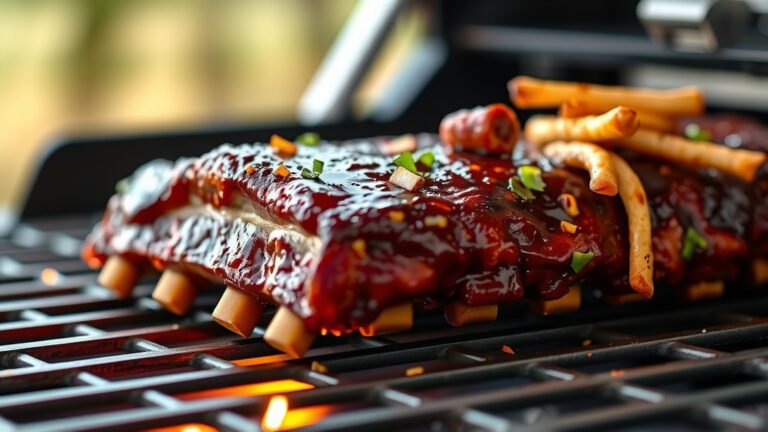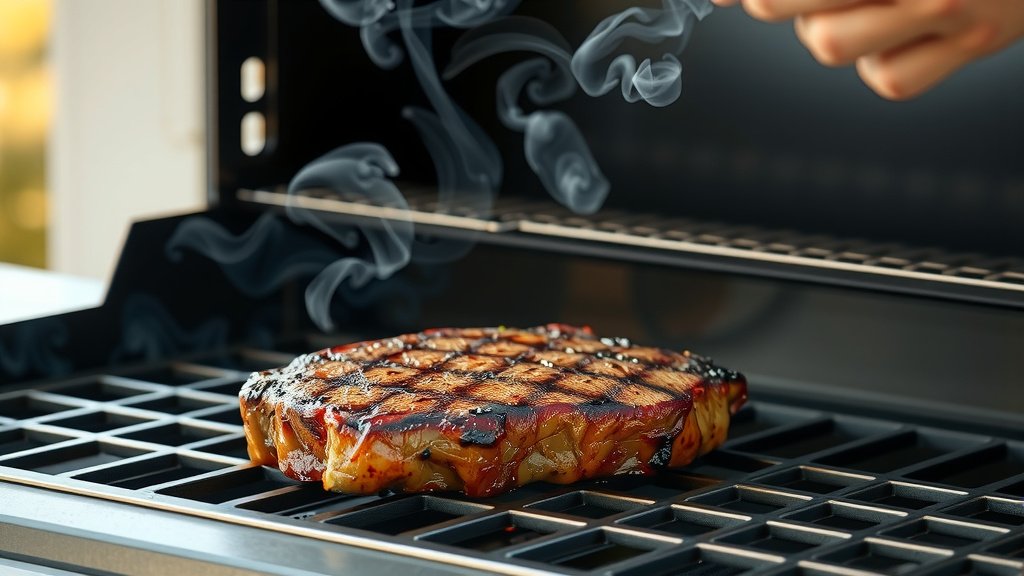
To cook a porterhouse steak on a gas grill, preheat your grill to high heat, sear the steak for 2-3 minutes per side over direct heat, then move it to indirect heat to finish cooking until it reaches your desired internal temperature, typically 125-135°F for medium-rare.
Always use a reliable meat thermometer to ensure your porterhouse steak is cooked perfectly and rested for at least 5-10 minutes before slicing to lock in the juices.
- Get your porterhouse to room temperature before grilling.
- Season generously with salt and pepper, or your favorite rub.
- Set up your gas grill for two-zone cooking: one side high, one side low.
- Sear the steak over direct heat for a few minutes per side for a great crust.
- Finish cooking over indirect heat, checking internal temperature with a thermometer.
- Rest the steak for 5-10 minutes after grilling; this step is a must for juicy results.
How To Cook Porterhouse Steak On Gas Grill?
Cooking a porterhouse steak on a gas grill means creating amazing flavor. You want a beautiful crust on the outside and a tender, juicy inside. We found this method truly delivers a memorable meal.
Why Choose a Porterhouse for the Grill?
The porterhouse is a king among steaks. It offers two distinct cuts in one: a generous New York strip and a tender filet mignon. Many experts agree this combination provides a fantastic grilling experience.
Understanding the Porterhouse Cut
A true porterhouse requires the filet side to be at least 1.25 inches thick. This gives you plenty of meat to work with. Think of it as a bone-in combo pack, perfect for sharing or a big appetite.
Prepping Your Porterhouse for Perfection
Good preparation is half the battle when grilling. Taking these few steps helps ensure your steak cooks evenly. It sets the stage for a mouth-watering result.
Bringing it to Room Temperature
Always take your steak out of the fridge about 30-60 minutes before grilling. This allows the meat to relax and cook more evenly. Research shows that a room-temperature steak cooks better (Cook’s Illustrated).
The Salt and Pepper Debate
Some grill masters swear by simply salt and pepper. Others prefer a complex rub. For a porterhouse, a generous sprinkle of coarse salt and fresh black pepper often lets the beef flavor shine. Apply it just before grilling, not too far in advance.
Oiling the Steak, Not the Grill
Instead of oiling your hot grill grates, lightly oil your steak itself. A thin coat of high smoke point oil, like avocado or grapeseed, helps prevent sticking. It also encourages that beautiful crust formation.
Setting Up Your Gas Grill for Success
Your grill is your cooking tool, so set it up right. A well-prepared grill makes all the difference. This setup ensures you can control the cooking process.
Two-Zone Grilling is Key
For a thick porterhouse, you need two heat zones. Turn one side of your grill to high for direct heat. Leave the other side off or on low for indirect heat. This setup lets you sear and then gently finish your steak.
Cleaning Your Grill Grates
Always start with clean grill grates. Use a wire brush to remove any food debris from previous cooks. Clean grates help prevent sticking and ensure good sear marks. Nobody wants old bits of food on their fresh steak, right?
The Grilling Process: Step-by-Step
Ready to get grilling? Follow these steps for a perfectly cooked porterhouse. Precision here means a fantastic meal.
- Preheat Grill: Get your grill to high (450-550°F) on one side, low or off on the other.
- Sear Steak: Place the porterhouse over the direct, high heat. Sear for 2-3 minutes per side until a deep brown crust forms.
- Move to Indirect: Transfer the steak to the cooler, indirect heat zone.
- Monitor Temperature: Insert a meat thermometer into the thickest part of the New York strip, away from the bone.
- Flip and Turn: Flip the steak every 2-3 minutes while on indirect heat to ensure even cooking.
- Check Doneness: Cook until it reaches your desired internal temperature (see table below).
- Rest: Remove from grill and let rest for 5-10 minutes on a cutting board.
Searing for That Crust
Searing is where the magic happens. High heat creates a flavorful crust through the Maillard reaction. Don’t rush this step; a good sear makes a big impact.
Moving to Indirect Heat
After searing, shift your steak to the cooler side of the grill. This allows the inside to cook gently without burning the outside. It’s like a mini oven for your steak.
Temperature is Your Best Friend
Forget guessing; a good meat thermometer is non-negotiable. We found that cooking to temperature is the most reliable way to achieve perfect doneness. Pull your steak off the grill a few degrees before your target, as it will continue to cook while resting (carryover cooking).
| Doneness | Target Internal Temperature (Pull from Grill) | Final Internal Temperature (After Resting) |
|---|---|---|
| Rare | 120-125°F | 125-130°F |
| Medium-Rare | 125-130°F | 130-135°F |
| Medium | 130-135°F | 135-140°F |
| Medium-Well | 140-145°F | 145-150°F |
| Well-Done | 150°F+ | 155°F+ |
Resting Your Steak: Don’t Skip This!
This is arguably the most critical step after cooking. Resting lets the steak’s juices redistribute. Skipping this step often results in a dry steak, no matter how well you cooked it.
Why Resting Matters
When meat cooks, its muscle fibers tighten, pushing juices to the center. Resting allows these fibers to relax and reabsorb the juices. Many experts agree that resting prevents dryness and enhances flavor.
Common Mistakes to Avoid
Even seasoned grillers can make simple mistakes. Being aware of these helps you get better results. A little foresight can save your delicious porterhouse.
Over-Flipping Fails
Resist the urge to constantly flip your steak. Flipping too often prevents a good crust from forming. We found that two to three flips total are usually plenty for a porterhouse.
Cutting Too Soon
Cutting into your steak immediately after grilling is a common error. All those precious juices will spill out onto your cutting board. Patience for those few minutes of resting truly pays off.
Flavor Boosters and Serving Suggestions
A great steak can stand alone, but a few additions can elevate it further. Think about what complements the rich beef flavor. Simple enhancements can make a big difference.
Simple Compound Butters
A dollop of compound butter melting over a hot, rested steak is divine. Try mixing softened butter with minced garlic, fresh herbs like rosemary or thyme. This addition adds an extra layer of richness.
What Sides Pair Well?
Classic steakhouse sides pair beautifully with porterhouse. Roasted asparagus, creamy mashed potatoes, or a simple garden salad. Choose something that balances the richness of the meat. A good red wine never hurts, either!
Conclusion
Grilling a porterhouse steak on a gas grill is a rewarding experience. With proper preparation, two-zone cooking, and careful temperature monitoring, you can achieve restaurant-quality results at home. Remember the crucial step of resting your steak for maximum juiciness. Enjoy your perfectly grilled porterhouse!
How do I prevent my porterhouse steak from sticking to the grill?
To prevent sticking, ensure your grill grates are clean and well-oiled before placing the steak. Many experts suggest lightly oiling the steak itself, rather than the grates, for better results.
Can I use a marinade for porterhouse steak?
While you can use a marinade, many grillers prefer to let the natural flavor of a porterhouse shine. A simple seasoning of salt and pepper is often sufficient. If you use a marinade, choose one that enhances rather than masks the beef flavor.
What if my gas grill doesn’t have a high enough heat for searing?
If your grill struggles to reach high temperatures, ensure it’s clean and try closing the lid for a few minutes to build heat. Some grillers preheat a cast-iron pan on the grill grates to boost searing power.
Should I trim the fat off my porterhouse before grilling?
It’s generally recommended to leave most of the fat on the porterhouse. The fat cap adds flavor and helps keep the steak juicy during cooking. You can trim away any excessively thick or hanging pieces if you wish, but don’t remove it all.
How do I tell if my steak is done without a thermometer?
While a thermometer is highly recommended, you can try the “palm test” for an approximate guide. Touch your thumb to your index finger; the fleshy part below your thumb will feel like a rare steak. More fingers connected will mimic medium-rare, medium, and well-done. However, we found that a reliable meat thermometer is always the most accurate method.