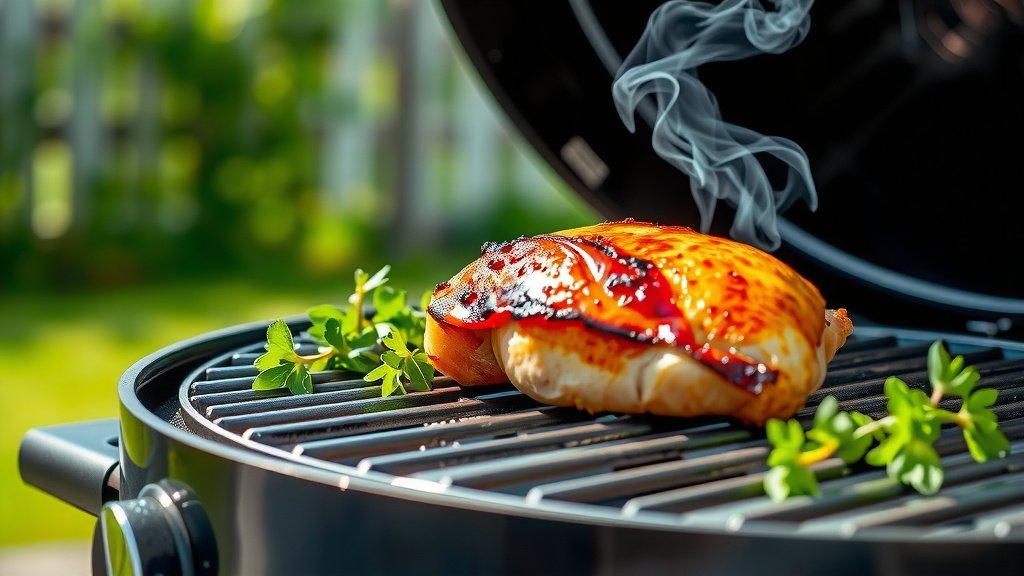
To cook chicken breasts on a pellet grill, aim for an internal temperature of 165°F (74°C) after about 30-45 minutes at 375°F (190°C).
You’ll want to flip them halfway through for even cooking and a beautiful sear, ensuring your chicken breasts are juicy and flavorful.
Here’s a quick overview of how to get that perfect chicken:
- Preheat your pellet grill to a consistent 375°F (190°C).
- Prepare your chicken breasts with simple yet powerful seasoning.
- Grill each side for about 15-20 minutes until golden brown.
- Always verify the internal temperature reaches 165°F (74°C) using a meat thermometer.
- Let them rest for several minutes after cooking for the best results.
How To Cook Chicken Breasts On A Pellet Grill?
Cooking chicken breasts on a pellet grill is a straightforward process that yields fantastic results. You’ll achieve a juicy, tender interior with a lovely smoky hint and beautiful grill marks, often in less than an hour.
Why Choose a Pellet Grill for Chicken?
Pellet grills offer a unique advantage: they combine the flavor of smoke with the convenience of a gas grill. You get that wood-fired taste without all the hassle of charcoal or stick burners. Many experts say this balance is what makes pellet grills so popular (Traeger Grills).
They provide consistent temperatures, which is key for cooking poultry evenly. Plus, you can set it and walk away, trusting the grill to do its job. It’s like having an extra hand in the kitchen, isn’t it?
Essential Tools You’ll Need
Before you start, gather your equipment. You’ll need a reliable pellet grill, of course, along with quality wood pellets. For chicken, a fruitwood like apple or cherry often pairs beautifully.
A good instant-read meat thermometer is non-negotiable for food safety and perfect doneness. Tongs for flipping, a cutting board, and your favorite seasonings will complete your toolkit. We found that having these items ready makes the process smooth.
Picking the Perfect Chicken Breasts
Selecting the right chicken breasts sets the stage for success. Look for boneless, skinless chicken breasts that are similar in size and thickness. This helps them cook at the same rate.
Thicker breasts may need a bit more time, or you can pound them slightly to an even thickness. Think of it like evening out the playing field for your chicken.
Fresh vs. Frozen Chicken Breasts
While you can grill frozen chicken, it’s always best to start with fresh or fully thawed chicken breasts. Thawing ensures more even cooking and better seasoning absorption. Research often connects proper thawing with food safety and taste (USDA).
If you start with frozen, make sure to thaw them completely in the fridge before you begin. Plan ahead; it can take 24 hours.
Preparing Your Chicken for the Grill
Preparation is simple but mighty. First, pat your chicken breasts dry with paper towels. This step helps the seasoning stick better and promotes a nicer sear. Think of it as preparing a canvas before painting.
Trim any excess fat or sinew. You want a clean piece of chicken ready for flavor.
Brining: A Secret Weapon for Juicy Chicken
Want incredibly juicy chicken every time? Consider a quick brine. Many experts suggest brining for at least 30 minutes, or even a few hours, can make a huge difference. A basic brine is just water, salt, and maybe a touch of sugar.
We found that brining helps the chicken retain moisture, preventing it from drying out. It’s like giving your chicken a hydrating spa treatment before the heat.
Seasoning Your Chicken Like a Pro
The beauty of chicken is its versatility. For seasoning, a simple salt, black pepper, and garlic powder mix is a classic. You can also use your favorite pre-made rubs.
Apply your chosen seasoning generously to both sides of the patted-dry chicken. Don’t be shy; the seasoning forms that delicious crust. Many guidelines point to generous seasoning for maximum flavor (Cook’s Illustrated).
Setting Up Your Pellet Grill for Success
First, fill your pellet hopper with your chosen wood pellets. Then, preheat your grill to 375°F (190°C). This temperature allows for good browning and efficient cooking without drying out the meat.
Allow the grill to reach temperature and hold it for at least 10-15 minutes. This ensures the grill grates are hot, which is crucial for those beautiful grill marks. A hot surface helps prevent sticking and develops flavor.
Grilling Time and Temperature Guide
Knowing your grill time is key. Here’s a general guide for boneless, skinless chicken breasts:
| Chicken Breast Thickness | Grill Temperature | Approximate Cook Time (Total) | Internal Temp Target |
|---|---|---|---|
| 1 inch (2.5 cm) | 375°F (190°C) | 30-40 minutes | 165°F (74°C) |
| 1.5 inches (3.8 cm) | 375°F (190°C) | 40-50 minutes | 165°F (74°C) |
Remember, these are estimates. Always cook to temperature, not just time. We found that using a meat thermometer is always best.
Flipping and Monitoring Your Cook
Once your grill is hot, place the seasoned chicken breasts directly on the grates. Close the lid and let them cook for about 15-20 minutes on the first side.
After that time, use tongs to flip them. Cook for another 15-20 minutes, or until the internal temperature reaches 165°F (74°C) in the thickest part. Don’t press down on the chicken; you’ll squeeze out all the juices!
The Importance of Resting Your Chicken
This step is often overlooked, but it’s super important. Once your chicken reaches 165°F (74°C), remove it from the grill and place it on a clean cutting board. Tent it loosely with foil.
Let it rest for 5-10 minutes. This allows the juices to redistribute throughout the meat, making it incredibly tender and moist. Skipping this step often results in dryer, less flavorful chicken, as many chefs will tell you.
Common Mistakes to Avoid
Even seasoned grillers can make simple mistakes. Here’s a quick checklist to keep your chicken perfect:
- Not preheating the grill fully.
- Overcrowding the grill grates.
- Flipping the chicken too often.
- Not using a meat thermometer for doneness.
- Skipping the resting period after cooking.
- Using too high of a temperature, leading to dry chicken.
Flavor Variations: Beyond Basic Seasoning
Once you master the basic technique, feel free to get creative. Try a lemon-herb marinade before grilling, or brush on some BBQ sauce in the last 10 minutes of cooking. Some people like a spicy Cajun rub, while others prefer a sweet honey glaze.
The pellet grill itself offers flavor variety through different wood pellets. Apple, cherry, or even a classic hickory can all add distinct smoky notes to your chicken. Experiment to find your favorite!
Conclusion
Cooking chicken breasts on a pellet grill is a rewarding experience. With a little preparation, the right tools, and a focus on internal temperature, you’ll consistently create juicy, flavorful chicken that will impress your family and friends. Remember to preheat, season, cook to temperature, and always rest your meat. Happy grilling!
How do I prevent chicken breasts from drying out on a pellet grill?
To prevent dry chicken, use a meat thermometer to ensure you cook only to 165°F (74°C). Brining the chicken before grilling also helps keep it moist, and always remember to let the chicken rest for 5-10 minutes after removing it from the grill.
What’s the best wood pellet flavor for chicken?
Many grillers recommend lighter, fruitier wood pellets for chicken. Apple, cherry, or pecan pellets impart a mild, sweet, and complementary smoky flavor that enhances the chicken without overpowering it.
Can I cook bone-in chicken breasts on a pellet grill?
Yes, you can cook bone-in chicken breasts. However, they will take longer to cook than boneless chicken breasts. Adjust your cooking time, and always rely on your meat thermometer to reach 165°F (74°C) in the thickest part of the meat, avoiding the bone.
Should I sear chicken breasts on a pellet grill?
For a good sear, ensure your grill grates are hot before placing the chicken. Cooking at 375°F (190°C) allows for browning and some searing. If your grill has a “sear” zone or can reach higher temperatures briefly, you might use it at the end of the cook, but it’s not strictly necessary for delicious results.
How long should I marinate chicken breasts for grilling?
For best flavor and tenderness, marinate chicken breasts for at least 30 minutes, but ideally 2-4 hours. You can even marinate them overnight in the refrigerator, but avoid marinating for more than 12-24 hours, as some marinades can start to break down the meat too much.