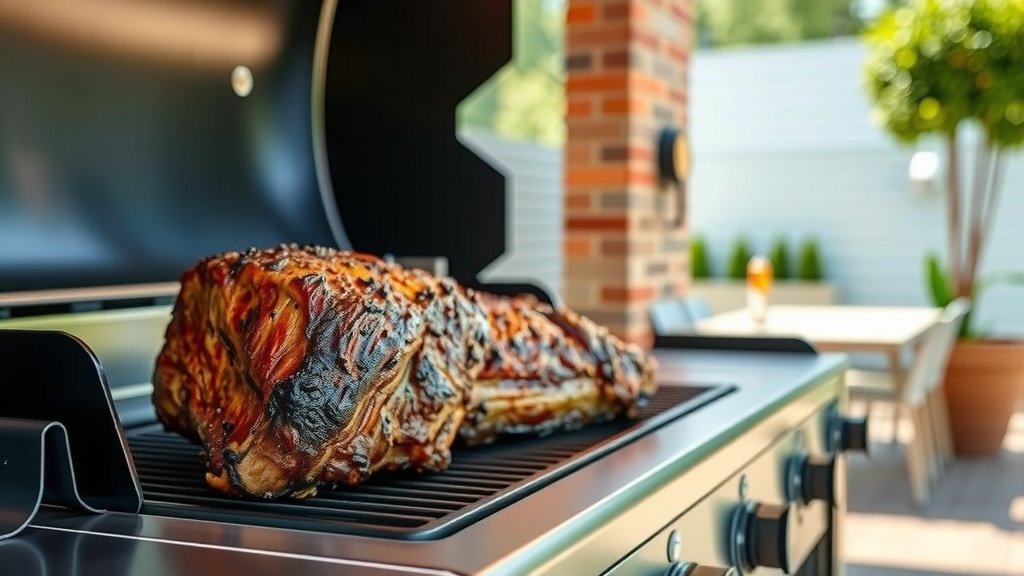
To cook a rib roast on a pellet grill, you’ll generally use a two-zone cooking method: a low temperature for smoking and slow cooking, followed by a high-temperature sear.
Aim for an internal temperature of 120-125°F for rare, or 130-135°F for medium-rare, letting it rest after cooking for perfect results.
- Get your rib roast ready by trimming excess fat and tying it for even cooking.
- Season generously with salt, pepper, and your favorite beef rub for deep flavor.
- Smoke the roast at a low temperature, around 225-250°F, until it’s about 10-15 degrees below your target final temperature.
- Then, crank up the heat on your pellet grill for a quick sear to create that delicious, crusty exterior.
- Always let your rib roast rest for at least 20-30 minutes before slicing to keep it juicy.
How To Cook A Rib Roast On A Pellet Grill?
Cooking a rib roast on a pellet grill involves a simple, yet effective, process of smoking and then searing to achieve both tenderness and a flavorful crust.
It’s all about controlling temperature and time to get that perfect holiday centerpiece or special meal.
Why Pellet Grills for Rib Roast?
Pellet grills offer an incredible advantage: they combine the convenience of gas grills with the smoky flavor of traditional offset smokers.
You get consistent temperatures, which is vital for a large cut like a rib roast, plus that rich wood-fired taste.
This allows you to achieve a beautiful smoky ring and a tender interior with less fuss.
Choosing Your Rib Roast
The journey to a perfect rib roast starts at the butcher shop. Selecting the right cut is important.
Many experts suggest looking for good marbling, which means small flecks of fat throughout the meat. This fat melts during cooking, adding moisture and flavor.
Bone-in vs. Boneless
A bone-in rib roast often offers more flavor because the bones conduct heat evenly and protect the meat.
A boneless rib roast is easier to carve, but you might lose a little bit of that deep, savory bone flavor.
Some people say bone-in offers better results, while others prefer the carving ease of boneless. Here’s the trade-off: flavor versus convenience.
How Much to Buy?
Plan on about one pound per person for a bone-in roast, or half a pound per person for boneless.
This ensures everyone gets a generous serving, with perhaps some leftovers for a delicious roast beef sandwich.
Essential Tools You’ll Need
Having the right gear makes all the difference when tackling a rib roast on the pellet grill.
- A reliable pellet grill (of course!).
- A good quality meat thermometer with a probe is non-negotiable for accuracy.
- A sturdy roasting pan or drip pan to catch juices and prevent flare-ups.
- Sharp carving knife and a large cutting board.
- Butcher twine for tying the roast, if needed.
We found that a good meat thermometer is the single most important tool for success.
Preparing Your Rib Roast
Proper preparation sets the stage for a mouth-watering rib roast.
Trimming and Tying
First, let your roast sit at room temperature for about an hour before cooking. This helps it cook more evenly.
You might want to trim off any really thick, hard fat on the exterior, leaving about a quarter-inch layer.
If you have a boneless roast, or if the bones are frenched, tying the roast with butcher twine helps it hold its shape and cook uniformly.
Seasoning It Right
For seasoning, keep it simple but generous. A good quality kosher salt and freshly cracked black pepper are always a great start.
Many experts say that less is more, letting the beef flavor shine through.
You can also add garlic powder, onion powder, and a touch of paprika for a classic beef rub.
Pat the roast dry before seasoning for a better crust. Don’t be shy with the salt!
The Cooking Process: Step-by-Step
This is where the magic happens, transforming your seasoned roast into a tender, juicy masterpiece.
Preheating Your Pellet Grill
First, preheat your pellet grill to 225-250°F (107-121°C). Use a good quality wood pellet flavor like oak, hickory, or a competition blend.
Make sure the grill has reached and stabilized at the target temperature before putting the roast on.
The Low and Slow Method
Place your seasoned rib roast directly on the grill grates, or in a shallow roasting pan.
Insert your meat thermometer into the thickest part of the roast, avoiding bone.
Cook at this low temperature until the internal temperature reaches about 120-125°F (49-52°C) for rare, or 125-130°F (52-54°C) for medium-rare. This can take anywhere from 3 to 5 hours, depending on the size of your roast and your grill.
Research often connects slow cooking with more tender results (USDA).
Monitoring Internal Temperature
This is the most critical part. Trust your meat thermometer, not the clock.
The internal temperature will tell you exactly where your roast stands in terms of doneness.
| Desired Doneness | Internal Temperature (Before Rest) | Internal Temperature (After Rest) |
|---|---|---|
| Rare | 120-125°F (49-52°C) | 125-130°F (52-54°C) |
| Medium-Rare | 125-130°F (52-54°C) | 130-135°F (54-57°C) |
| Medium | 130-135°F (54-57°C) | 135-140°F (57-60°C) |
The Reverse Sear Technique
Once your roast hits your desired internal temperature (before resting, remember!), remove it from the grill.
Now, increase your pellet grill’s temperature to its highest setting, usually 450-500°F (232-260°C).
Once hot, return the roast to the grill for a quick sear, about 5-10 minutes per side, or until you achieve a beautiful, browned crust.
Keep a close eye on it during this stage to prevent burning.
Resting Your Rib Roast
This step is often overlooked but it is incredibly important for a juicy roast.
Once the searing is done, immediately remove the roast from the grill and loosely tent it with foil.
Let it rest for at least 20-30 minutes. This allows the juices to redistribute throughout the meat, making every slice tender and moist.
Cutting too soon will cause the juices to run out, leaving you with dry meat.
Slicing for Perfection
After resting, it’s time to carve. If you have a bone-in roast, carefully separate the bones from the meat first.
Then, slice the roast against the grain into desired thickness. This ensures each slice is as tender as possible.
Present your perfectly cooked rib roast with pride – you earned it!
Troubleshooting Common Issues
Even with the best planning, sometimes things don’t go exactly as expected. Don’t worry, we’ve got you.
- Roast is cooking too fast: Lower your grill temperature slightly. Remember, slow and steady wins the race.
- No good crust: Ensure your grill reaches a high temperature for the sear, and don’t be afraid to leave it on for a few extra minutes, watching carefully.
- Dry roast: This usually means it was overcooked or not rested properly. Always use a thermometer and rest the meat!
- Uneven cooking: This can happen if the roast wasn’t brought to room temperature, or if it wasn’t tied. Next time, try these prep steps.
Conclusion
Cooking a rib roast on a pellet grill is a rewarding experience that delivers incredible flavor and a beautifully tender result.
By following these steps, from selecting your roast to the final sear and rest, you’re set to impress.
Enjoy the process, trust your thermometer, and get ready for a truly memorable meal. It’s simpler than you might think!
What is the best type of rib roast for a pellet grill?
A bone-in prime rib roast, often called a standing rib roast, is excellent for pellet grilling. The bones add flavor and help the roast cook evenly. However, a boneless roast can also yield fantastic results and is easier to carve after cooking.
How long does it take to cook a 5-pound rib roast on a pellet grill?
A 5-pound rib roast cooked low and slow at 225-250°F on a pellet grill can take approximately 3 to 4 hours to reach an internal temperature of 120-125°F, before the high-heat sear. Cooking time can vary based on your grill and the roast’s exact thickness, so always rely on a meat thermometer.
Do I need to sear a rib roast after smoking it on a pellet grill?
Yes, searing is highly recommended after smoking your rib roast. The low and slow smoke provides tenderness and flavor, but a quick high-heat sear creates a delicious, crispy crust, enhancing both the texture and overall eating experience. This is known as the reverse sear method.
Can I cook a rib roast directly on the grates or should I use a pan?
You can cook a rib roast directly on the grill grates to maximize smoke penetration and crust formation. However, many people place it in a shallow roasting pan or drip pan to catch the flavorful drippings for gravy and to prevent potential flare-ups from rendering fat.
What internal temperature should a rib roast be for medium-rare?
For a perfect medium-rare rib roast, you should remove it from the grill when its internal temperature reaches 125-130°F (52-54°C). After resting for 20-30 minutes, the temperature will rise to the ideal 130-135°F (54-57°C) due to carryover cooking.