
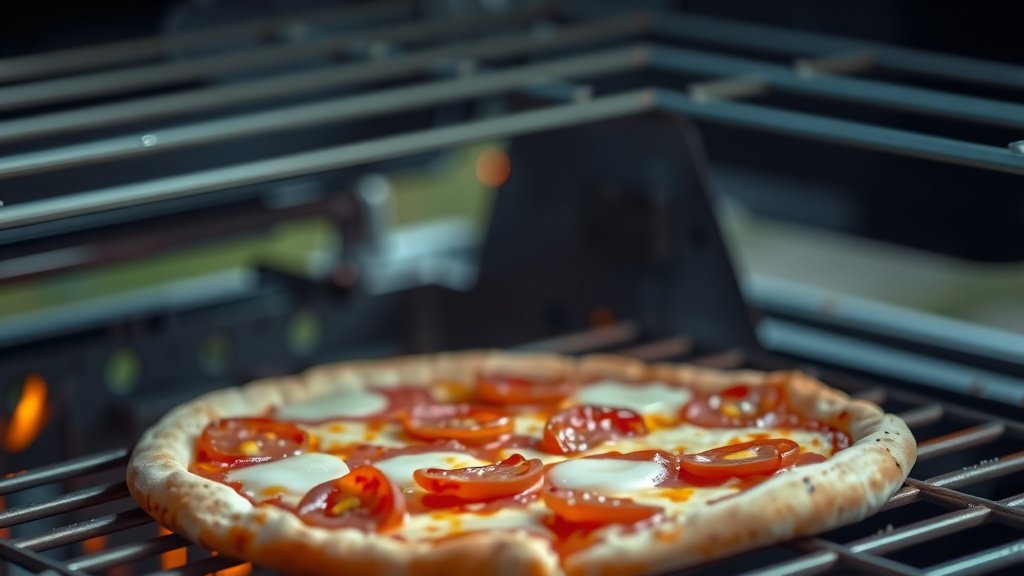
You can absolutely cook a frozen pizza on a gas grill, transforming a standard pie into a smoky, crispy delight with a perfectly browned crust.
The trick involves setting up your grill for indirect heat, preheating properly, and using a pizza stone or heavy-duty foil for a consistent bake.
TL;DR: Grilling a frozen pizza is a fantastic idea! Here’s the quick scoop:
- Preheat your gas grill to a medium-low temperature, around 350-400°F.
- Set up for indirect heat; often, this means turning off the middle burner.
- Always use a pizza stone or heavy-duty aluminum foil as a barrier.
- Place the pizza on the preheated stone or foil, then close the lid.
- Cook for about 12-20 minutes, checking often, until golden and bubbly.
How To Cook A Frozen Pizza On A Gas Grill?
To cook a frozen pizza on a gas grill, you will first prepare your grill for indirect cooking at medium heat, then place the pizza on a preheated pizza stone or foil, and monitor it closely until it’s perfectly crispy and melted.
Why Grill a Frozen Pizza Anyway?
Ever wondered if your grill can do more than just burgers and brats? It totally can! Grilling a frozen pizza gives it a unique, smoky flavor and a wonderfully crispy crust that an oven often can’t match.
It’s like taking a regular Tuesday night meal and turning it into a mini backyard celebration. Plus, it keeps your kitchen cool on a hot day.
Gather Your Gear: What You’ll Need
Before you get started, make sure you have the right tools. Think of it as preparing your culinary battlefield. Having everything ready means a smoother process.
- A frozen pizza (of course!)
- A gas grill with a lid
- A pizza stone or heavy-duty aluminum foil
- A pizza peel or large spatula for moving the pizza
- Oven mitts or heat-resistant gloves
- A meat thermometer (optional, but good for checking internal temp if you’re unsure)
The Unsung Hero: Your Pizza Stone
Using a pizza stone is a game-changer for grilling pizza. We found that it helps create an incredibly crisp crust by distributing heat evenly (culinary experts suggest this). No soggy bottoms here!
If you don’t have a stone, several layers of heavy-duty aluminum foil can work in a pinch. It provides a barrier against direct flame.
Setting Your Grill Temperature for Frozen Pizza
This isn’t like searing a steak; you want a controlled, moderate heat. Many grill masters recommend a medium-low temperature range.
Our research suggests aiming for a grill temperature between 350°F and 400°F. This allows the pizza to cook through without burning the crust.
Preheating is Key: Don’t Rush It!
Just like baking in an oven, preheating your grill is crucial. Light all your burners to get the grill up to temperature, then adjust for indirect heat.
Allow your grill, and especially your pizza stone if you’re using one, to preheat for at least 10-15 minutes. A hot stone means an instant crisp crust (grilling organizations concur).
Direct vs. Indirect Heat: The Great Debate
This is where the magic happens for frozen pizza. You want to avoid putting the pizza directly over high flames. Why?
Direct heat will likely burn your crust before the toppings are cooked and the cheese is melted. It’s a tale as old as time for grill beginners.
Setting Up for Indirect Heat
Most gas grills allow you to turn off one or more burners while others stay on. If you have three burners, turn off the middle one and keep the outer two on low to medium.
If you have two burners, turn one off and place the pizza over the unlit side. This creates a cozy, even cooking zone, almost like a convection oven.
Placing the Pizza on the Grill
Once your grill is perfectly preheated and set for indirect cooking, it’s time for the main event. Be careful, as the grill and any stone will be very hot.
Use a pizza peel or large spatula to gently slide your frozen pizza onto the pizza stone or aluminum foil. Then, quickly close the grill lid.
How Long Does It Take? Monitoring Your Pizza
Cooking times can vary widely based on your grill, the outside temperature, and the specific pizza. Generally, you’re looking at 12 to 20 minutes.
But don’t just set a timer and walk away! Your grill can be a fickle friend. Check on your pizza every 5-7 minutes. Lift the lid, take a peek, and then close it quickly to retain heat.
Signs of a Perfectly Cooked Pizza
You’ll know your pizza is ready when the cheese is fully melted and bubbly, and the crust is golden brown and crispy.
If you used a pizza stone, the bottom crust will have those lovely charred spots, signaling true grilled goodness.
The Flipping Question: To Flip or Not To Flip?
For a frozen pizza, you generally do not need to flip it. The indirect heat and closed lid create an oven-like environment that cooks the top and bottom simultaneously.
Flipping a frozen pizza could lead to a messy situation and potentially uncooked toppings spilling onto your grill grates.
Troubleshooting Common Grill Pizza Problems
Sometimes things don’t go exactly as planned. Don’t worry, we’ve got you covered with a few quick fixes.
| Problem | Possible Cause | Solution |
|---|---|---|
| Burned Crust, Raw Toppings | Too much direct heat, grill too hot | Lower grill temp, ensure indirect setup |
| Soggy Bottom | Pizza stone not hot enough, too much moisture | Preheat stone longer, ensure it’s dry |
| Pizza Not Cooking Evenly | Uneven heat distribution in grill | Rotate pizza halfway through cooking |
| Cheese Not Melting | Grill not hot enough, opening lid too often | Increase temp slightly, keep lid closed more |
Flavor Boosts: Take Your Pizza Up a Notch
While a frozen pizza is great on its own, you can add a few touches to make it even better. Consider tossing on some fresh basil or a drizzle of olive oil right after it comes off the grill.
A sprinkle of red pepper flakes or a dash of grated Parmesan cheese can also really elevate the experience. It’s your pizza canvas!
Consider Adding Fresh Toppings
If you want to add fresh veggies or extra cheese, do it towards the end of the cooking process. Adding them too early might cause them to burn.
A few minutes before the pizza is done, lift the lid, quickly add your desired fresh toppings, and close the lid again to let them warm through.
Safety First: Grilling Tips
Grills are powerful tools, so always prioritize safety. Keep children and pets away from the grill while it’s hot.
Make sure your grill is on a stable, flat surface away from any flammable materials. And always use proper grilling tools and oven mitts to avoid burns.
Conclusion
Cooking a frozen pizza on a gas grill is a fun, easy way to inject some excitement into your meal routine. With just a few adjustments to your grill setup and a watchful eye, you can achieve a pizza that boasts a delightful smoky flavor and a crispy crust that’s hard to beat.
Remember, indirect heat is your friend, a pizza stone is your secret weapon, and patience is a virtue. So, go ahead, fire up that grill and enjoy a uniquely delicious frozen pizza experience. Your taste buds will thank you!
What kind of frozen pizza works best on a gas grill?
Thin-crust or regular-crust frozen pizzas generally work best on a gas grill because they cook through quickly and consistently. Avoid extremely thick or deep-dish pizzas, as they might not cook evenly.
Can I put a frozen pizza directly on the grill grates?
We do not recommend placing a frozen pizza directly on the grill grates. It can cause the crust to burn rapidly, melt through the grates, and make it very difficult to remove without a mess.
Do I need to thaw the frozen pizza before grilling?
No, you do not need to thaw the frozen pizza. In fact, it’s generally better to cook it from frozen, as thawing can make the crust soggy and harder to handle on the grill.
My pizza is smoking a lot on the grill, is that normal?
Some smoke is normal, especially from dripping cheese or toppings. However, excessive smoke could mean your grill is too hot or you have too much direct heat. Adjust your burners and ensure an indirect setup.
How do I prevent the pizza from sticking to the pizza stone?
Ensure your pizza stone is well-preheated. Some experts suggest lightly dusting the stone with a bit of cornmeal or flour before placing the pizza. This acts as tiny ball bearings, helping the pizza slide easily.
