
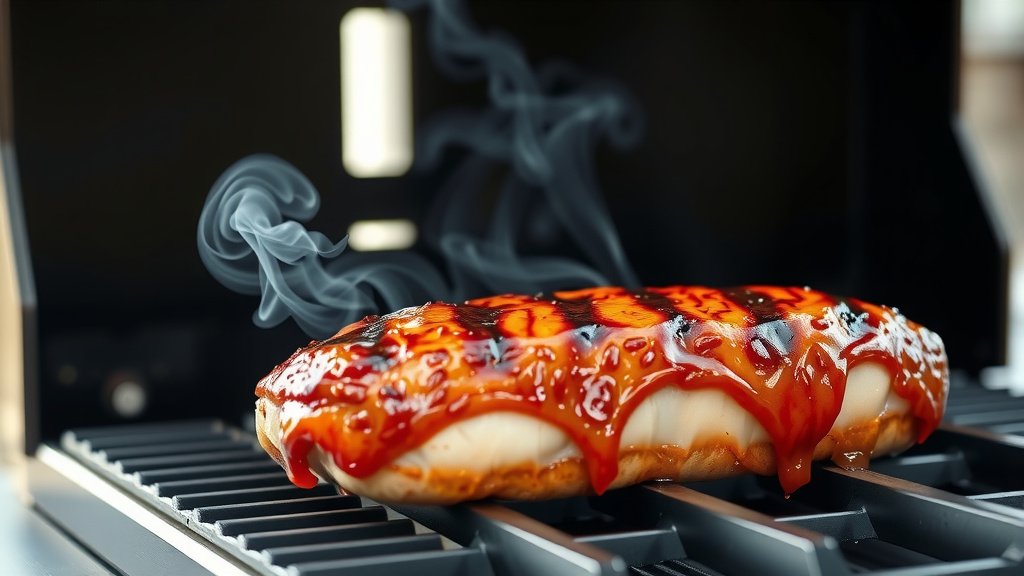
To cook a Boston butt on a gas grill, set your grill for indirect heat, maintaining a consistent temperature between 225-275°F (107-135°C), and allow it to slow-cook until it reaches an internal temperature of 200-205°F (93-96°C).
You’ll achieve tender, pull-apart pork by using a two-zone setup, adding wood chips for smoke flavor, and patiently monitoring the internal temperature with a reliable thermometer.
Here’s a quick overview of what you’ll learn to master your gas grill for amazing pulled pork:
- Set your gas grill for indirect cooking, aiming for 225-275°F.
- Prepare your Boston butt with a good rub and consider injecting for moisture.
- Add wood chips in a smoker box or foil pouch for that essential smoky flavor.
- Cook low and slow, monitoring the internal temperature until it hits 200-205°F.
- Don’t forget to rest the meat after cooking for maximum juiciness and tenderness.
Imagine serving up incredible pulled pork right from your gas grill. It sounds like a dream, doesn’t it? Many people think you need a dedicated smoker for perfect Boston butt. But guess what? Your trusty gas grill is more capable than you might think.
We’re here to show you exactly how to transform a tough cut of pork into a succulent, smoky masterpiece. Get ready to impress your friends and family with your grilling skills!
How To Cook A Boston Butt On A Gas Grill?
You cook a Boston butt on a gas grill by setting up a two-zone indirect heat system, maintaining a low and steady temperature, and allowing the pork to cook slowly until it’s fall-apart tender.
This method ensures even cooking and allows time for the connective tissues to break down, giving you that classic pulled pork texture.
Why Use a Gas Grill for Boston Butt?
A gas grill offers incredible control over temperature. This makes it a surprisingly good tool for long, low-temperature cooks, like a Boston butt.
You can adjust burners precisely, helping you hold a consistent temperature for hours. This is a big advantage over charcoal, which often requires more frequent attention.
Choosing the Right Boston Butt
A good cook starts with good ingredients. Look for a Boston butt (often called pork shoulder or pork butt) that weighs between 6-9 pounds.
We look for one with good marbling—those little streaks of fat throughout the meat. Marbling means flavor and moisture, which is key for a juicy end product.
Preparing Your Pork Perfection
Before it hits the heat, your Boston butt needs a little love. This preparation makes a big difference in the final taste and texture.
The Magic of a Good Rub
First, pat your pork butt dry with paper towels. Then, apply a generous layer of your favorite BBQ rub. Don’t be shy; cover every surface!
Many experts say to let the rub sit on the pork for at least an hour at room temperature, or even better, overnight in the fridge. This allows the flavors to sink in.
To Trim or Not To Trim?
A Boston butt often has a thick fat cap on one side. We found that leaving some fat helps keep the meat moist during long cooks.
However, trimming it down to about a quarter-inch thick is a good idea. This allows your rub to reach more meat and helps prevent excessive greasiness (USDA Food Safety and Inspection Service).
Setting Up Your Gas Grill for Success
The secret to using a gas grill for low-and-slow cooking is creating “two zones” of heat. This lets you cook indirectly, preventing the meat from burning.
Achieving Consistent Low Heat
Turn one or two burners on one side to low, leaving the other burners off. Your goal is a grill temperature between 225-275°F (107-135°C).
Use an accurate grill thermometer, or even better, a separate oven thermometer placed on the grate, to monitor the temperature near where the meat will cook. Adjust your lit burners as needed to maintain that steady range.
Adding That Smoky Flavor (Without a Smoker)
Getting that authentic smoke flavor from a gas grill might seem tricky. But don’t worry, it’s quite simple to add a smoky essence to your Boston butt.
We found that soaking wood chips in water for about 30 minutes before use helps them smoke longer. Many experts suggest using a smoker box or a foil pouch filled with these chips (Texas A&M AgriLife Extension).
Place your smoker box or foil pouch directly over one of the lit burners set to low. Once you see smoke, move it to the indirect heat side if your grill layout allows, or just keep it there if it’s not directly under the meat. This infuses the meat with a lovely, deep flavor.
Consider these popular wood chip options:
- Hickory: A strong, classic BBQ smoke flavor.
- Apple: Sweet and fruity, great for pork.
- Cherry: Mild and slightly sweet, adds a nice color.
- Pecan: Milder than hickory, with a nutty flavor.
The Low and Slow Cooking Process
Once your grill is stable at 225-275°F and your wood chips are smoking, it’s time to put the Boston butt on the indirect side of the grill.
Close the lid and resist the urge to peek! Every time you open the lid, heat escapes, and your cooking time will increase. Use a good probe thermometer inserted into the thickest part of the meat to track its internal temperature.
Navigating “The Stall”
Don’t be surprised if your Boston butt’s internal temperature gets stuck around 150-165°F (65-74°C) for several hours. This is perfectly normal and known as “the stall.”
Many pitmasters address this by wrapping the pork in butcher paper or foil once it hits the stall. This technique, sometimes called the “Texas Crutch,” helps push through the stall and locks in moisture. You can unwrap it for the last hour or so to let the bark firm up.
Keeping It Moist: Spritzing and Water Pans
While wrapping helps, you might also consider spritzing your Boston butt. After a few hours, you can periodically spray it with apple cider vinegar, apple juice, or even plain water.
We found that a small foil pan filled with water placed on the indirect side of the grill also helps. It adds moisture to the cooking environment and can help stabilize grill temperatures (USDA Food Safety and Inspection Service).
Knowing When Your Boston Butt is Done
This is where patience truly pays off. The exact cooking time varies based on the size of your butt and grill temperature consistency. It could take 8-12 hours, sometimes even longer.
The Right Internal Temperature
Your Boston butt is ready when its internal temperature reaches 200-205°F (93-96°C). But temperature isn’t the only indicator.
A better sign is tenderness. When you insert your probe thermometer, it should slide in with very little resistance, feeling like it’s going into warm butter.
The All-Important Rest
Once it’s done, resist the urge to pull it apart immediately. Remove the Boston butt from the grill, wrap it loosely in foil or butcher paper, and let it rest for at least 30 minutes, or up to 2 hours.
This resting period allows the juices to redistribute throughout the meat, resulting in incredibly moist and flavorful pulled pork. Don’t skip this step – it’s crucial for tenderness!
Troubleshooting Common Gas Grill Challenges
Cooking low and slow on a gas grill can have its quirks. But with a few tips, you can handle them.
Temperature Swings
Gas grills can be sensitive to wind and outside temperatures. If your grill temperature drops, try turning up your active burners slightly. If it gets too hot, turn them down. It’s a bit like driving a car on cruise control – small adjustments keep you on track.
Flare-Ups
Though less common with indirect heat, fat drippings can sometimes cause flare-ups. Keep a spray bottle of water nearby to douse any flames quickly. Moving the meat further away from direct heat can also help.
Here’s a helpful snapshot of wood chip flavors:
| Wood Type | Flavor Profile | Best For |
|---|---|---|
| Hickory | Strong, bacon-like, savory | Pork, beef, poultry |
| Apple | Mild, sweet, fruity | Pork, chicken, fish |
| Cherry | Mild, sweet, subtle fruit | Pork, beef, lamb |
| Oak | Medium, earthy, robust | Pork, beef, brisket |
| Pecan | Mild, nutty, subtle sweet | Pork, poultry, fish |
Your Pulled Pork Checklist
- Choose a 6-9 lb well-marbled Boston butt.
- Apply your favorite rub generously and let it sit.
- Set up your gas grill for two-zone indirect heat (225-275°F).
- Add a smoker box or foil pouch with soaked wood chips.
- Place the butt on the indirect side and cook until 200-205°F internal temperature.
- Probe for tenderness – it should feel like butter.
- Rest the pork for 30 minutes to 2 hours before shredding.
Conclusion
Cooking a Boston butt on a gas grill for authentic pulled pork is entirely achievable. By understanding how to manage indirect heat, add smoke flavor, and patiently monitor your meat, you’ll unlock incredible results.
The journey from a raw pork butt to tender, delicious pulled pork is a rewarding one. Enjoy the process, trust your thermometer, and get ready for some truly amazing BBQ straight from your backyard!
Can I cook a Boston butt faster on a gas grill by raising the temperature?
While technically possible to cook it faster at higher temperatures, this often leads to dry, tough meat. The “low and slow” method (225-275°F) is crucial for breaking down the tough connective tissues in the Boston butt, resulting in that desirable tender, pull-apart texture. Rushing the process usually compromises quality.
How much wood do I need for smoking a Boston butt on a gas grill?
For a cook that can last 8-12 hours, you’ll likely need to replenish your wood chips several times. Start with about 2-3 handfuls in your smoker box or foil pouch. Plan to add more every 1-2 hours for the first 4-6 hours of cooking, or until you’ve achieved your desired smoky flavor. After that, the pork won’t absorb much more smoke.
What if my gas grill doesn’t hold a steady low temperature?
Maintaining a steady low temperature can be a challenge on some grills. Try cleaning your burners, as clogged ports can affect flame consistency. Also, check your grill’s lid seal for any gaps where heat might escape. On windy days, consider placing a windbreak or moving your grill to a more sheltered spot to minimize temperature fluctuations.
Should I flip or turn the Boston butt during cooking?
Generally, you do not need to flip or turn a Boston butt when cooking it on indirect heat. The consistent, circulating heat within the grill will cook it evenly. Opening the lid to turn the meat just lets heat escape and extends the cooking time. Trust the indirect heat to do its job.
Can I inject my Boston butt for extra moisture and flavor?
Absolutely! Injecting a Boston butt is a popular technique to add internal moisture and flavor. You can use a savory liquid like apple juice, chicken broth, or a specialized pork injection solution. Inject about an ounce per pound of meat, distributing it evenly throughout the butt before applying your rub. This can make a noticeable difference in the final juiciness.
