
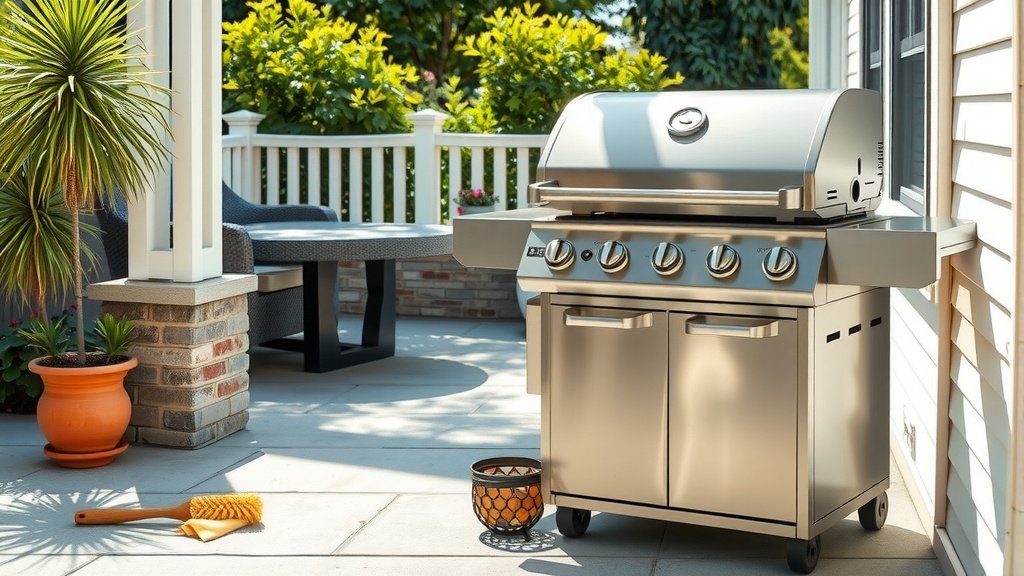
To clean a stainless gas grill effectively, always start by ensuring the grill is completely cool and the gas supply is turned off for safety. Then, tackle the grates, interior components, and finally polish the exterior for a sparkling finish.
Regular maintenance, including proper cleaning, helps maintain your grill’s performance and appearance, making your grilling experience much more enjoyable and extending the life of your appliance.
Here’s a quick overview of what you will learn about cleaning your stainless gas grill:
- Always prioritize safety first: cool grill, disconnected gas.
- Break down cleaning into manageable steps: grates, interior, exterior.
- Understand the right tools and cleaning agents for each part.
- Learn simple habits to keep your grill looking great between deep cleans.
- Discover common mistakes to avoid for long-lasting shine.
How To Clean Stainless Gas Grill?
Cleaning your stainless gas grill means you’re ready to get down to business. It involves a systematic approach, from managing cooled grates to making the exterior gleam. This process keeps your grill performing its best for every delicious meal.
Why Bother Cleaning Your Stainless Grill?
You might ask yourself, “Do I really need to clean it every time?” We get it. Sometimes, after a great cookout, the last thing you want to do is scrub. But keeping your grill clean is about more than just looks.
A well-maintained grill is a happy, efficient grill. It’s like taking care of your car; a little effort goes a long way. Let’s look at why cleaning pays off in big ways.
Extend Grill Life
Regular cleaning stops grease and food particles from building up. This prevents corrosion and damage to internal components. Many experts say proper care can significantly prolong your grill’s lifespan, saving you money.
Better Tasting Food
Imagine biting into a perfectly seared steak that tastes faintly of last week’s burnt burgers. Not appealing, right? Cleaning removes old food residue, ensuring your new culinary creations taste pure and delicious, as they should.
Safety First
Grease fires are no joke. Accumulated grease and food drippings pose a real fire hazard. Research often connects grease buildup with potential flare-ups (National Fire Protection Association). A clean grill is a safer grill for you and your family.
Gather Your Cleaning Toolkit
Before you dive in, make sure you have the right tools. Having everything ready makes the job much smoother. Think of it like a chef preparing their ingredients before cooking.
Here is a quick checklist of essential cleaning supplies:
- Wire grill brush (brass or stainless steel, depending on grates)
- Stiff-bristled nylon brush
- Grill scraper or putty knife
- Bucket of warm, soapy water (dish soap works well)
- Degreaser specifically for grills or heavy-duty kitchen degreaser
- Stainless steel cleaner and polish
- Soft cloths or microfiber towels
- Disposable gloves
- Optional: shop vac for loose debris
Daily Care: Quick Wipes for a Happy Grill
You don’t need a full deep clean after every use. A little attention after each cook can make a big difference. It’s about building good habits, just like wiping down your kitchen counter.
After Every Cook
When your grill is still warm (but not scorching hot), use your grill brush. A quick scrub will remove any stuck-on food from the grates. This step prevents stubborn grime later. It’s a simple habit with big rewards.
Preventing Stubborn Stains
Always wipe down the exterior stainless steel after it cools. Use a damp cloth to remove any drips or splatters. This helps keep fingerprints and general mess from becoming hard-to-remove stains.
Deep Cleaning Your Stainless Steel Gas Grill
About twice a season, or more often if you grill frequently, it’s time for a deep clean. This is where you really get into every nook and cranny. Are you ready to make your grill shine?
Step 1: Cool It Down, Disconnect Gas
This is non-negotiable. Always wait until the grill is completely cool to the touch. Then, turn off the gas at the tank and disconnect the gas line. Your safety is always the most important thing.
Step 2: Tackle the Grill Grates
Remove the grates from your grill. For lighter residue, soak them in warm, soapy water for 15-30 minutes. For heavier, baked-on grime, consider using a grill degreaser. Scrub them thoroughly with your wire brush, rinse, and set aside to dry.
Step 3: Clean the Flavorizer Bars and Burners
Carefully lift out the flavorizer bars. Scrape off any carbonized gunk with a plastic scraper or wire brush. Inspect your burners for any blocked ports. Use a stiff wire or a paperclip to clear small holes. We found that keeping burner ports clear is essential for even heat distribution.
Step 4: Scrape the Grill Interior (Cook Box)
Inside the firebox, you’ll find a lot of charred bits and grease. Use a grill scraper or a putty knife to gently scrape down the sides and bottom. Push all the debris towards the grease tray opening. Many experts suggest using a shop vac to remove loose pieces easily.
Step 5: Shine the Exterior Stainless Steel
This is where your stainless steel magic happens. You need to wipe with the grain of the steel, not against it. This prevents streaks and tiny scratches. Always use a soft cloth for this step.
Here’s a look at different solutions for common exterior issues:
| Issue | Recommended Solution | Application Tip |
|---|---|---|
| Fingerprints/Light Smudges | Warm water and mild dish soap | Wipe with soft cloth, rinse, dry with microfiber. |
| Grease Splatters/Streaks | Stainless steel cleaner (spray/cream) | Apply sparingly, wipe with grain, buff for shine. |
| Stubborn Grime/Rust Spots | Baking soda paste (baking soda + water) | Apply paste, let sit (15 min), gently scrub with soft brush. |
| Overall Polish | Stainless steel polish | Follow cleaner with polish for extra gleam. |
Step 6: Don’t Forget the Drip Tray
The drip tray catches all the grease and drippings. Remove it, empty any foil liners, and wash it with warm, soapy water. A dirty drip tray can attract pests and create bad odors. This step is crucial for hygiene and pest control.
Common Stainless Steel Cleaning Mistakes to Avoid
Nobody wants to accidentally damage their prized grill. Avoid these common missteps:
- Do not use abrasive cleaners or steel wool; they will scratch the stainless steel finish.
- Avoid chlorine bleach; it can cause discoloration and pitting on stainless steel.
- Never clean a hot grill with water; the sudden temperature change can warp parts.
- Do not forget to dry stainless surfaces completely to prevent water spots and rust.
- Do not leave cleaning products on too long; follow product instructions carefully.
Maintain the Shine: Ongoing Tips
Once your grill is sparkling clean, a few simple actions can keep it that way. Think of these as little acts of love for your outdoor cooking station.
Always use a grill cover when not in use. This protects it from the elements, dust, and debris. We found that a good cover can greatly reduce the need for deep cleaning. Also, consider placing a drip pan under your food to catch excess grease.
Conclusion
Cleaning your stainless gas grill might seem like a chore, but it’s a worthwhile investment. By following these steps and giving your grill a little attention, you’ll ensure it performs beautifully for years to come. A clean grill means tastier food, a safer cooking environment, and a grilling setup you’ll be proud to show off. So go ahead, get cleaning, and enjoy the rewards!
FAQs
How often should I deep clean my stainless gas grill?
Most experts suggest a thorough deep cleaning at least twice a year, typically at the start and end of grilling season. If you grill very often, you might consider doing it quarterly to maintain optimal performance.
Can I use oven cleaner on my stainless steel grill grates?
While oven cleaner is powerful, it can be too harsh for some grill grates and might damage certain finishes. For stainless steel grates, a dedicated grill cleaner or a soak in hot, soapy water followed by scrubbing is generally safer and effective.
What should I use to remove rust spots from stainless steel?
For light rust spots on stainless steel, a paste made from baking soda and a little water, gently rubbed with a soft cloth or sponge, often works well. Always rub with the grain and rinse thoroughly. For heavier rust, a specialized stainless steel rust remover might be needed.
Is it okay to use a power washer on my gas grill?
Using a power washer is generally not recommended for gas grills. The high pressure can damage delicate components, electrical wiring, and cause water to enter areas it shouldn’t, potentially leading to rust or malfunctions. Stick to manual cleaning methods.
How can I prevent bugs and pests from getting into my clean grill?
To deter pests, always ensure your drip tray is clean and empty, as leftover grease attracts them. Store your grill with a proper, snug-fitting cover, and keep food scraps away from the grill area. Some grill owners also place a few dryer sheets inside when not in use.
